In the off-season, the route matters more than the miles
On a dry day, you can choose a walk based on your mood. After rain, melting snow, or a night-time freeze, the logic changes: assess the ground first, then the distance. In Kostanay, this is especially noticeable on open stretches near the Tobol and on unpaved park paths. A good route in slushy weather is one where you can turn back after 10–15 minutes, find lit sections, and avoid most hidden potholes.
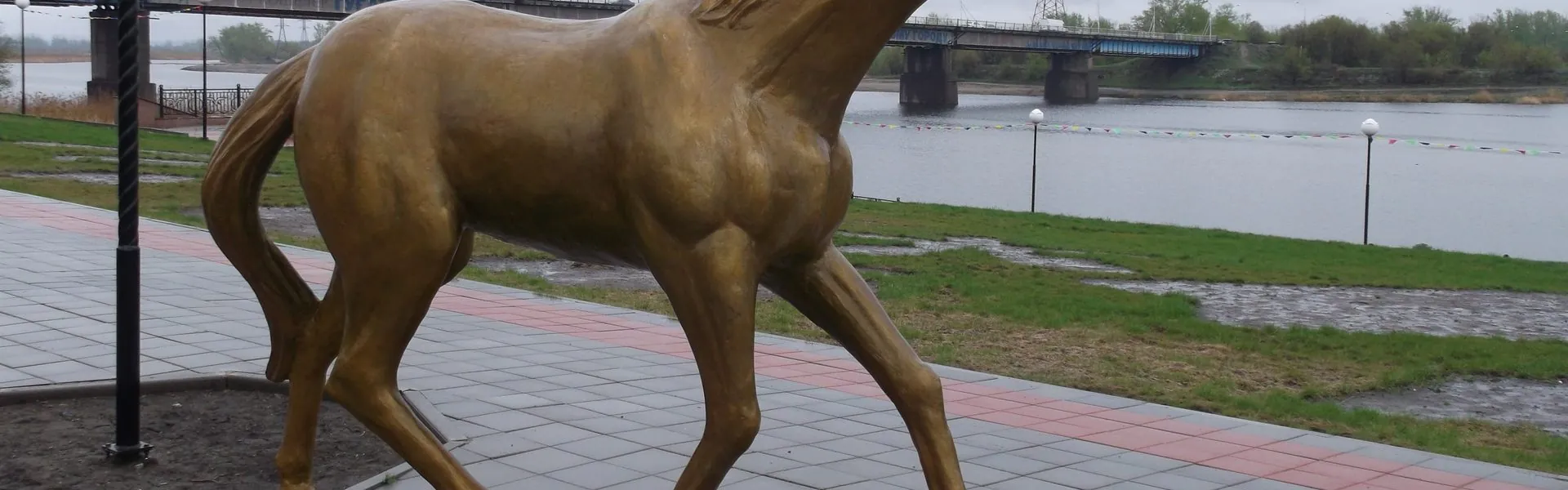
The Shagala Embankment connects to Triathlon Park via a walking zone around 2,5 km long. It’s a convenient urban route, but it’s exposed to the wind and isn’t always the best choice right after rain. The current condition of the stretch and the connection under the Central Bridge are described in materials from the Kostanay akimat and local city news outlets.
- After rain, start with a short park loop rather than a long embankment walk.
- Look for footwear with a grippy rubber sole, a stable heel counter, and a protective upper.
- On wet ground, shorten your stride, keep your torso upright, and don’t bury your hands deep in your pockets.
- If you see ice under water, mud with deep ruts, or a long stretch of slippery paving, change your route.
- To keep the habit going, have two options ready: a short park route and a longer route for dry weather.
How to choose a route before heading out
Check the hourly forecast and the map, but don’t focus only on the temperature. In the off-season, the combination of precipitation, wind, an overnight freeze, and how long the ground has had to dry matters more. Studies of urban walking show that rain, snow, and cold are linked to fewer walks, while dry weather and sunshine are linked to increased pedestrian activity. That’s not a reason to cancel your outing—it’s a hint to choose a more sheltered loop.
- Check the first 100–200 meters from home: if there is already water, smooth paving, or softened ground, it’s better not to start a long route.
- Choose your surface: dry asphalt and rough concrete are usually more predictable than wet stone, metal grates, painted markings, and leaves.
- See where there is lighting, benches, shops, or stops. In slushy weather, these are places for a short rest and a safe turnaround.
- Check the route in 2GIS immediately before leaving: stops, passages under bridges, and access to individual areas can change.
Three surface colors Green: dry or simply damp asphalt without a glossy film of water. Yellow: wet leaves, paving, wooden walkways, and mud along the edges of the path. Red: ice, a smooth surface covered with a film of water, a deep rut, or a puddle whose bottom you can’t see. Don’t test your courage on a red section—go around it.
Four Kostanay routes for spring and autumn
1. Central Park: a short loop for the wettest day
Distance: approximately 2–2,5 km along the main paths, or around 2 600–3 500 steps. Start: the area around the TSUM and Central Square. Getting there: search 2GIS for “Central Park of Culture and Recreation” or use the stops near the TSUM and Central Square as landmarks. It’s easy to walk here from the central districts.
This is the basic option when you want to leave the house but the forecast doesn’t promise a dry evening. Stick to the wide paths and don’t cut across the grass: after rain, grass turns to mud faster than you might expect. Do one loop and assess your footwear. If your feet are dry and the surface is stable, add a second loop; if not, your walk has still happened.
2. Victory Park: trees, short turnarounds, and less wind
Distance: around 2 km per loop, approximately 2 600–3 000 steps. Start: at the “Victory Park” stop. In 2GIS, the park is listed as “Victory Park” in Kostanay; check the bus numbers before leaving because city routes are updated.
The mature trees provide some protection from crosswinds, making the park more convenient than the embankment on a gusty day. After heavy rain, choose the main paths rather than the side dirt branches. A good approach is two short loops of 15–20 minutes instead of one long route with no easy way out.
3. Shagala Embankment–Triathlon Park: even, scenic, but exposed to the wind
Distance: around 2,5 km one way and up to 5 km there and back, which usually comes to approximately 6 500–7 500 steps. Start: from the Shagala Embankment side; finish or turn around at Triathlon Park. There is a pedestrian connection under the Central Bridge, so you can complete the route without a break. For navigation, enter “Shagala Embankment” and “Triathlon Park” in 2GIS.
This option works well when the rain has stopped, the asphalt is no longer covered with a continuous glossy film, and the wind is moderate. On an exposed day, start against the wind if you plan to walk back: the return stretch will be easier. If the gusts pick up, don’t be stubborn—turn around at the nearest lit section or move into the park. The embankment may be walkable after rain, but near the water you’ll encounter puddles, wet leaves, and gusty crosswinds more often.
4. Park by Baitursynov University: a short new route
Distance: approximately 1,5–2,5 km along the available paths, or around 2 000–3 500 steps. Start: near Kostanay Regional University named after Akhmet Baitursynov; the university address is 47 Baitursynov Street. Before leaving, check 2GIS to see which entrances and paths are open today.
The park, covering around 4,3 hectares, was designed as a public space with paths for walking and running. In the off-season, it’s a convenient compromise: you can put together a calm walk close to city streets without going far from public transport. If some paths are wet, don’t move onto the grass—shorten the loop and add some walking on nearby sidewalks instead.
| Route | When to choose it | Approximate distance |
|---|---|---|
| Central Park | The rain stopped recently and you need a short outing | 2–2,5 km · 2 600–3 500 steps |
| Victory Park | It’s windy and you want to walk among trees | Around 2 km · 2 600–3 000 steps |
| Shagala–Triathlon Park | It’s dry, the surface has been checked, and you want a long route | Up to 5 km there and back · 6 500–7 500 steps |
| Park by the university | You need a short urban loop away from the embankment | 1,5–2,5 km · 2 000–3 500 steps |
All distances are approximate: your step counter depends on your height, stride length, and how many times you walk around puddles. For more detailed connections around the city, open the guide to Kostanay routes, then adapt it to today’s ground conditions.
How to choose footwear for mud and puddles
In the off-season, you don’t need the most expensive footwear—you need footwear you can rely on. Look for a closed upper with a water-repellent treatment or membrane, a sole with a pronounced tread, a stable heel counter, and proper foot support. Tall rubber boots are useful in deep mud, but they can be heavy on a long walk and may hold the foot less securely, so choose them for the specific route rather than following the rule “the more waterproof, the better.”
- The sole should be grippy, not worn smooth: check whether the tread is worn down around the heel and toe.
- Avoid smooth, thin soles and heavily worn sneakers, especially if you’ll be crossing wet paving or metal.
- A very soft sole isn’t always safer: on wet ground, it can change your stepping mechanics and reduce stability.
- Laces or another fastening system should hold your heel without squeezing the instep.
- Wear synthetic or wool socks that don’t become heavy when damp. Cotton stays cold for a long time after getting wet.
The experiment compared different surfaces and footwear properties in young and older participants. On a wet surface, a soft sole was associated with shorter steps and a flatter foot placement; footwear with an elevated heel reduced stability in older participants. For city walking, this means that in slushy weather, stable footwear with a moderately firm sole and good support matters more than maximum softness and cushioning. Be cautious when applying the result to all city footwear: a laboratory surface is not the same as Kostanay mud.
Menant J. C. et al. Effects of walking surfaces and footwear on temporo-spatial gait parameters in young and older people. Gait & Posture, 2009.In a study using a controlled slippery section, tread design affected the coefficient of friction and the length of a slip. The best result came from a combination of patterns crossing the direction of movement. In everyday life, the practical takeaway is this: an open tread that isn’t clogged with mud is better than a smooth sole, but deep tread alone does not guarantee grip on wet stone or ice.
Liu L.-W. et al. Shoe Sole Tread Designs and Outcomes of Slipping and Falling on Slippery Floor Surfaces. PLOS ONE, 2013.The right pace in slushy weather isn’t the one that gets you to the end of the route faster—it’s the one where every step remains predictable. If you constantly have to guess where to place your foot, the surface is already too difficult for a walk in ordinary footwear.
How to walk without slipping
On a slippery surface, your body naturally becomes more cautious: your stride shortens, your foot lands more evenly, and your time in contact with the ground increases. Don’t fight this response or try to maintain your dry-weather pace. Take short steps, place your foot closer beneath your body, and avoid sharp push-offs with your toes. Don’t put your weight on a heel far ahead of you, and don’t take wide lunging steps over puddles.
- Slow down before the slippery section, not after your foot has already started sliding.
- Look 2–3 steps ahead, but check the surface right in front of your foot for shine, leaves, and hidden puddle edges.
- Don’t speed up on a descent: shorten your step and keep your knees slightly relaxed.
- Don’t turn sharply on paving or metal grates. Cross them directly and calmly.
- Don’t put both hands in your pockets. Keep your hands free for balance.
- Put your phone away until you reach stable ground. It’s better to use voice navigation or stop at the edge of the path.
When it’s better to cancel your walk Move your walk indoors or choose a very short route if there is black ice outside, water has frozen into a thin film, puddles are hiding potholes, or your footwear doesn’t grip the surface. The same applies if you feel dizzy, your legs suddenly become weak, or you have fallen recently. If you have balance problems, it can help to read the advice in the material about walking and fall risk in advance and discuss repeated episodes with a doctor.
How to keep the habit when the city turns soggy
The biggest off-season mistake is planning only long walks. If every outing has to take an hour and follow perfect asphalt, your habit will quickly become dependent on the weather. Create three levels of activity: a short park loop, a medium route through several blocks, and a long embankment walk on a dry day. Then rain doesn’t cancel walking—it simply moves it to another level.
- Prepare your footwear in the evening: dry the insoles, clean the tread, and place the pair by the door.
- Before leaving, choose one route and one turnaround point. Don’t change the plan on the go just to add extra kilometers.
- After your walk, rinse off the mud with cool water, blot the footwear with a cloth, and dry it at room temperature, not on a radiator.
- If your footwear gets wet, shorten your next outing, but don’t wait a week for perfect weather.
- Track more than just steps: note the rain, wind, surface, and how you feel. After two or three weeks, you’ll see which route works for you.
The authors analyzed 6 255 observations of pedestrians in nine cities and found a link between pedestrian numbers and temperature, precipitation, and sunlight. In particular, the shift from snow to dry weather was accompanied by an increase in pedestrian numbers. The study doesn’t say you need to wait for sunshine; it shows why it’s useful to have a sheltered short route ready and not build your habit only around long walks on exposed streets.
de Montigny L., Ling R., Zacharias J. The Effects of Weather on Walking Rates in Nine Cities. Environment and Behavior, 2012.In this longitudinal study, objectively measured physical activity was compared with temperature, rain, snow, and wind speed. Weather did change the amount of activity, but its influence became less noticeable over time among people who walked regularly. The practical takeaway for the off-season is simple: a repeatable plan and a backup route help you avoid depending on every rainy day.
Chan C. B., Ryan D. A. C. Assessing the Effects of Weather Conditions on Physical Activity Participation Using Objective Measures. IJBNPA, 2006.FAQ: off-season walks in Kostanay
Can I walk along the embankment right after rain?
You can if the surface isn’t covered with a continuous film of water, there hasn’t been a freeze, and you’ve checked the first few dozen meters. For a long walk, it’s better to wait until the asphalt stops shining and puddles no longer hide edges and potholes.
Which is better: sneakers or rubber boots?
For asphalt and parks, water-repellent sneakers or lightweight boots with a grippy sole are usually more comfortable. Boots are better in deep mud and large puddles, but for a long walk, check the heel support, weight, and risk of chafing.
Do I need to slow down on wet paving?
Yes. Shorten your stride, don’t turn sharply, and place your foot closer beneath your body. If the paving is smooth and covered with leaves or water, it’s safer to go around the section on asphalt, even if it adds a few minutes.
How can I reach 10 000 steps if the city is muddy?
Split the goal into two parts: a short park loop during the day and another outing on dry ground. Focus not on an obligatory 10 000 but on keeping the habit steady; you can read about different daily target options in the material about 7 000 steps.
What should I do if my footwear gets wet during a walk?
Shorten the route and return using the most even surface. At home, remove the insoles, blot the footwear with paper or a cloth, and let it dry naturally. Don’t place it right next to a radiator: high heat can damage the glue and the shape of the upper.
Sources
- Menant J. C. et al. Effects of walking surfaces and footwear on temporo-spatial gait parameters in young and older people. Gait & Posture, 2009. DOI: 10.1016/j.gaitpost.2008.10.057
- Liu L.-W. et al. Shoe Sole Tread Designs and Outcomes of Slipping and Falling on Slippery Floor Surfaces. PLOS ONE, 2013. DOI: 10.1371/journal.pone.0068989
- de Montigny L., Ling R., Zacharias J. The Effects of Weather on Walking Rates in Nine Cities. Environment and Behavior, 2012. DOI: 10.1177/0013916511409033
- Chan C. B., Ryan D. A. C. Assessing the Effects of Weather Conditions on Physical Activity Participation Using Objective Measures. International Journal of Behavioral Nutrition and Physical Activity, 2006. DOI: 10.1186/1479-5868-3-21
- Kostanay Akimat. Material about the improvement of the Shagala Embankment and the connection between the walking zone and Triathlon Park. Kostanay Akimat: Shagala Embankment
- 2GIS. Directory of cultural and recreation parks in Kostanay: Central Park, Victory Park, Triathlon Park, and other city spaces. 2GIS: Kostanay parks
- Qozgal. Where to Walk in Kostanay—10 Routes Along the Tobol and Through the Parks. A practical city guide with landmarks and route options. Qozgal: Kostanay routes

