JAMA Psychiatry 2022: numbers that change the conversation
In April 2022, JAMA Psychiatry published the largest-ever systematic review on "physical activity and risk of depression." Pearce ME and colleagues pooled 15 prospective cohorts — 191,130 people observed for an average of 7.3 years. That's millions of person-years of observation
What the math showed:
- Just 2.5 hours of brisk walking a week (half the WHO recommendation) cuts depression risk by 25% compared to sedentary people
- 1.25 hours (literally 17-18 minutes a day, or 30 minutes three times a week) already gives −18%
- The dose-response curve flattens past 4-5 hours a week — moving more isn't harmful, but it doesn't add protection
The authors' main conclusion: "if sedentary adults did even half the recommended activity, 1 in 9 cases of depression could be prevented." At the population level, that's tens of millions of people worldwide
Harvard 2019: walking and the genetics of depression
Karmel Choi's group at Harvard did a unique piece of work: they took participants of the Partners HealthCare Biobank whose polygenic risk for depression (a genetic vulnerability score) was known, and compared them by their level of physical activity
The result surprised even the researchers. In people with a high genetic predisposition to depression, physical activity cut the risk of the condition manifesting almost as strongly as it did in people with average risk. In other words, "bad genetics" can be partly overridden by walking
The specifics: every additional 4 hours of physical activity per week (any type, walking counts) cut depression risk by 17%. In the top quartile of activity, depressive episodes were 32% less frequent
BMJ 2023: walking works like an SSRI for mild depression
This study deserves its own shelf because it makes a direct comparison. In 2023, the British Journal of Sports Medicine published a large overview — Singh B et al. pooled 97 systematic reviews (1,039 RCTs, 128,119 participants) and measured: what effect on depression and anxiety symptoms do different interventions deliver?
- SSRIs (first-line antidepressants): Hedges' g effect size ≈ 0.30 (moderate)
- CBT (cognitive behavioral therapy): g ≈ 0.55 (moderate to strong)
- Brisk walking and aerobic exercise: g ≈ 0.43 (moderate)
- Strength training: g ≈ 0.65 (largest effect)
This doesn't mean "quit your meds and go for a walk." It means something else: for mild and moderate depression, regular physical activity delivers an effect of the same order of magnitude as pharmacotherapy. Often without side effects
The authors recommend directly: include structured physical activity as a first-line treatment for mild depression, anxiety and distress — not as a "nice add-on to the meds"
How walking actually changes the brain
The effect on mental health isn't magic or "fresh air plus endorphins." There are concrete biochemical and neural mechanisms behind it:
- BDNF (brain-derived neurotrophic factor). A protein responsible for neuron growth and survival, especially in the hippocampus — the region that gets "eaten away" by chronic depression. Aerobic exercise raises BDNF levels by 30-40%. That's why regular walking doesn't just "distract" — it literally grows the brain back
- Serotonin and norepinephrine. The same systems SSRIs/SNRIs act on are activated by physical exercise. Only without the side effects of weight gain, libido loss and emotional blunting
- Lower inflammation. Chronic inflammation (C-reactive protein, IL-6) is linked to depression. Regular walking lowers both markers
- Vagal tone. Linked to the parasympathetic nervous system and stress resilience. Aerobic activity trains the vagus the same way meditation and breathing practices do
- Cortisol rhythms. Regular morning exercise normalizes the daily cortisol curve, which is especially important in anxiety disorders
So when your mood is "inexplicably" better after a walk, it's actually completely explicable — in 30 minutes, several molecules rose in your blood that are literally written into the prescriptions for antidepressants
Why outdoors beats the gym: the nature effect
A walk in a park and 30 minutes on a treadmill at a fitness club are different interventions, even if the step counter shows the same number. Nature acts on the mind separately from the physical load
In 2015, Bratman's group at Stanford ran an elegant experiment. They randomized 38 healthy city residents to 90 minutes of walking:
- Half — on a trail in a natural park
- Half — along a 4-lane urban highway
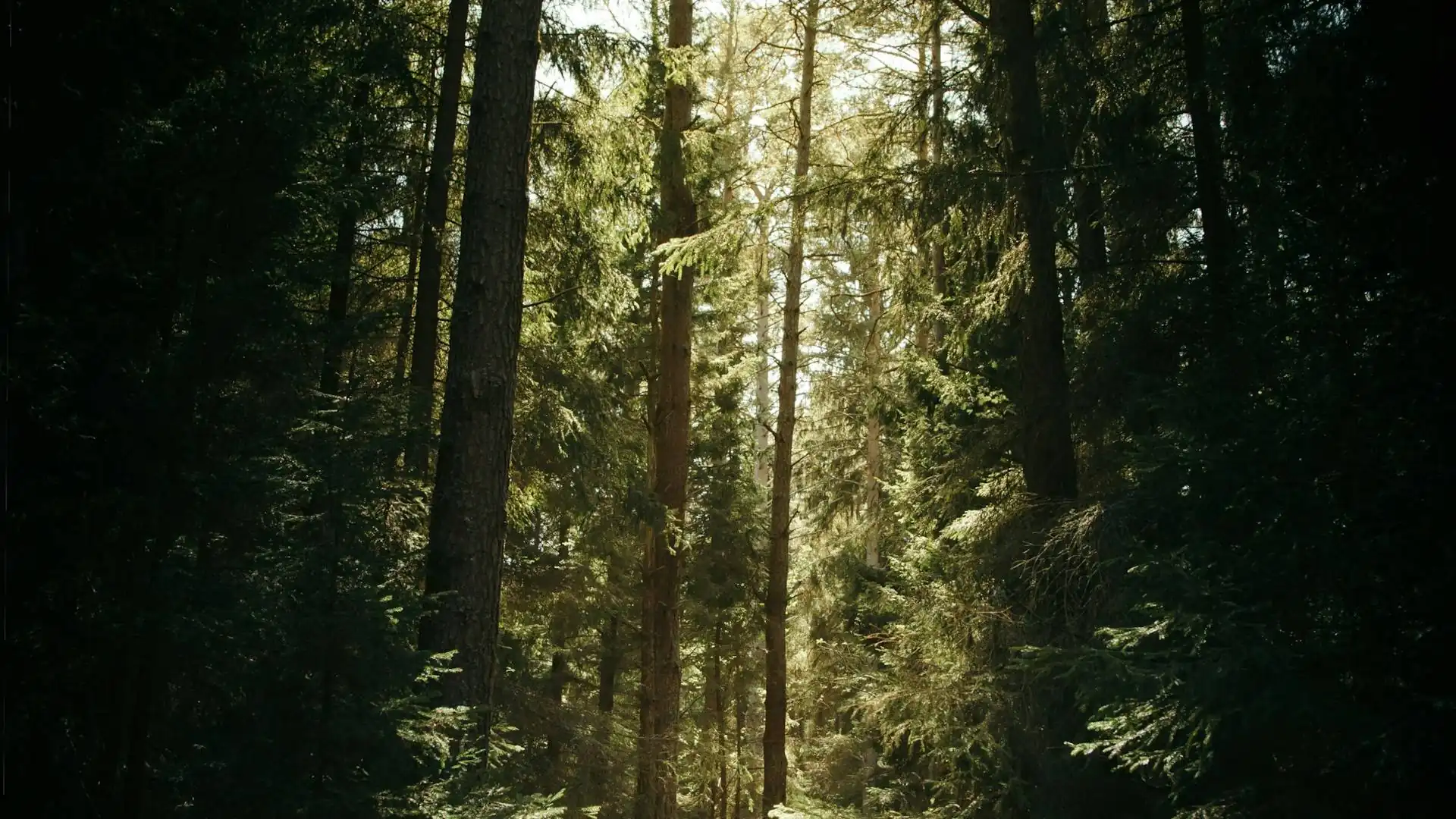
Before and after — rumination questionnaires (intrusive negative thoughts) and MRI. The "nature" group had significantly lower rumination and reduced activity in the subgenual prefrontal cortex — a brain region hyperactive in depression. The "urban" group showed neither change, despite the same physical load
This is explained by Kaplan's Attention Restoration Theory (University of Kansas, 1989): nature engages "soft attention," which restores the depleted prefrontal cortex. The city demands "hard attention" — cars, pedestrians, traffic lights — and depletes it further
30 minutes in a park does more for anxiety than 30 minutes on a gym treadmill. It's not "better" — it's a different intervention
Morning or evening: different effects
Time of day matters, and for different goals — differently
A morning walk (especially in the first hour after waking up):
- Bright daylight in the first 30-60 minutes after sleep resets the circadian rhythm via the suprachiasmatic nucleus. This is the strongest sleep regulator — stronger than any supplement
- Morning cortisol is higher — the load feels easier, and the mood effect lasts the whole day
- Cuts anxiety from the morning on, which changes the tone of the day
An evening walk:
- Releases the muscular and psychological tension accumulated during the day
- Helps "close" the day — switching the brain from work to rest
- Too intense within 2 hours of sleep can make it harder to fall asleep. A light 30-minute one — improves sleep
If you're fighting anxiety and poor sleep — pick morning. If you're fighting accumulated daily stress — pick evening. Both is best, but if you have to pick one for an anxious temperament — pick morning
How much and at what pace
Combined recommendations from the latest meta-analyses:
- Minimum: 30 minutes of brisk walking 3-5 times a week. Already gives measurable effects in 4-6 weeks
- Optimum: 30-45 minutes 5 times a week. That's around 8,000-10,000 steps a day
- Pace: brisk walking where you can speak in short phrases but not sing. More on walking speed
- Regularity beats volume. 5 sessions of 30 minutes beats 1 session of 2.5 hours on the weekend
Most people notice the first improvements at week 2-3: less morning anxiety, a steadier mood floor, easier sleep onset. Stable antidepressant effect — by week 6-8 of regular practice
Who needs this most
- People with mild and moderate depression — as a standalone or complementary intervention (always after consulting a doctor)
- For generalized anxiety — especially morning anxiety. Brisk walking "discharges" accumulated cortisol
- During burnout — Attention Restoration Theory is exactly about this: nature returns depleted attention
- For seasonal affective disorder (SAD) — morning light in the first hour of the day is the most powerful non-pharmacological intervention
- After a major loss (death, divorce, relocation) — regular physical activity cuts the risk that acute stress turns into chronic depression
When walking isn't enough:
- Severe depression with suicidal thoughts — this is an acute state requiring urgent help from a psychiatrist. Walking can be part of the plan, but not a substitute for treatment
- Bipolar disorder — unsupervised activity without monitoring can trigger phase shifts
- Post-traumatic stress disorder (PTSD) — psychotherapy is needed; walking is only an add-on
In Kazakhstan, there's a psychological support hotline: 150 (free, 24/7). In Uzbekistan — 1142. If you're bad enough that thoughts of harming yourself have come up, a phone call matters more than any article
Why walking specifically, and not another sport
Strength training in a gym and running are more effective by some metrics (Singh 2023 showed strength gave g = 0.65). But walking has three unique advantages for mental health:
- Zero barrier to entry. No gym, no kit, no special shoes, no schedule. Depression and anxiety are conditions where barriers to entry matter critically. Anything that adds a "but first I have to get to..." becomes an excuse not to go
- No performance anxiety. Social anxiety often blocks a trip to the gym. A solo walk — zero social risk
- You can do it in a "bad" state. A sleep-deprived, anxious person won't go to a treadmill or barbell. They might still go for a walk
That's why in real life walking often outperforms "more effective" alternatives — you can actually do it. The best intervention is the one you'll stick with
How to make it stick
The psychology of habits is its own topic (we've written about it). Specifically for walking-as-therapy:
- A fixed time window. "Every day before breakfast" works better than "sometime today." A window turns a decision into a habit
- One default route. Without choice you spend less mental energy. The same park, the same loop — that's fine
- Pair with an existing habit. "After coffee" or "after dinner" — habit stacking strongly boosts your odds
- Minimum 7 minutes — better than 0. On a bad day, don't set a bar at 30 minutes. Set it at "head out and walk for 7 minutes." Once you're walking, extending almost always happens on its own
- A freeze beats a failure. Qozgal has freezes — skip a day without losing your streak. When working through depression, this is critical: one missed day shouldn't turn the habit into "didn't work out"
Bottom line
Walking for mental health is the most underrated and most accessible intervention out of those backed by serious science. 30 minutes of brisk walking 5 times a week delivers an effect on anxiety and depression of the same order as pharmacotherapy. No prescription, no side effects, no budget
If you have a choice of format — a park beats a treadmill. Morning beats evening for the anxious; evening beats morning for the stressed. And the main thing — it works from regularity, not from one random walk. Not one 2-hour Sunday session, but five 30-minute weekday ones
It doesn't cure everything. But it lowers the risk, severity and duration of what's hard to treat any other way
Sources
- Pearce M, Garcia L, Abbas A et al. "Association Between Physical Activity and Risk of Depression: A Systematic Review and Meta-analysis." JAMA Psychiatry, 2022. → JAMA Network
- Singh B, Olds T, Curtis R et al. "Effectiveness of physical activity interventions for improving depression, anxiety and distress: an overview of systematic reviews." British Journal of Sports Medicine, 2023. → BMJ
- Choi KW, Chen CY, Stein MB et al. "Assessment of Bidirectional Relationships Between Physical Activity and Depression Among Adults." JAMA Psychiatry, 2019. → JAMA Network
- Bratman GN, Hamilton JP, Hahn KS, Daily GC, Gross JJ. "Nature experience reduces rumination and subgenual prefrontal cortex activation." PNAS, 2015. → PNAS
- Schuch FB, Vancampfort D, Richards J et al. "Exercise as a treatment for depression: A meta-analysis adjusting for publication bias." Journal of Psychiatric Research, 2016. → ScienceDirect
Start with 30 minutes a day
Qozgal counts your steps automatically and keeps your streak with freezes for bad days. Free