Short answer if you're in a hurry
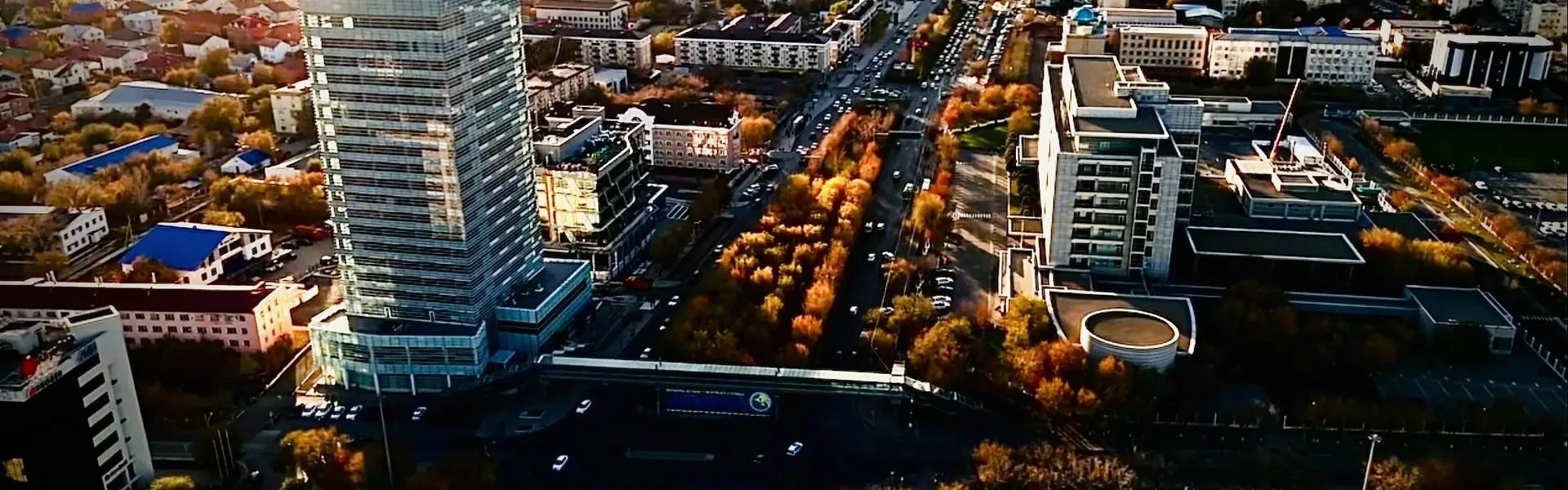
Atyrau is compact, flat and laid out on the delta of the Ural river. There are no mountains, gorges or switchbacks — you can walk anywhere with no climbing. But three factors define every walk: summer sun, steppe wind and dust storms. From June to August asphalt hits +50°C, in winter a -10°C day with wind feels like -25°C. The good news — the city has a long, well-maintained Ural embankment, parks with mature trees, and a rare global perk: a single footbridge that takes you from Europe to Asia in about three minutes
Basic rule: in summer — early morning or evening, in winter — only on calm days, during dust-storm season — not at all. Most spots in Atyrau are walkable without a car. The Caspian (about 30 km) requires a car
Pick a route for your steps and energy
Route picker by steps and effort
Check the wind, temperature and dust first
In Atyrau, unlike Almaty or Tashkent, the dominant weather variables are not smog, but wind and dust. The steppe is wide open, and summer often brings dust storms that swallow the horizon in an orange haze. Before heading out, check:
- Windy.com — app and site. Hourly wind forecast, direction and gusts. If gusts top 10 m/s and dust is up — better stay home or hit a mall
- kazhydromet.kz — official weather stations. Temperature, wind, particulates. Reliable but slow to update
- 2GIS — for distances between districts and bus routes. Atyrau's micro-district numbering is non-linear; without 2GIS first-timers get lost
Temperature rule of thumb: with a feels-like above +35°C, hard exertion is risky. Plan 0.5 L of water per hour of summer walking. Steppe UV in summer hits 9–10 — a hat and sunscreen are non-negotiable at midday. In winter the killer is wind: -10°C with 8 m/s feels like -25°C, so bring a balaclava and a windproof jacket
City routes — pavement, parks and the Ural
1. Victory Park (Jenis)
Length: ~1.8 km full loop · Steps: ~3,000 · Profile: flat
The oldest park in Atyrau, in the city centre. Memorial, shaded lanes, benches. One of the few parks with mature trees that actually provide shade in the heat — that matters in July. Pensioners use the outdoor gym in the morning, families and teenagers fill it in the evening. Ideal for a 30–40 minute stroll
How to get there: bus #3 or #17 to the centre, walk in
2. Park Bonita
Length: ~2.5 km full loop · Steps: ~4,500
A family park tucked into residential blocks near the centre. Rides, cafés, shaded lanes and playgrounds. The vibe is calm and well-kept; lots of kids. Stroller-friendly with smooth asphalt and no climbs. Downside — can get crowded on weekends
How to get there: bus #3 or #6 to the centre, then walk
3. Beibarys Sultan square and the central mosque
Length: ~2 km loop · Steps: ~3,500
Beibarys Sultan square holds the equestrian statue, open marble plazas and fountains. A few blocks away you find the central mosque with its turquoise domes — and a Christmas Cathedral nearby, an interesting "twin" silhouette of the city centre. Sunsets here are particularly photogenic — the sun drops directly over the mosque
How to get there: any downtown minibus; 10 minutes' walk from the Europe-Asia bridge
4. Riviera Park and Akhmet Baitursynov alley
Length: ~3 km loop · Steps: ~6,500
A modern park on the left (European) bank with bike lanes, an outdoor gym and open sports zones. Right next door — the Akhmet Baitursynov alley, a long green corridor between buildings, surprisingly quiet for the centre. Good in shoulder season and in the evening once the heat lifts. Young trees mean little shade at noon
How to get there: bus #25 or a taxi to Riviera
5. Europe-Asia bridge and the banks around it
Length: ~3.5 km loop · Steps: ~5,500
Atyrau's signature walk. The pedestrian footbridge across the Ural carries symbolic markers labelled "Europe" and "Asia" — the shortest intercontinental crossing in Kazakhstan. The bridge itself is 550 metres, ~750 steps. The natural loop runs both banks: drop down to the embankment, cross the bridge, return on the other side. Cafés, benches and photo spots along the way. The bridge lights up at night and half the city walks it on weekends
How to get there: any downtown minibus to the akimat or the bridge
6. Ural embankment — short stretch (right bank)
Length: ~2.5 km one way · Steps: ~7,000 round-trip
The improved promenade on the Asian bank: asphalt, benches every 100 m, lamps and a bike lane. Walk in either direction from the Europe-Asia bridge along the water. Runners in the morning, families and rollerbladers in the evening. The air by the river is noticeably cleaner and 2–3°C cooler than in residential blocks
How to get there: bus #3 or #6 to the centre, walk to the bridge
7. Full embankment loop along both banks
Length: ~7 km loop · Steps: ~10,000
The best long city loop in one go. Start at the Europe-Asia bridge, walk the right (Asian) bank to the railway bridge, cross and return on the left (European) side. You cover both continents, the central blocks and Riviera Park. 10,000 steps add up almost without notice — the views keep changing
How to get there: start at the Europe-Asia bridge; return by any downtown minibus
8. Big downtown loop: embankment + bridge + parks
Length: ~10 km loop · Steps: ~14,000
Every city highlight stitched together. Start at Victory Park, walk through Beibarys Sultan to the mosque, drop to the embankment, follow the right bank to the Europe-Asia bridge, cross into Europe, take the left bank to Riviera, return through Park Bonita. Closes both your day and your weekly WHO target. Best done in shoulder seasons or in summer evenings
How to get there: start downtown, any minibus
Out of town — the Caspian and the Damba
9. Damba — Caspian shore
Length: ~5–7 km along the coast · Steps: up to 18,000
The Caspian sits roughly 30 km from central Atyrau. The closest shoreline is the Damba area and Balykshy village. This is not a classical beach — more sand, shells, fishing camps and empty horizons. The city's fishing heritage (Atyrau was historically the country's "caviar capital") is most visible here. In summer locals come for shashlik; in winter it's deserted and beautiful. Bring a hat, water and sunscreen — there is no shade at all
How to get there: car or taxi only, ~35–45 minutes from downtown. Public transport reaches Balykshy; you walk from there
10. Sandy road and outskirts (Balykshy)
Length: ~10–15 km · Steps: up to 22,000
A long route along coastal villages and sandy paths — what locals call the "sandy road". Wild and empty: steppe, sand, fishing nets, the occasional shed. This is no longer a stroll but a proper out-of-town hike — plan 4–5 hours. Ideal for a long solo route when you want total silence and emptiness. Mobile coverage is patchy
How to get there: car to Balykshy, then walk wherever the road takes you. Bring extra water and a charged phone
Seasons — what works when
Winter (December — February)
Mild compared to the rest of Kazakhstan: -5 to -10°C in the day, rarely below -20. The main threat is the steppe wind: -10°C with 8 m/s feels like -25°C. What to do: windproof jacket, hat, balaclava or scarf for the face. Walks are fine all day on calm days. The embankment is especially beautiful in winter — ice on the Ural, silence, almost no people
Spring (March — May)
The best season in Atyrau. +15–25°C, the steppe greens, tulips bloom on the outskirts in April. What to do: March–April is peak for everything, including the Damba and Caspian trips. By late May the heat creeps to +30 and the first dust storms arrive
Summer (June — August)
The hard season. +35–40°C in the day, asphalt at +50, UV 9–10 and regular dust storms. What to do: walks strictly before 8 a.m. or after 7 p.m. The river embankment (breeze), Victory Park and Park Bonita (mature trees) are the saviours. At noon — home, mall or a car with AC. The Damba in summer is for sunset only — daytime sand is unbearable
Autumn (September — November)
The second peak after spring. From mid-September the heat fades, October hits a perfect +18–25°C. What to do: use October hard, walk a lot. By late November the cold steppe winds set in and the walking season closes until March
What to bring — a short checklist
- Water — lots of it. 0.5 L per hour of summer walking. For Damba/Balykshy — at least 2 L per person
- A cap or hat. Steppe UV is harsher than mountain UV
- Sunscreen. SPF 30+ on face, shoulders, arms. Genuinely needed eight months a year
- Sunglasses — sun on water and sand is brutal
- A buff or scarf. Summer — against dust, winter — against wind
- Comfortable shoes. Sand around the Damba and Balykshy is treacherous — flat sneakers will fill with grit
- Charged phone. Coverage is patchy on the outskirts — an offline map of Atyrau is a must
Bottom line
- Atyrau has a clear comfort hierarchy: embankment > parks > downtown. The river breeze decides things in summer
- The real enemies are summer sun, steppe wind and dust storms, not distance. The city is compact and walkable
- The most rewarding routes are the Ural embankment and the Europe-Asia bridge: the iconic 7 km / 10,000-step combo
- The cosiest are Victory Park and Park Bonita: shade, benches, kids, calm
- The most epic is the Damba and Balykshy: 35–45 minutes by car and you're alone on the Caspian shore
- The most meaningful is walking from Europe to Asia across the bridge: 550 metres, ~750 steps, intercontinental selfie included
- Seasons matter: best — March–May and September–October; in summer, only morning and evening
The simple rule: in Atyrau you can't just "walk wherever" — sun, wind and dust don't forgive bad planning. But knowing five or six trusted spots and a couple of apps lets you get 10,000 comfortable-air steps year-round. And Qozgal will count every one — no subscriptions, no ads, no extra numbers

Count your steps for free
Download Qozgal — an accurate step counter using Apple Health and Health Connect. No subscriptions, no ads