The main idea: walk for the conditions, not the plan
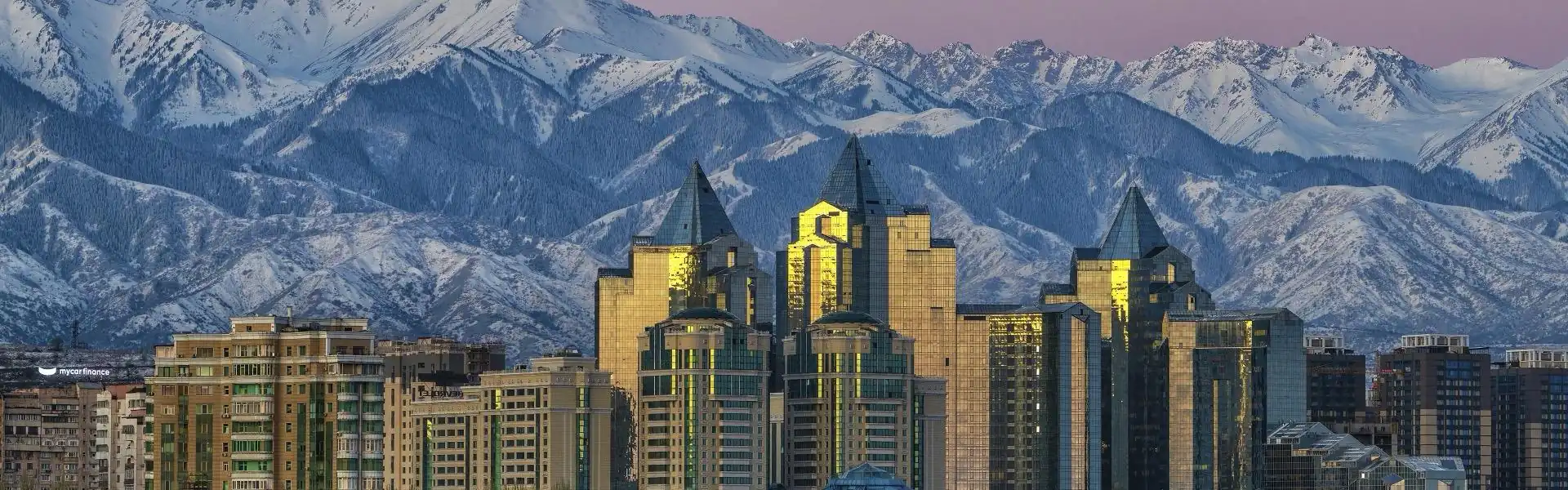
In Almaty, the same 5 000 steps can feel completely different: a flat Botanical Garden loop is calm, Terrenkur uphill is already a workout, and the Medeu stairs are almost interval training. So the goal is not to “push through the steps at any cost,” but to choose the right time, place, and pace for the air, heat, and terrain.
Before you head out, keep a simple formula in mind: if the air is clean, you can walk longer; if it is hot, go earlier or later; if the route climbs, slow down. And if smog, heat, and an uphill stretch happen at the same time, that is not “weakness” — it is a perfectly good reason to move your walk indoors. You can compare the balance between outside and inside in the article indoor vs outdoor walking.
- Check PM2.5 before going out: when the air is dirty, choose a shorter walk, a park farther from roads, or indoor walking.
- In summer, schedule your main walk for early morning or evening; leave open exposed stretches for cooler days.
- On climbs, slow down enough that you can speak in phrases, not single words.
- Descents load your knees and calves: take shorter steps, do not “fall” downhill, and do not race the stairs.
- For Almaty, 2–3 steady, easy walks per week are better than one heroic route through heat and smog.
Before you go out: three checks
The first check is PM2.5. For walks, it is more useful to look not only at the colored AQI, but also at the actual number in µg/m³: different apps may calculate the index differently. WHO gives a daily PM2.5 guide of 15 µg/m³, while Almaty city dashboards often show both this threshold and a higher local threshold of 35 µg/m³.
- Up to 15 µg/m³: a good day for a park, Terrenkur, or a long embankment walk.
- 15–35 µg/m³: keep it shorter, stay in green areas, and do not choose a walk along Al-Farabi, Sain, Raiymbek, or other major roads.
- Above 35 µg/m³: reduce intensity; if you have asthma, cardiovascular disease, pregnancy, or are recovering after an infection, indoor is better.
- Above 70 µg/m³ or visible smog with a smoky smell: do not do a workout walk; keep only essential movement.
On smoggy days, a walk is not automatically good for you. If you notice wheezing, chest pain, unusual shortness of breath, dizziness, or weakness, stop walking and go indoors. If symptoms repeat, discuss your walking plan with a doctor.
When to walk in summer: morning, evening, and shade
In the hot season, the safest walk in Almaty is not the longest one, but the coolest one. The best windows are usually early morning and evening after the sun has eased. If you need to get more steps during the day, choose shade, nearby water, and a route without long exposed avenues. There is a detailed summer checklist in the article how to walk in the heat.
| Time | What to do | Best places |
|---|---|---|
| 06:00–09:00 | Main walk for 30–60 minutes | Terrenkur, Botanical Garden, Sairan |
| 09:00–12:00 | Short and in the shade | Botanical Garden, Central Park |
| 12:00–17:00 | Only light movement | Mall, metro, treadmill, shady courtyard |
| After 18:30 | Second easy walk | First President Park, embankments |
| Smog + heat | Do not train outdoors | Indoor walking or rest |
Where to walk: real Almaty routes
The steps below are a guide: I count roughly 1 km as 1 300–1 500 steps. Your app will be more accurate because stride length depends on height, pace, and slope. If you want a separate selection of city walks, also see Almaty routes.
| Route | Length and steps | How to get there | When to choose it |
|---|---|---|---|
| Terrenkur | 4,5 km, ≈6 300 steps | Bottom: Dostyk 104; top: Kerei-Zhanibek khandar 310 | Morning, evening, cool weather |
| First President Park | ≈3 km, ≈4 200 steps | Entrance from Sain, parking near Dulati, buses available | When you need a flat, wide route |
| Park + Big Almaty River | 7,5 km, ≈10 500 steps | Start at the park, then cross the bridge to the riverside path | When the air is clean |
| Botanical Garden | 2–3 km, ≈2 800–4 200 steps | Timiryazev 36d, entrances also from Al-Farabi and Atakent | Heat, shade, easy pace |
| Sairan | 2,5–8,9 km, ≈3 500–13 000 steps | Sairan metro, then walk toward the water | Evening, if there is no dust or wind |
| Medeu, stairs | 100–842 steps | Bus or taxi to the Medeu complex | Cool morning, no rush |
Start with half the distance. On Terrenkur, you can walk for 20 minutes and turn back; at Medeu, do 100–200 steps instead of the full staircase; at Sairan, choose only the improved section rather than completing the loop at any cost.
Slopes: how to walk up and down
A slope is not just “the same walking, but prettier.” Going uphill increases energy expenditure and heart rate, while going downhill adds more eccentric muscle work: your quadriceps brake the body, and your calves and feet stabilize each step. That is why in the foothills your pace should be more modest than on a flat alley.
- Uphill: shorten your stride, lean slightly from the ankles, and do not hike up your shoulders.
- Uphill: keep a pace where you can speak in phrases. If you are speaking one word at a time, slow down.
- Downhill: do not lock your knees straight, and place your foot softly under you.
- On stairs: hold the handrail, especially after rain or snow, or if your legs are tired.
- After a descent: give your calves and thighs 3–5 minutes of flat walking; do not sit down for a long time right away.
A good walk in Almaty is not a victory over the mountain, the heat, or the smog. It is a day after which you want to go out again tomorrow.
If you have recently been ill, your knees have flared up, or you have dizziness, chest pain, or unusual shortness of breath, do not start with Terrenkur uphill or Medeu. Choose the Botanical Garden, a flat part of a park, or indoor walking. For uphill technique, also see walking on stairs and slopes.
Pace: how to tell you are walking correctly
For a city guide, the most convenient tool is not a heart-rate monitor, but the talk test. On flat ground, you can walk briskly while still being able to speak. On a climb, the goal changes: not to “hold speed,” but to keep your breathing under control. In smog, the pace should be even lower, because with intense walking you inhale more air and, accordingly, more particles.
- On a clean, cool day: 30–60 minutes at a conversational pace.
- In the heat: 15–30 minutes, shade, water, no surges or records.
- With moderate smog: 15–25 easy minutes, preferably in a park, not along a major road.
- On a climb: go about 20–40% slower than usual by feel.
- At Medeu: count not the steps, but how you feel; stopping is part of the route.
When to swap your walk for indoor walking
Indoor is not “plan B for the lazy,” but a normal tool for living in Almaty. It is especially useful when the city is hazy, there is dusty wind outside, the heat lasts until evening, or you need to recover after illness without extra stress.
| Situation | What to choose | How to do it |
|---|---|---|
| PM2.5 is high | Indoors | 20–40 minutes in a mall or on a treadmill |
| Heat and sun | Shade or indoor | Split it into 2 short outings |
| Knees hurt after a descent | Flat route | Botanical Garden, mall, treadmill without incline |
| Need to get steps in the evening | Safe indoor space | MEGA, Dostyk Plaza, Forum, home treadmill |
| After illness | Very easy | 10–15 minutes, no hill |
Set a timer for 10 minutes and walk loops through a mall gallery or at home. After each loop, change the task: 5 minutes easy, 3 minutes brisker, 2 minutes recovery. This way, steps add up gently, without smog or overheating.
A route builder for the week
- Monday: 25–35 minutes in the Botanical Garden or a quiet courtyard, with no speed goal.
- Tuesday: if the air is clean, Terrenkur from bottom to top for 20 minutes and back; if not, indoor.
- Wednesday: a short evening walk near Sairan or along the Big Almaty River embankment.
- Thursday: a flat walking day: First President Park, 3 km without accelerations.
- Friday: rest or 15–20 minutes after dinner at an easy pace.
- Saturday: Medeu — only if it is cool and clean; start with 100–300 steps.
- Sunday: a long gentle walk of 45–60 minutes, if PM2.5 and the heat allow.
Questions and answers
Can I walk in Almaty during smog if I feel fine?
Yes, but do not turn it into a workout. Check PM2.5, choose a park farther from roads, and reduce time and pace. If you have asthma, heart issues, pregnancy, or are recovering after illness, indoor is better.
What is better in summer: Terrenkur or the Botanical Garden?
In the heat and for an easy day, choose the Botanical Garden: it has more flat walking and makes it easier to control the load. Terrenkur is good in the morning or evening, when the air is clean and you are ready for a climb.
How many steps will I get on Terrenkur?
The full 4,5 km is roughly 6 000–7 000 steps. If you are walking uphill, do not compare your pace with a flat street: the climb itself increases the load.
Do I need to walk the entire Medeu staircase?
No. 842 steps are a guide for a strong day, not a mandatory norm. Start with 100–200 steps, and check your breathing, knees, and pulse. In heat, smog, or after illness, it is better not to storm the stairs.
What is the main sign that it is time to end the walk?
Unusual shortness of breath, dizziness, nausea, pressing chest pain, wheezing, chills in the heat, or sudden weakness. In this situation, stop walking, get to a cool place, and seek medical help if needed.
Sources
- Kerimray A., Azbanbayev E., Kenessov B., Plotitsyn P., Alimbayeva D., Karaca F. Spatiotemporal Variations and Contributing Factors of Air Pollutants in Almaty, Kazakhstan. Aerosol and Air Quality Research, 2020. DOI
- Tainio M. et al. Can air pollution negate the health benefits of cycling and walking? Preventive Medicine, 2016. DOI
- DeFlorio-Barker S., Lobdell D. T., Stone S. L. Acute effects of short-term exposure to air pollution while being physically active. Preventive Medicine, 2020. DOI
- Minetti A. E., Moia C., Roi G. S., Susta D., Ferretti G. Energy cost of walking and running at extreme uphill and downhill slopes. Journal of Applied Physiology, 2002. DOI
- Tudor-Locke C. et al. Walking cadence and intensity in 21–40 year olds: CADENCE-adults. International Journal of Behavioral Nutrition and Physical Activity, 2019. DOI
- WHO global air quality guidelines: recommended 2021 AQG levels for PM2.5, PM10, ozone, NO2, SO2 and CO. WHO / NCBI Bookshelf
- AAI Dashboard: real-time air quality monitoring system in Almaty with PM2.5 data and WHO/RK threshold labels. AAI Dashboard
- Tengri Guide: Almaty Terrenkur, length 4,5 km, elevations 876–1058 m and route start near the Kazakhstan Hotel. Tengri Guide
- Great Runs: First President Park and Big Almaty Riverbank Path, park loop, river path and 7.5 km combined route. Great Runs
- Almaty Akimat: Sairan improvement, a 2,5 km walking zone and embankment infrastructure. gov.kz
- Main Botanical Garden of Almaty: official website and grounds addresses. Main Botanical Garden
- CDC/NIOSH: heat-related illnesses, warning signs and prevention principles for heat exposure. CDC

Count your steps with Qozgal
A free app that counts your steps, keeps your streak and motivates you to walk every day.