Why Anxiety Makes You Want to Move
When anxiety rises or panic approaches, the body shifts into "fight or flight": the pulse speeds up, breathing turns shallow, and adrenaline and cortisol pour into the blood. Evolutionarily this reaction prepared us to move — to run or to fight. That is why sitting still in such a moment can feel almost impossible: the body is literally asking for action. A calm walk gives that tension a safe, natural outlet.
This article is about using a walk both in the acute moment of rising anxiety and as a gentle everyday tool. We will look at how walking lowers stress hormones, why rhythmic, "bilateral" steps calm the brain, how to breathe and what pace to choose. We will talk about quiet green routes, how to start small, and, crucially, when anxiety needs a professional. Walking complements treatment, but does not replace it, and that is worth remembering.
What Happens to the Nervous System as You Walk
Rhythmic walking gently switches the body out of stress mode and into recovery. Steady steps and deeper breathing activate the parasympathetic nervous system — the one responsible for calming down. Stress hormone levels gradually fall, muscles relax, and the stored "battle" adrenaline seems to burn off in useful movement. Many people notice that after twenty minutes of a calm walk the head feels clearer and the anxious hum inside quiets down.
The rhythm itself matters too. As you walk, the legs move in turn — a gentle "bilateral" stimulation that helps the brain order the stream of anxious thoughts. Add to that the changing scenery, fresh air and the sense that you are doing something, and you get a natural way out of the loop of worry, without any heroic effort.
- Rhythmic steps activate the calming parasympathetic system.
- Movement helps "burn off" excess adrenaline and ease muscle tension.
- A change of scene and the sight of nature shift attention away from worry.
- Deeper breathing while walking slows the pulse and calms you down.
Walking in a Moment of Rising Anxiety
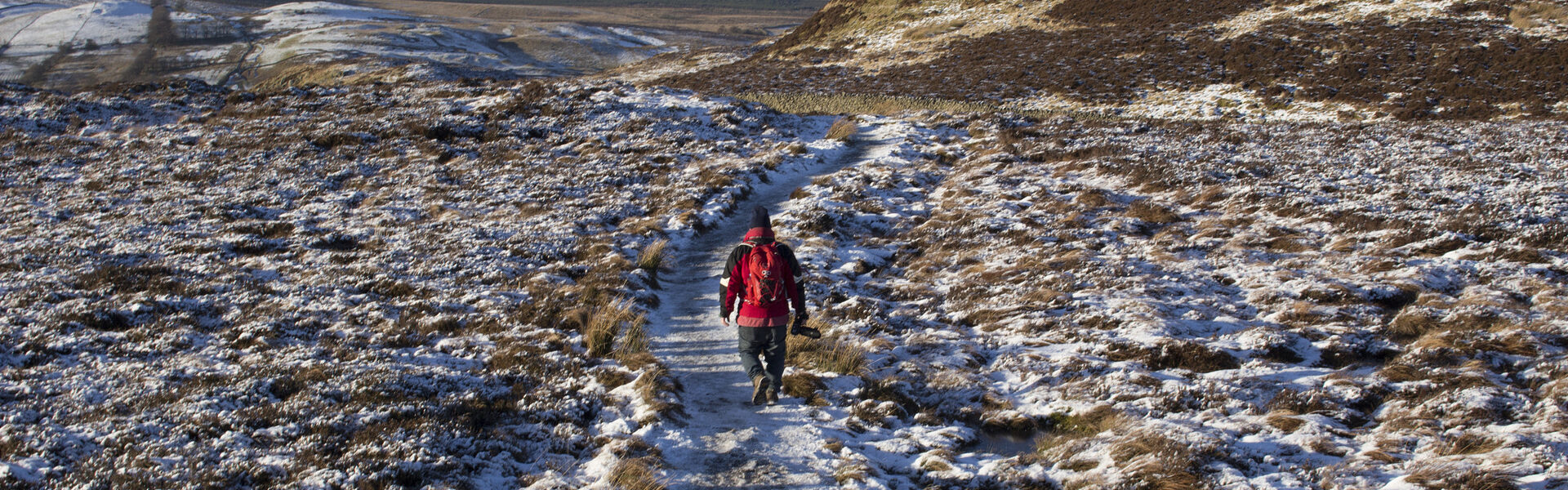
If anxiety is just rising or you feel panic approaching, a short walk can act as "first aid". You do not need to run or push yourself — on the contrary, the goal is a calm, even pace. Focus on sensations: how your feet meet the ground, how your arms move, what you see around you. This simple grounding technique brings you back to the present moment and stops anxiety from spinning up further.
As you walk, try to sync your breath with your steps: breathe in for four steps, out for six. A longer exhale gently switches on the parasympathetic system and slows the pulse. If six steps feels like too much, start with in for three and out for four. Breathe through your nose, drop your shoulders, do not force it — let the rhythm stay natural and calm.
What to Do in Different Situations
Anxiety comes in many forms — from a mild background unease to an acute panic surge. And a walk looks a little different in each case. Below is a simple guide to help you sense how to move depending on your state. It is not a strict prescription but a starting point: listen to yourself and choose what feels manageable right now.
| State | What to do |
|---|---|
| Mild background unease | A calm 10–20 minute walk, in a green spot if possible |
| Anxiety is rising | Slow pace, breathe in steps, attention on body sensations |
| Panic is approaching | Don't fight yourself: walk slowly, name out loud what you see |
| Severe chest pain, can't breathe, fainting | This is not a time to walk — seek emergency help |
Anxiety says "run", and a calm step answers: "we are safe, we can go slowly".
How to Start and Build the Habit
For walking to help not only in the acute moment but also to lower baseline anxiety, regularity matters. Research shows that people who move every day tend to have a lower baseline level of anxiety over time. But there is no need to force it — big goals can be frightening in themselves. A gentle start with something small works far more reliably: easy to fit into an ordinary day, and never turning into yet another source of pressure.
- Week 1: a short 5–10 minute walk at an easy pace, at a convenient time of day.
- Week 2: add a second short outing or extend the walk to 15 minutes.
- Week 3: where you can, choose quiet green routes — a park, a yard, a riverside.
- Week 4: aim for 20–30 minutes a day, but without rigid targets or self-criticism.
- Ongoing: in an anxious moment, head out for a short walk as "first aid".
- Walking activates the calming parasympathetic system and lowers stress hormones.
- Rhythmic steps and a longer exhale help ease anxiety in the moment.
- Regular walks lower baseline anxiety over time.
- Start with 5–10 minutes, choose quiet green routes, don't push yourself.
- For severe or persistent anxiety and panic attacks, be sure to see a professional.
Frequently Asked Questions
Can walking replace treatment for an anxiety disorder?
No. Walking is a complement, not a replacement. For severe or persistent anxiety or frequent panic attacks, it is important to see a doctor or therapist. Walks pair well with therapy and treatment, but do not cancel them out.
What pace should I choose when anxious?
Calm and even, no bursts. The goal is not to "go all out" but to gently switch the nervous system. A handy guide is a pace at which you can breathe and talk calmly. If panic is approaching, walk even more slowly.
How much do I need to walk to feel an effect?
Often 10–20 minutes is enough to feel relief in the moment. To lower baseline anxiety, regularity helps — several walks a week over a span of weeks. The effect builds up gradually.
When is anxiety a reason to seek help urgently?
If anxiety disrupts your life, lasts for weeks, comes with thoughts of harming yourself or with frequent panic attacks — that is a reason to see a professional. And severe chest pain and shortness of breath require emergency medical care.
Sources
- WHO. Physical activity fact sheet. WHO: physical activity
- WHO. Guidelines on physical activity (Bull FC et al., Br J Sports Med, 2020). WHO 2020 guidelines
- Mayo Clinic. "Depression and anxiety: Exercise eases symptoms". Mayo Clinic: exercise and anxiety
- Cleveland Clinic. Health library. Cleveland Clinic
- PubMed. Topic search "exercise anxiety". PubMed: exercise anxiety
Count your steps with Qozgal
A free app that counts your steps, keeps your streak and motivates you to walk every day.