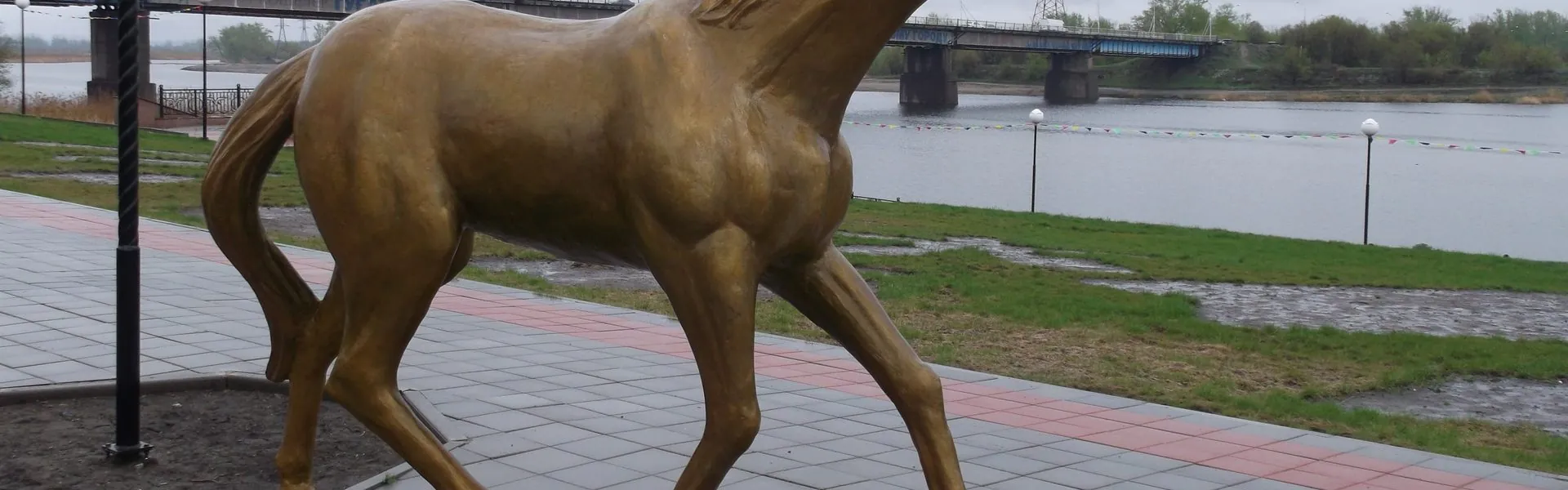
Winter in Kostanay: don’t be heroic, stay consistent
In Kostanay in winter, the main enemies of a walk are not just frost, but the combination of ice + wind + open spaces. The average January temperature is about −14.9°C, and according to climate data, the windiest month is February: average wind speed is about 5.3 m/s. So the very same kilometer can feel fine in Central Park and almost like a test on the open Tobol embankment.
The goal of this guide is not to “train through it.” Your goal is simpler: keep everyday walking, your streak, and the habit of leaving the house—but not pay for it with a fall. If you want summer and shoulder-season options, keep this separate route guide to walks in Kostanay; here, we’re focusing specifically on the winter version.
- On a windy day, choose tree-lined parks, not the open embankment.
- After a thaw followed by a night frost, cut your route in half: black ice is worse than loose snow.
- For a streak, 10–20 safe minutes are enough—not a mandatory 10,000 steps.
- Shoes matter more than clothes: you need a grippy winter sole, and for icy days, removable anti-slip grips.
- The best winter window for a walk is the daylight part of the day, most often around 12:00–15:00.
The going-out rule: wind first, then route
Before you go out, don’t look only at the temperature. For Kostanay, first assess the wind, precipitation, and yesterday’s thaw. If it was around zero in the morning and dropped below freezing by evening, the sidewalk may look dry but turn glassy. If the wind is above 8 m/s or gusty, the open embankment almost always loses to the parks.
| Condition | Where to go | What to cut |
|---|---|---|
| Calm, −5…−15°C | Tobol embankment or a park | Walk your usual short route |
| Strong wind | Victory Park, Central Park | Open areas near the water |
| Thaw → frost | Only cleared alleys | Stairs, descents, small bridges |
| Blizzard or fresh snow | Short loop near home | New unfamiliar routes |
| Below −25°C with wind | Home, mall, short errands on foot | The long walk completely |
A streak is about resilience, not heroics. On a bad day, count 10 minutes of safe walking near home or indoors. That way you protect the habit we wrote about in the article on the psychology of streaks, without turning it into a risk.
Routes for 20–45 minutes: real spots
In winter, estimate steps roughly: because of shorter steps, snow, and a cautious pace, one kilometer can give you more steps than in summer. For planning in this guide, it’s convenient to use a range of 1300–1700 steps per 1 km. If you want to convert steps to distance more accurately, this breakdown of how many kilometers are in 10,000 steps will help.
- Central Park of Culture and Recreation: 1.2–2 km, about 1800–3200 steps. Start from TSUM or Central Square; almost any central bus will work. Good in the wind: the trees partially cut the airflow.
- Victory Park: 1.5–2 km, about 2300–3400 steps. A convenient point is the “Victory Park” stop, on city routes through the center. Plus: mature trees and calm alleys; minus: treat the memorial area quietly and respectfully.
- The square near the regional akimat and a section of Al-Farabi: 1–1.5 km, about 1500–2500 steps. This is the “left the office and came back” option when you need a short daylight walk.
- Childhood Park + a cleared section toward the embankment: 1.5–2.5 km, about 2500–4200 steps. Take buses that go toward the Tobol to the 5th microdistrict area; in winter, don’t go far if the wind is in your face.
- Uly Dala Park / KZHBI area: 2–3 km, about 3000–5000 steps. The landmark is Gashek Street and the embankment near KZHBI. There is walking infrastructure there, but check open sections for wind and clearing.
- Tobol embankment out and back: the summer option is about 7 km, up to 10,000 steps. In winter, make a shortened version of 1.5–3 km, especially after snowfall.
It’s better to walk two short loops—one during the day and one in the evening for an errand—than one big route on ice. For your body and your habit, consistency often matters more than a pretty distance.
The Tobol embankment: when yes, when no
The embankment is one of Kostanay’s strongest routes: flat, beautiful, with lights, benches, and a long line along the water. But in winter, it feels colder by the water, and the wind amplifies risk: you hunch your shoulders, hurry, watch your footing worse, and more often place your foot “on autopilot.”
- Go to the embankment only in daylight or on a well-lit, cleared section.
- Start with 10–15 minutes in one direction. If the wind is in your face or the ground is glossy, turn back without guilt.
- Don’t go down to the water itself and don’t test the ice on the river. For steps, you need a sidewalk, not an adventure.
- Avoid stairs, slopes, tiles near bridges, and places where snow has been packed until it shines.
- If you want 7000–10,000 steps, build them as a combo: park + errands on foot + a short evening loop.
A good winter walk is one after which you want to go out again tomorrow. If a route makes you tense every second, that’s not discipline—it’s a poor choice of surface.
Shoes: the sole matters more than the brand
On ice, the word “winter” on the box won’t save you. Look at the sole: deep tread, soft rubber for frost, a wide contact area, a stable heel counter, and no high heel. On icy days, removable anti-slip grips are useful, but you need to take them off indoors: on tile and metal, they can do the opposite—slide or catch.
- Check the sole at home: if it is smooth or becomes “plastic-like” in the cold, those shoes are not for icy conditions.
- Choose a boot where your foot doesn’t move around. Poor fixation worsens balance.
- Carry thin removable spikes or grips in your backpack if you’re walking through courtyards and bus stops.
- Don’t go out onto ice with bags in both hands: one hand should be free for balance.
- Assess old winter shoes honestly: worn-down tread means less grip, even if the boots are warm.
Removable spikes are good on ice and packed snow, but they can be dangerous on smooth tile, on the bus, in a mall, and on metal steps. Once you go indoors, take them off—or walk especially slowly.
How to walk on ice: small steps and free hands
Technique changes on a slippery surface. Don’t push off with a long stride, don’t speed up before a crossing, and don’t look at your phone. Place your foot almost under your body, make your step shorter than usual, and keep your knees soft. The pace may feel funny—that’s okay. In winter, you’re not passing a fitness test; you’re getting through a section safely.
- Walk with short steps, without a sharp push-off from the toe.
- Lean your body slightly forward, but don’t stare at the ground the whole time—scan 2–3 meters ahead of you.
- At a crossing, don’t launch forward as soon as it turns green: first assess the curb edge, where there is often ice.
- Take your hands out of your pockets. If you’re carrying a bag, a backpack or one light bag at your side is better.
- On stairs, hold the handrail, even if it’s “only three steps.”
- If you feel yourself starting to slip, don’t make a wide saving lunge. It’s better to tuck in, bend your knees, and reduce the height of the fall.
A streak without risk: a plan for bad days
The most common winter mistake is thinking “either 10,000 steps or the day is ruined.” No. In bad weather, your job is to keep the rhythm. If the sidewalks are icy, you can top up your steps in a mall, in an apartment entryway on a flat landing, at home with an audiobook, or on a treadmill. We compared street and indoor options separately in the article about indoor and outdoor walking.
| Day | Plan | Goal |
|---|---|---|
| Green | Park or embankment for 30–45 minutes | 5000–8000 steps |
| Yellow | Park for 20–30 minutes + errands on foot | 3000–6000 steps |
| Red | 10–15 minutes near home + indoors | streak without risk |
| Black | Indoors only or rest | not falling is also a plan |
Where exactly is better in Kostanay in winter
Choosing a place in winter means choosing the surface and the wind. Open views by the Tobol are great on a calm day, but in gusty weather it’s better to go where there are trees, buildings, and short escape routes to a bus stop, café, or home.
| Location | Winter plus | Be careful | How to get there |
|---|---|---|---|
| Central Park | trees, center, short loops | tiles and entrance areas | TSUM, Central Square |
| Victory Park | quieter, many alleys | respect the memorial area | “Victory Park” stop |
| Square near the akimat | quick lunchtime loop | little wind protection | Al-Farabi, TSUM |
| Childhood Park | easy to link with the Tobol | young trees, open area | 5th microdistrict |
| Tobol embankment | flat and beautiful | wind, slopes, ice by the water | buses to the bridge |
| Uly Dala / KZHBI | long recreation zone | check clearing | Gashek St., KZHBI |
After snowfall and thaw: route-section checklist
The trickiest day is not always the day of the blizzard. Often the next one is worse: the snow has been packed down, the sun has softened it, and the night has frozen it. You get a thin crust that is only visible from an angle. Before you “get into pace,” walk the first 100–200 meters as a test.
- Watch for shine: a glossy sidewalk is almost always more dangerous than matte snow.
- Check the edges of bus stops and crossings—people brake there and compact the ice.
- Avoid car ruts in courtyards: it’s easy to twist your foot there.
- On tiles near entrances, slow down, even if spikes help outside.
- Don’t run across the road over a snowbank: there may be an icy curb underneath.
- If a section makes you shuffle and tense your shoulders, turn back.
- After a fall or a near fall, don’t “push through the target”—go home and assess how you feel.
FAQ: questions
Can I walk along the Tobol embankment every day in winter?
Yes, if the section is cleared, it’s light out, and the wind is moderate. But for a daily streak, it’s better to alternate: calm day—Tobol, windy day—Central Park or Victory Park.
How many steps should I set as a goal in icy conditions?
Set a range, not a single number. On a normal day—5000–8000, on a difficult day—2000–4000, on a dangerous day—10 minutes of safe walking indoors. In winter, the goal is not a record, but continuity.
Do I need walking poles in winter?
If you feel steadier with them, yes, especially on snow. But on bare ice, regular poles without winter tips can slide. For technique and choosing a pair, see the guide to Nordic walking poles.
What should I do if I’m afraid of falling after last winter?
Start with the most predictable places: a short loop in Central Park, daytime, shoes with good grip, and no bags in your hands. If the fear is strong or you’ve already had falls, it’s useful to add balance exercises; more details are in the article about walking, balance, and falls.
When is it better not to go out at all?
If there is strong wind, a blizzard, freezing rain, poor visibility, or you feel weak. One day at home does not break the habit. A fall breaks much more.
Bottom line: safe steps are still steps
Winter Kostanay does not cancel walking, but it does demand respect for the surface and the wind. Choose a daylight window, keep a short backup route, wear shoes with real grip, and don’t argue with ice. If today you managed just 15 minutes without falling, that’s a good day for your streak.
Sources
- Hsu J., Shaw R., Novak A. et al. Slip resistance of winter footwear on snow and ice measured using maximum achievable incline. Ergonomics, 2016. DOI: 10.1080/00140139.2015.1084051
- Bonander C., Holmberg R. Estimating the effects of a studded footwear subsidy program on pedestrian falls among older adults in Gothenburg, Sweden. Accident Analysis & Prevention, 2019. DOI: 10.1016/j.aap.2019.105282
- Björnstig U., Björnstig J., Dahlgren A. Slipping on ice and snow — elderly women and young men are typical victims. Accident Analysis & Prevention, 1997. DOI: 10.1016/S0001-4575(96)00074-7
- Aspvik N. P., Viken H., Ingebrigtsen J. E. et al. Do weather changes influence physical activity level among older adults? The Generation 100 study. PLOS ONE, 2018. DOI: 10.1371/journal.pone.0199463
- Kostanay climate: average monthly temperatures and historical extremes according to Pogoda i Klimat. pogodaiklimat.ru
- Kostanay Climate and Average Weather Year Round: average wind and seasonality indicators from WeatherSpark. WeatherSpark
- For the 25th anniversary of the state symbols of the Republic of Kazakhstan, Kostanay residents received a new embankment: data on the 25th Anniversary of Independence Park and the 2-kilometer roller-ski track. Костанайские новости
- History under the open sky: how Victory Park in Kostanay is arranged: a description of the memorial complex and park features. Kazinform
- Kostanay: top attractions, what to see, what to do, and where to go: information about Central Park, the embankment, Uly Dala Park, and Victory Park. Aviasales KZ

Count your steps with Qozgal
A free app that counts your steps, keeps your streak and motivates you to walk every day.