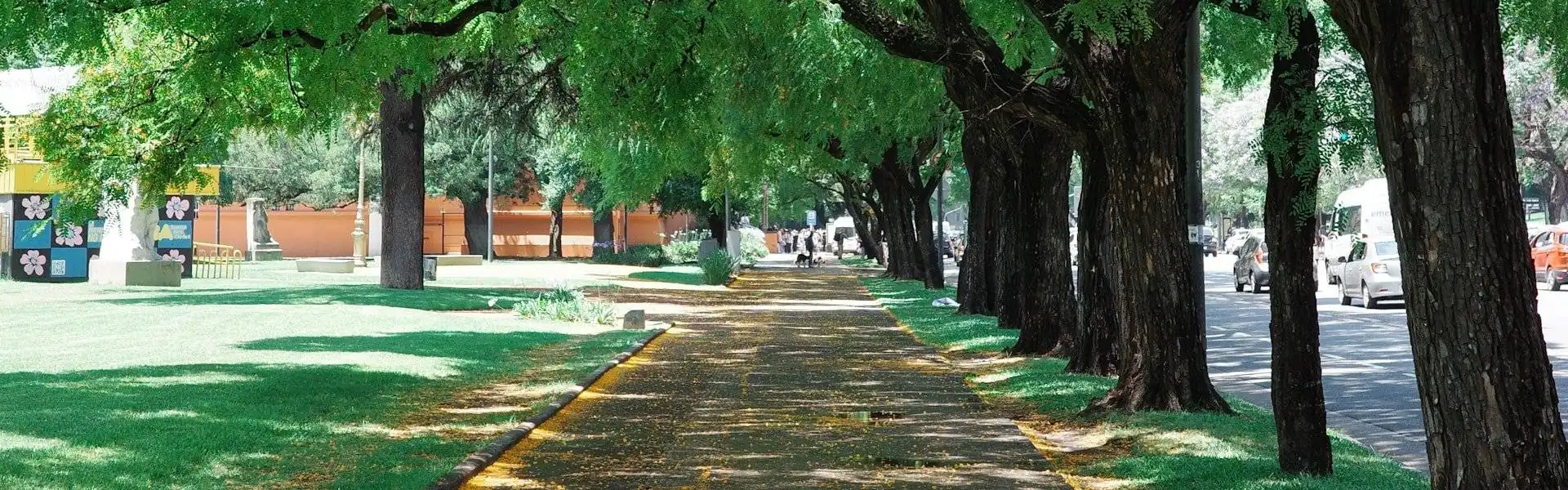
Why walking fits when you want connection but feel scared
Loneliness is not just “too few people around.” Sometimes there are plenty of contacts, but no feeling of connection. And the opposite can also be true: one short, calm conversation can bring more warmth than a noisy two-hour meetup. Walking helps because it does not require a perfect mood. You do not have to be interesting, energetic, or talkative. You just walk.
There is less social pressure on a walk: you look ahead, not at each other; the conversation can come in pieces; silence does not feel awkward because there is a shared rhythm, the road, traffic lights, trees, a dog, takeaway coffee. For many people, this is easier than “let’s meet up and talk.”
The systematic review by Hanson and Jones included 42 studies with 1843 participants. Walking groups were linked with improvements in blood pressure, physical fitness, and depressive symptoms; the authors also noted good tolerability and no noticeable serious side effects. For our topic, the key point is not that “walking cures everything,” but that the group format turned out to be a practical and fairly safe way to regularly leave the house.
DOI: 10.1136/bjsports-2014-094157The goal of a social walk is not to become the life of the party. The goal is to give yourself a small, repeatable point of contact that does not require half a day of recovery afterward.
First, be honest: a walk does not cure loneliness by itself
If you simply walk near people but feel unwanted, loneliness may remain. So in this article, we are not talking about steps as magic, but about a social habit: a short invitation, a predictable route, a clear pace, and a repeat the following week. Contact becomes easier not because you suddenly turned into an extrovert, but because the meetup has a simple shape.
Shvedko and colleagues analyzed randomized studies of physical activity in older adults. An important nuance: physical activity did not show a clear effect on loneliness, social support, or network size, but it did produce a small significant effect on social functioning. This is a useful sober takeaway: a walk can help you enter contact more easily, but the contact itself needs to be designed.
DOI: 10.1016/j.psychsport.2017.10.003A gentle goal For the first two weeks, do not set the goal of “stopping feeling lonely.” Set a simpler goal: two short walks with real human contact. That is enough for the habit to take shape.
Three formats: one person, a small group, and parallel walking
Choose the format not by what is “right,” but by your energy level. If you have little energy, choose one reliable person. If it feels scary to be the center of attention, choose a small group where the conversation is shared. If talking feels very awkward, try parallel walking: walk side by side, sometimes in silence, sometimes commenting on the road.
| Format | When it fits | How to start |
|---|---|---|
| One person | You need safety and predictability | 15–25 minutes on a familiar loop |
| Small group 3–5 | You do not want to carry the whole conversation | A shared starting point and a simple route |
| Parallel walking | It is hard to make eye contact or talk for long | Walk side by side and allow pauses |
| Route with an errand | You need a natural reason | Coffee, pharmacy, park, market, dog |
Sandstrom and Dunn showed that subjective well-being is connected not only with close relationships, but also with interactions with “weak ties” — acquaintances, neighbors, baristas, and colleagues. The practical takeaway: you do not have to text your closest person right away. Sometimes it is easier to start with someone where there is already light, uncomplicated contact.
DOI: 10.1177/0146167214529799Who to text if you have not invited anyone anywhere in a long time
Do not start with a list of “who I matter to.” That is a heavy filter, and it quickly leads into self-criticism. Start with a list of people with whom things are logistically simple: someone who lives nearby, already walks a dog, goes out for lunch, walks to the metro, sometimes messages in a chat, or likes takeaway coffee.
- A colleague you can walk with for 15 minutes after work, without a big confession.
- A neighbor or someone from your area: “I’m doing a short loop this evening, want to join?”
- An old friend you do not have to explain your whole life to from scratch.
- Someone who is also rebuilding a walking routine after a break.
- A member of a local chat, courtyard group, book club, or the Qozgal community.
- A relative with whom it is easier to talk while walking than at the table.
Three messages that do not pressure people
- “Hi. I want to bring back short walks. Would you walk with me for 20 minutes on Wednesday? No sporty pace.”
- “I’m doing a small loop after work. If you need some air too, join me — we can just walk and chat about anything.”
- “I have a two-week experiment: two walks a week with a real live person. Want to be my walking partner for one short loop?”
Do not ask for forever The phrase “let’s walk every week from now on” can sound heavy. It is better to suggest one specific walk. You can discuss repeating it at the end if it felt okay for both of you.
How to choose a route that helps instead of complicating things
The first route should be almost boring: familiar, short, without complicated crossings, with a clear start and finish point. Do not begin with a park on the other side of town or a “beautiful two-hour route.” The fewer decisions, the higher the chance you will actually go out.
A good starting setup: a 15–25-minute loop, a bench or shop along the way, the option to shorten the distance, and decent lighting. If you want to count steps, count them, but do not turn the meetup into an exam for 10,000 steps. The social goal matters more here than the mileage.
Marselle, Irvine, and Warber studied participants in group walks in nature. These walks were associated with lower levels of depression, perceived stress, and negative affect, as well as higher positive affect and mental well-being. This does not mean you need a perfect forest: even a small park or quiet street can make the conversation feel softer.
DOI: 10.1089/eco.2014.0027How to agree on pace and conversation
The most common mistake is silently enduring someone else’s pace. One person speeds up, the other gets out of breath, both pretend everything is fine, and neither wants to repeat it. Before you start, say it plainly: “I want to walk at a pace where we can speak in short sentences.” This is close to the simple talk test: if you cannot say a sentence, the pace is too high for a social walk.
- Name your pace before you start: “I’m slow today,” “this is a recovery walk for me,” “no hills.”
- Agree on the right to pause: water, a bench, a photo, a traffic light — none of it is a failure.
- Allow silence: “If we go quiet sometimes, that’s okay.”
- Do not turn the walk into a therapeutic interrogation: one deep question is better than ten follow-ups.
- At the end, suggest a small repeat: “Want to do the same loop next week?”
The first 10 minutes rule Make a deal with yourself: you only have to go out for 10 minutes. If it feels hard after that, you can turn back. Often, this permission is exactly what lowers the resistance before leaving home.
Parallel walking: when not speaking face to face feels easier
Some people find it hard to maintain direct eye contact, especially when the topic is personal. There is no weakness in that. Experimental work shows that a direct gaze can increase physiological arousal. So walking side by side is not “avoiding closeness”; sometimes it is a more caring way to move toward it.
Helminen, Kaasinen, and Hietanen studied responses to the gaze direction of a live person. Direct gaze caused a stronger skin conductance response compared with averted gaze or closed eyes. This is not a walking study, but it helps explain why shoulder-to-shoulder conversation feels less tense for some people.
DOI: 10.1016/j.biopsycho.2011.07.002If it is easier for you to talk when your eyes are on the road, use that. Closeness does not have to begin with direct eye contact and a big confession.
A plan for the first 4 weeks
Do not begin with a friendship marathon. A social habit is built on repetition, not heroics. Let the first four weeks be almost like a training protocol: short, clear, and without judging yourself as “normal” or “not normal.”
- Week 1: one walk with the safest person. 15–20 minutes, a familiar loop, no goal to “talk about everything.”
- Week 2: repeat with the same person or the same route. Stability matters more than novelty.
- Week 3: add a weak tie: a neighbor, colleague, acquaintance from a chat, or someone with a dog. One short invitation is enough.
- Week 4: try a small group of 3–5 people or a walk with an errand: coffee, park, market, the way home.
- After each walk: write down not the steps, but the fact of contact: “went out,” “made it there,” “it was easier/harder than expected.”
Jones and colleagues conducted a pilot randomized study in older adults with hearing loss: the program combined group movement, conversation, health education, and audiological rehabilitation. 88% of participants completed the study. This is a good example: a social walk can be especially useful when it takes real barriers to communication into account instead of pretending they do not exist.
DOI: 10.1136/bmjopen-2018-026169If you feel anxious, ashamed, or like you are imposing
Loneliness often throws up thoughts like “they are bored with me,” “I am weird,” or “if they said no, it means I am not wanted.” Do not spend the whole evening arguing with them. Make the action smaller instead: not “invite someone to meet,” but “send one message”; not “become closer,” but “walk one loop.”
Masi, Chen, Hawkley, and Cacioppo compared approaches to reducing loneliness: developing social skills, strengthening support, creating more opportunities for contact, and working with social thoughts. In randomized studies, interventions that helped change painful interpretations of communication looked especially promising. So it is important not only to walk, but also to notice what conclusions you draw after a refusal, a pause, or silence.
DOI: 10.1177/1088868310377394When you need more than a walk If loneliness comes with constant hopelessness, loss of sleep, panic attacks, thoughts of self-harm, or a sense that you cannot cope, walks can be supportive, but they are not a replacement for help. Contact a doctor, psychologist, or your local emergency service.
How not to quit after the first week
After the first successful walk, it is tempting to sharply increase the plan: more people, a longer route, more frequent meetups. Do not rush. A habit breaks not because of small steps, but because of inflated expectations. It is better to repeat one modest format for three weeks than to arrange one perfect walk and disappear.
- Put the repeat in your calendar right after the walk, while the contact still feels warm.
- If you cancel, suggest a new date in the same message.
- Keep a backup short route for bad weather and low moods.
- Do not judge the walk only by your mood right after it: sometimes relief comes later.
- Use the streak principle, but without self-punishment: more on gentle streaks in the article about the psychology of streaks.
- Walking lowers the pressure of socializing: you can look ahead, be quiet, and not maintain a perfect conversation.
- Loneliness eases not through kilometers, but through repeated real human contact.
- Start with one person and a short 15–25-minute route.
- A small group helps if it is hard for you to be the main conversation partner.
- Parallel walking fits when direct eye contact feels too tense.
- If someone says no, it is not a diagnosis of the relationship: just suggest another day or ask someone else.
FAQ: common questions about social walks
How many times a week should I walk with someone for it to work?
Start with 1–2 times a week. For a social habit, predictability matters more than frequency. If you still have energy after walks, you can add a third one, but do not turn it into a mandatory exam.
What if no one replies or everyone is busy?
Narrow the request: a specific day, a short time, an easy route. And widen the circle: weak ties count too — a neighbor, colleague, or someone from a local chat. A refusal usually says more about someone’s schedule than about your worth.
If we walk at different speeds, who should adjust?
For a social walk, the pace is set by the person for whom it is harder. You can agree that the faster person does extra small loops or waits at traffic lights, but the group does not turn the walk into a race.
Can we just walk side by side and be silent?
Yes. That is parallel walking. Sometimes the body first needs to get used to the safe presence of another person, and only then does the desire to talk appear.
What if I felt sadder after the walk?
That happens: contact can highlight tiredness or a lack of closeness. Write down exactly what felt hard: the pace, the person, the topic, the route length. Next time, reduce the load. If the sadness is persistent and deep, bring in professional support.
Sources
- Hanson S., Jones A. Is there evidence that walking groups have health benefits? A systematic review and meta-analysis. British Journal of Sports Medicine, 2015. DOI
- Shvedko A., Whittaker A. C., Thompson J. L., Greig C. A. Physical activity interventions for treatment of social isolation, loneliness or low social support in older adults. Psychology of Sport and Exercise, 2018. DOI
- Jones C. A. et al. Walk, Talk and Listen: a pilot randomised controlled trial targeting functional fitness and loneliness in older adults with hearing loss. BMJ Open, 2019. DOI
- Sandstrom G. M., Dunn E. W. Social Interactions and Well-Being: The Surprising Power of Weak Ties. Personality and Social Psychology Bulletin, 2014. DOI
- Masi C. M., Chen H.-Y., Hawkley L. C., Cacioppo J. T. A Meta-Analysis of Interventions to Reduce Loneliness. Personality and Social Psychology Review, 2011. DOI
- Hoang P. et al. Interventions Associated With Reduced Loneliness and Social Isolation in Older Adults: A Systematic Review and Meta-analysis. JAMA Network Open, 2022. DOI
- Holt-Lunstad J., Smith T. B., Layton J. B. Social Relationships and Mortality Risk: A Meta-analytic Review. PLOS Medicine, 2010. DOI
- Marselle M. R., Irvine K. N., Warber S. L. Examining Group Walks in Nature and Multiple Aspects of Well-Being: A Large-Scale Study. Ecopsychology, 2014. DOI
- Helminen T. M., Kaasinen S. M., Hietanen J. K. Eye contact and arousal: The effects of stimulus duration. Biological Psychology, 2011. DOI
