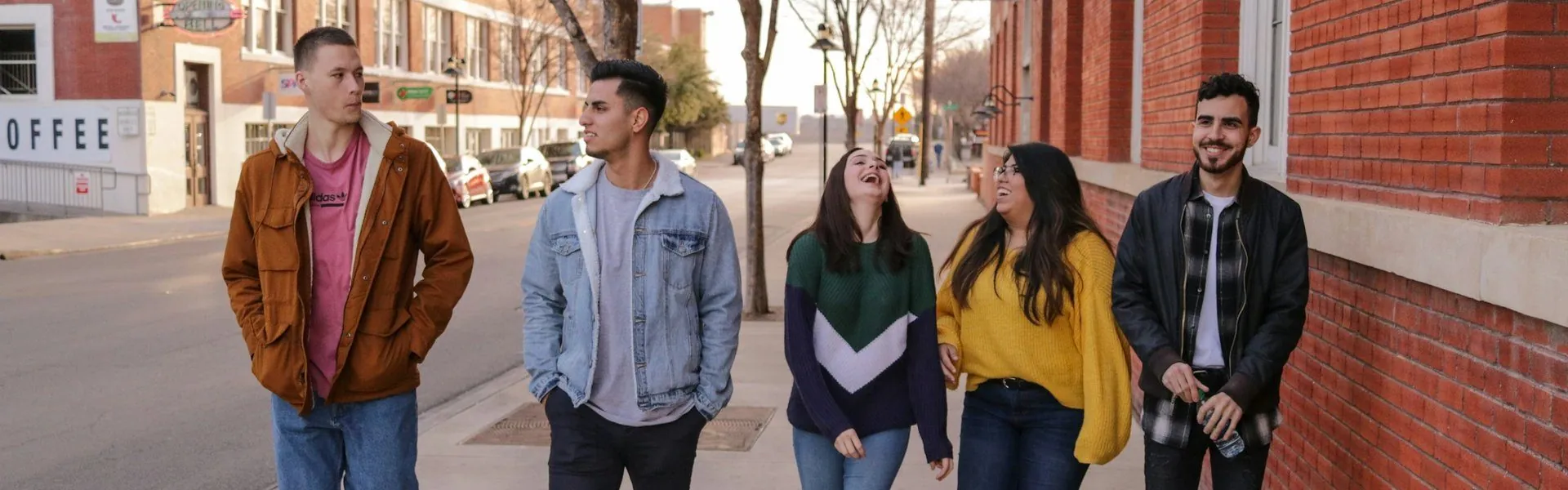
A pedometer is a tool. Qozgal is a community
Every step-counting app counts the same thing — your movement. The difference between them isn't in the accuracy of the count, but in what happens around those numbers. Alone, 10,000 steps turns into a boring check-mark. Inside a community, it becomes a shared ritual that connects people across Almaty, Astana, Tashkent, Bishkek, Dushanbe and dozens of other cities
Qozgal isn't "just another pedometer." It's a place where tens of thousands of people from Kazakhstan, Uzbekistan, Kyrgyzstan and Tajikistan walk toward the same goal and meet each other through shared raffles, referrals, Telegram and Instagram. The app's purpose isn't to sell you a subscription — it's to help make movement a normal part of life
One shared ritual — 10,000 steps a day
The number 10,000 isn't magic, and we've written about that in a separate piece. But as a common reference point, it works perfectly: easy to remember, easy to check, the same for everyone. When thousands of people see the same green "✓ goal reached" mark on their screens every evening, an invisible feeling appears — you're not alone
This isn't a marathon or a competition for "the best." It's just a bar that each person sets for themselves, but alongside others. That shared reference point is exactly what turns an individual habit into a collective movement
Raffles: we walk together, we win together
Every month, Qozgal runs live prize raffles on Instagram. The only condition: walk 10,000 steps on at least half the days of the month (roughly 15 of 30)
No subscriptions, no paid tickets. Just move enough — and you're automatically in the draw. Winners are picked randomly by an algorithm from everyone who met the condition. Prizes range from smart watches to home appliances
The raffle isn't a "bait" — it's an excuse. An excuse not to skip Monday, because your friend says "let's at least both finish this month together." An excuse to walk for 20 minutes in the evening when you're tired. And most importantly, an excuse to know that thousands of other people across the region are doing the same thing tonight
Freezes and referrals — you don't walk alone
Streaks in Qozgal work like in Duolingo: every day you hit your goal adds a day to the streak. Miss one — the streak resets. But life interrupts sometimes — illness, travel, emergencies. That's why there are freezes: skip a day without losing your streak
You get 1 free freeze at signup. +3 freezes go to every person who brings a friend in via their 5-character promo code. This isn't marketing for marketing's sake — it's a way of saying "we want the people closest to you to be walking next to you"
When you bring in a friend, you become a small pair inside a bigger community. You share the same goal, the same daily mark, and you automatically become teammates — without ever having to say "let's train together"
One person quits easily. Two people whose phones light up with the same daily mark — much less often
Telegram and Instagram — where the community lives
The app itself is numbers and charts. The conversations, memes, stories, questions, raffle news and the rare winner photos live in two places:
- Instagram @qozgal.app — raffle announcements, live winner drawings, glimpses of team life, walking and health tips
- Telegram @kozgal_bot — news, answers to questions, discussions. The liveliest channel for talking with the team
This isn't "social media for the sake of an SMM plan." It's a place where you can ask "why aren't my steps syncing," get an answer from an actual team member, and read the story of someone in Shymkent who just reached their first 30-day streak
Why "together" works better than "alone"
Social psychology has known this for a long time. When you move alongside others — even virtually — mechanisms switch on that don't exist when you're alone:
- The Köhler effect (1926, rediscovered in the 2000s). A person in a group performs better than the same person alone — even if the "group" isn't a team, just people with a similar task
- Social accountability. If someone next to you knows your goal, the chance you'll hit it goes up. Not from pressure, but from the internal "continuity of the promise"
- Habit normalization. When 10,000 steps is the normal thing around you — not a feat — your brain rewires. What seemed hard becomes "what everyone does"
How to join
No rituals — it's all simple:
- Download Qozgal from the App Store or Google Play. Free, no subscriptions, no ads
- Sign in with Apple ID (iOS) or Google (Android)
- Allow HealthKit / Health Connect — the app counts steps in the background without keeping the screen on
- Enter your name, country and city — needed for regional leaderboards and raffles
- Follow Instagram and Telegram — that's where the community is most alive
- Get your promo code in your profile and invite a friend — you both get bonuses
After that — just move. Not "for the app," but for yourself. The community is the bonus that appears on its own when a few thousand people are doing the same thing in the morning, at noon, and in the evening
Who it's especially good for
- People who tried to exercise alone and quit in week three
- People who need a light external excuse — not a marathon, not a gym, not a "12-week program"
- People who want to fit health into normal life, not "block time for training"
- People whose friends or family are lazy — bring them in with a promo code, start together
- People who care that the app comes from Kazakhstan and is built for the region — no foreign holidays, no foreign cultural metrics
The bottom line
Qozgal isn't a "stats" app. It's a community that:
- Counts steps automatically — no battery drain, no subscriptions
- Runs monthly prize raffles among everyone who moves
- Gives you tools to hold your streak — freezes, referrals, achievements
- Lives on Instagram and Telegram — where you see people, not numbers
- Works in Kazakh, Russian, English, Uzbek, Kyrgyz, Tajik and Uyghur
One person walks easier when they know others are walking too. And nobody gives up on you for one missed day. If you want — join. If you're already with us — tell a friend. They have two legs too
Sources
- Wing RR, Jeffery RW. "Benefits of recruiting participants with friends and increasing social support for weight loss and maintenance." Journal of Consulting and Clinical Psychology, 1999. → APA
- Feltz DL, Kerr NL, Irwin BC. "Buddy up: the Köhler effect applied to health games." Journal of Sport & Exercise Psychology, 2012. → Human Kinetics
- Bandura A. "Social cognitive theory of self-regulation." Organizational Behavior and Human Decision Processes, 1991. → ScienceDirect
Join the community
Download Qozgal free — automatic step counting and entry into monthly raffles