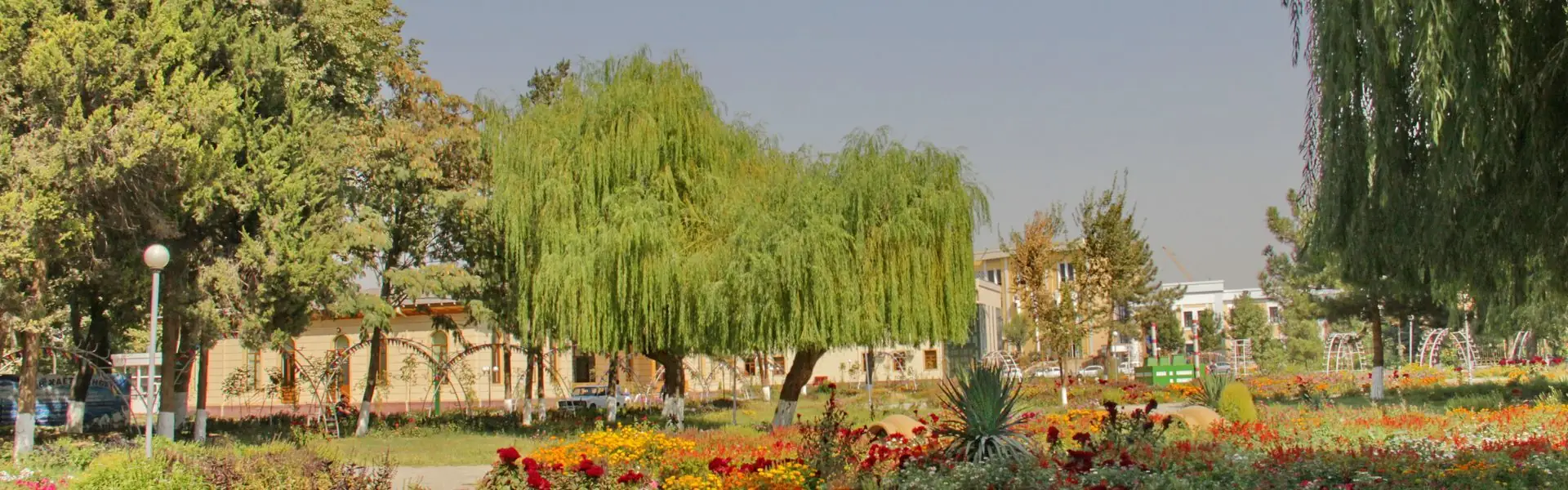
The main idea: in summer, walk smarter, not longer
In Namangan, the peak of summer is July: climate references put the average daytime high at around 30–31 °C, while in direct sun, paving, asphalt, and walls radiate more heat than the forecast suggests. So summer walking here is not built around records, but around three things: time, shade, pace.
If you are used to daily steps, you do not have to drop your streak for the whole summer. The format simply changes: 15–25 minutes in the morning, 20–40 minutes in the evening, short everyday loops near home, and cool indoor spaces during the day. As a guide: 1 km is about 1300–1500 steps, so even two short 1,5 km loops give you around 4000 steps without overheating.
If you feel dizziness, nausea, chills, unusual weakness, confusion, a strong headache, or cramps during a walk, go into shade or indoors right away, cool down, and stop the workout. Do not chase steps through feeling unwell.
When to go out: two safer windows
In summer, it is better to plan a walk in Namangan like a local: before the strong sun or after the city has started to cool down. In July, the sun rises early, so the gentlest window is roughly from 06:00 to 08:00. In the evening, it is more comfortable after 19:00, especially if your route goes through a park, along an aryk, by a fountain, or along an open waterfront with a breeze.
| Time | What to do | Where in Namangan |
|---|---|---|
| 06:00–08:00 | main walk, 3000–6000 steps | Bobur Park, Dustlik, quiet mahallas |
| 08:00–10:30 | short errands on foot, shade only | tree-lined streets, courtyard, market |
| 11:00–17:00 | not a workout: indoors, rest, short transfers | home, mall, work, covered places |
| 19:00–21:30 | second loop, family walk | Bobur, Naryn, Afsonalar vodiysi |
| after 22:00 | only familiar, well-lit places | courtyard loop or nearby park |
- Watch not only the temperature, but also how you feel: if your pulse is higher than usual at the same pace, slow down.
- Do not start a summer walk hungry and dehydrated: a glass of water 20–30 minutes before going out is simple insurance.
- At noon, it is better to add steps indoors: stairs, a corridor, a shopping center, or a post-meal walk at home.
- If your goal is the habit, count the total for the day, not one long outing: 3 short walks are easier to handle than one hot one.
How to collect shade in the city
Shade in Namangan is not a lucky accident; it is a route skill. Before going out, think not “where is it pretty?” but “where will I be walking in 10 minutes when the sun is coming from the side?” A good summer route zigzags: the tree-lined side of the street, a park, a courtyard, an archway, a covered storefront, then trees again. This way you heat up less and do not feel like you are arguing with the weather.
A summer walk in Namangan should feel like calm movement between islands of shade, not like endurance training under the sun.
Ready-made short routes for hot weather
Below are not sports courses, but practical city loops. Distances are approximate: steps depend on height and pace. If you want more seasonal options, save the general guide on where to walk in Namangan, and in summer choose the shadiest sections from it.
| Route | Distance and steps | How to get there | When to go |
|---|---|---|---|
| Bobur Park, main alleys | ~3,5 km · ~5000 steps | Bobur bog'i stop; during the festival season, buses 8, 17, 21, 31, 35, 45 are listed | 06:00–08:00 or after 19:00 |
| Dustlik Park | ~2,5 km · ~4500 steps | shared taxis from the center, look for Dustlik | morning, evening; good for shade |
| Husayn-bek → Otaboy bazaar | ~1,2 km · ~2500 steps | central shared taxis to Husayn-bek or the old bazaar | only early or after dinner |
| Bobur → Dustlik | ~5,5 km · ~8000 steps | start at Bobur Park, finish in the center | split it into two parts in the heat |
| Naryn embankment | ~5 km one way · ~7000 steps | western shared taxis toward Naryn or Kadiriya | in the evening, when there is wind |
| Kamolot bog'i | ~0,8–1,2 km · ~1200–1700 steps | landmark: Park Kamolot, XHXW+9V3 | short loop near home |
Choose a loop where every 7–10 minutes there is shade, a bench, a shop with water, or a point where you can cut back home. In summer, a good route is one that is easy to stop.
Bobur, Dustlik, Kamolot: three weekday scenarios
Bobur Park is the main option when you want a proper walk without navigation. The park is in the center, with long alleys and clear logic: you can do a short lap, sit down, add a side path, and stay close to water or an exit. In the heat, do not start with a full loop: the first 10 minutes are a check-in with how you feel.
- If you live or work closer to the center, make Bobur your “morning base”: 2–3 km before breakfast already covers a noticeable part of your daily target.
- Choose Dustlik on days when you specifically need a canopy of trees, not a landmark. It is a park for a steady pace and calm shade.
- Kamolot bog'i is small: according to mapping park data, about 7,7 acres. It is good not for a record, but for a streak: 10 minutes in the morning, 10 minutes in the evening.
- At the old bazaar and near Husayn-bek, steps add up by themselves, but in summer the early hours, a bottle of water, and not forcing a fast pace in the crowd matter most.
Naryn and Afsonalar vodiysi: evening options
The Naryn embankment is good when you want air and open space. But there is not always dense shade by the water, so it is not a daytime route. Go after 19:00, keep a conversational pace, and decide in advance where you will finish: in summer, 5 km one way is better not turned into a mandatory 10 km out-and-back.
- For Naryn, take extra water: on open sections, you may feel thirsty later than your body has already started losing fluid.
- Walk into the wind in the first half of the route, so the way back is easier.
- Afsonalar vodiysi is not an everyday “training track,” but an evening walk if you are already going to the complex: there are canals, lakes, fountains, attractions, and a water zone.
- In Afsonalar vodiysi, do not chase steps between attractions: crowds, sweet drinks, and heat can easily throw off your pace control.
Pace, water, and clothing: a 40-minute algorithm
In summer, the best pace is the one at which you can speak in phrases without getting breathless. It is the same principle as in the talk test: if conversation breaks into short words, you are walking too fast for the heat. In Namangan in July, slower does not mean worse — it is a way to keep tomorrow’s walk possible.
- 20–30 minutes before going out, drink water, especially if you have had tea, coffee, or salty food beforehand.
- Take the first 10 minutes gently: your body needs to understand how it is handling the heat today.
- Every 10–15 minutes, take 2–3 sips instead of waiting for strong thirst.
- At minute 30–40, decide: continue only if there is shade, water, and you feel okay.
- After the walk, cool down indoors, wash your face and neck, and eat normal food with salt if you sweated a lot.
Light-colored lightweight clothing, a cap or panama hat, sunglasses, comfortable sneakers, and SPF on exposed areas. Save flip-flops for a short courtyard walk: over 4000–7000 steps, they often cause blisters and overload the foot.
How to keep the habit when it is scorching outside
The most common mistake is thinking the habit only counts if you take one long walk. In summer, it is better to think in a “minimum version”: 10 minutes in the morning, 10 minutes after dinner, 5 minutes indoors after lunch. This is not a setback, but a seasonal adjustment. If your goal is 10 000 steps, in the heat you can hold a 6000–8000 range and return to the full target on cooler days; for more on step targets, see the article about 10 000 steps.
- In Namangan in summer, walk in the morning before 08:00 and in the evening after 19:00; leave noon for indoor spaces.
- Choose routes where you can cut back: Bobur, Dustlik, Kamolot, and short loops near home.
- Shade matters more than mileage: the tree-lined side of a street is often better than a beautiful but open square.
- Drink in small portions and do not wait for strong thirst, especially on the Naryn embankment.
- A conversational pace is the best limiter: in the heat, you should be able to speak calmly.
- You can keep the habit with short blocks: steps add up over the day.
Questions and answers
Can I walk in Namangan during the day if I go slowly?
In the hot season, it is better not to plan a walk as a workout from 11:00 to 17:00. If you need to go somewhere, choose shade, a short route, water, and an indoor place for a break. For steps, use the morning, evening, or covered spaces.
How much water should I take for a walk?
For 30–60 minutes in the heat, it is usually convenient to have 0,4–0,8 L of water, but adjust for sweating, duration, and how you feel. If you walk longer than an hour and sweat a lot, add normal food with salt afterward.
Which route is the shadiest for a beginner?
Start with Bobur Park or Dustlik Park: it is easier there to keep a loop, leave early, and find a bench. Do not start the summer with Naryn 5 km one way — it is better saved for the evening and when you feel well.
What if I did not reach my daily step target because of the heat?
Do not try to make up steps at noon. Split the rest: 10 minutes indoors, 10 minutes after dinner, stairs instead of the elevator, a short walk after a meal. A habit is held by regularity, not heroics.
Who should be more careful with summer walking?
If you have heart disease, diabetes, blood pressure issues, pregnancy, older age, recent illness, or medications that affect sweating and blood pressure, agree on your summer volume with a doctor. In the heat, lower intensity first, not last.
Sources
- American College of Sports Medicine. Exertional heat illness during training and competition. Medicine & Science in Sports & Exercise, 2007. DOI: 10.1249/MSS.0b013e31802fa199. DOI
- Sawka M.N. et al. Exercise and fluid replacement. Medicine & Science in Sports & Exercise, 2007. DOI: 10.1249/mss.0b013e31802ca597. DOI
- Coutts A.M. et al. Temperature and human thermal comfort effects of street trees across three contrasting street canyon environments. Theoretical and Applied Climatology, 2016. DOI: 10.1007/s00704-015-1409-y. DOI
- Lorenzo S. et al. Heat acclimation improves exercise performance. Journal of Applied Physiology, 2010. DOI: 10.1152/japplphysiol.00495.2010. DOI
- Paluch A.E. et al. Steps per Day and All-Cause Mortality in Middle-aged Adults. JAMA Network Open, 2021. DOI: 10.1001/jamanetworkopen.2021.24516. DOI
- Weather Atlas. Namangan, Uzbekistan — July weather and climate: reference climate data on temperature, humidity, and precipitation. Weather Atlas
- Weather Spark. Average Weather in July in Namangan, Uzbekistan: data on daylight, sunrise, and sunset. Weather Spark
- Uzbekistan Travel. Afsonalar vodiysi — Valley of Legends: description of the complex, water zone, fountains, canals, and infrastructure. Uzbekistan Travel
- Government portal of the Republic of Uzbekistan. Afsonalar vodiysi Amusement Park: official profile of a tourist site in Namangan. gov.uz
- Pacer. Kamolot bog'i in Namangan: park location and area based on OpenStreetMap data. Pacer
- Qozgal. Where to walk in Namangan: city routes, loop lengths, and landmarks for walks. Qozgal

Count your steps with Qozgal
A free app that counts your steps, keeps your streak and motivates you to walk every day.