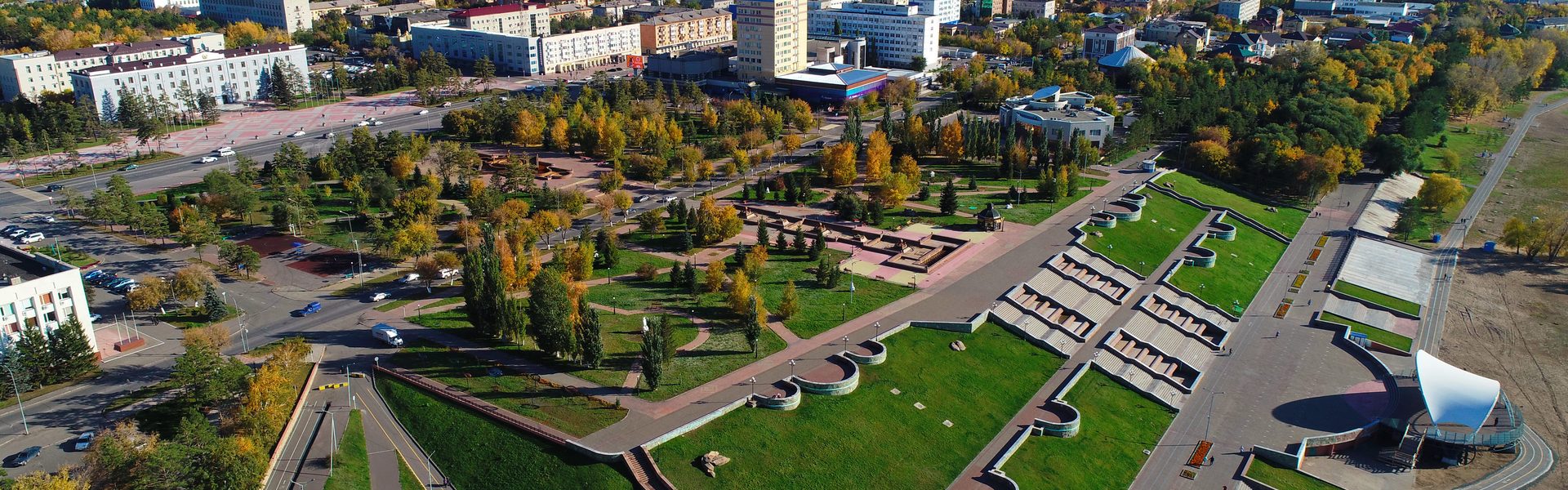
Winter Pavlodar: the goal is consistency, not heroics
Pavlodar winter can quickly kill the desire to go outside: frost, open wind from the Irtysh, packed snow near bus stops, icy patches by slopes and building entrances. So winter walking here is not about doing 10 thousand steps at any cost, but about keeping the rhythm: fewer kilometers is fine, as long as you avoid falls, colds and joint pain.
The most common mistake is planning a winter walk like a summer one: the same pace, the same embankment, the same distance. On ice, your step gets shorter, speed drops, and the muscles of your calves and thighs tense up more. That’s normal. Your task is to choose the surface in advance, make the route shorter and leave yourself a turnaround buffer: a point where you can calmly head home or step indoors to warm up.
- In frost and wind, choose not the prettiest route, but the most predictable one: a park or the center is often safer than the open embankment.
- On ice, walk with shorter, softer and slower steps: speed is not the main metric in winter.
- Removable ice grips are useful if you often walk on packed snow and ice, but you need to take them off indoors.
- A winter goal can be 3000–7000 steps a day, not the mandatory 10 000.
- If the surface looks questionable, split your walk into 2–3 short outings of 10–15 minutes.
How to choose the day: don’t look only at degrees
Before you go out, check three things: temperature, wind and the type of precipitation over the last day. Wind matters especially in Pavlodar: at the same -12°C, a walk in quiet Gorsad and a walk on the open embankment can feel like two different seasons.
- Green day: dry, light wind, sidewalks are cleared. You can walk 30–60 minutes at your usual easy pace.
- Yellow day: below -15°C, gusty wind or packed snow. Do 10–30 minutes and choose loops close to home.
- Red day: freezing rain, fresh black ice, strong side wind by the river, poor visibility. Move your steps indoors.
- After a thaw and evening refreeze, be especially careful: thin transparent ice is harder to notice than snow.
If your fingers go numb, your face stings, your skin hurts, shivering does not stop after 5–7 minutes of movement, or your shoes get wet, don’t try to finish the plan. Go somewhere warm. Frostbite often starts with redness, pain, numbness or tingling on exposed skin.
Pace on ice: shorter stride, wider support
In Pavlodar, this is especially useful on the descents to the Irtysh, near bus stops, in parking lots and by shop entrances. Walk as if you’re carrying a cup of hot tea: torso slightly forward, knees soft, foot landing almost on the whole sole, arms free. Phone in your pocket, not in your hand.
- Shorten your step by 20–30% and don’t lock your knees straight.
- Don’t speed up when crossing the road: it’s better to wait for the next green light than to slip at the start.
- Turn with your whole torso instead of twisting on one leg.
- A backpack is better than a one-shoulder bag: your arms should help with balance.
- On stairs and descents, hold the railing, even if you don’t usually do that.
A winter walk counts not because of speed, but because you chose to go out wisely and come back in one piece.
Shoes and ice grips: what really lowers the risk
For a Pavlodar winter, look for shoes with a wide stable sole, pronounced tread, a secure heel and room for a warm sock. A smooth city sole may be fine in a shopping mall, but on packed snow it turns an ordinary step into a balance test. If you’re choosing a new pair, it’s useful to check the basic principles in the guide how to choose walking shoes.
Wear removable ice grips outdoors, especially on morning ice and packed snow. But take them off in your building entrance, on the bus, in malls and on smooth tile: metal spikes can slip there themselves.
Routes in Pavlodar: where to walk in winter
In winter, choose routes with a clear way out to a bus stop, lighting and the option to shorten the loop. Within the city, you have several practical options: the Irtysh embankment, Victory Square, Gorsad and Gagarin Park. You can find longer summer routes in the separate guide where to walk in Pavlodar; below is the winter version, adjusted for ice and wind.
| Route | Length and steps | How to get there | When to choose it |
|---|---|---|---|
| Embankment: Victory Square — central descent — back | 2,0–2,6 km / 2 800–4 000 steps | To Victory Square or the regional akimat | When it’s cleared and there is no strong wind |
| Ertis Promenade and the long embankment | 5,0–6,6 km / 7 500–10 000 steps | Start from Victory Square or the center | Only by day, in dry frost |
| Victory Park + central squares | 1,5–3,3 km / 2 200–5 000 steps | To Victory Square | When the river area is windy |
| Gorsad, City Park on Yestay St. | 1,0–2,0 km / 1 500–3 000 steps | To the center and Yestay St. | For a short loop and kids |
| Yuri Gagarin Park | 0,8–2,4 km / 1 200–3 600 steps | To Gagarin Park, Kamzin or Vorushin | For calm loops away from the river |
There is more open space by the Irtysh, which means the wind feels stronger. If the forecast shows gusts, choose Gagarin Park, Gorsad or the center. You haven’t given up — you chose the route that gives you a better chance of repeating the walk tomorrow.
Three walk scenarios: frost, ice, snow
- Dry frost without wind. Do your usual 25–45-minute loop. Start slowly for the first 5 minutes, then settle into a conversational pace.
- Ice. Choose the shortest loop near home or a park with sanded paths. The goal is 10–20 minutes without jerks or turning on one leg.
- Snow and slush. Wear waterproof shoes, shorten the distance, go around curbs and puddles. Wet feet are a reason to end the walk, not to endure it.
If it’s psychologically hard for you to lower the plan, change the metric: in winter, count not only steps, but also days you got outside. For the habit, it’s more important to go out 5 times for 15 minutes than to heroically walk 9 km once and then avoid the street for a week. You can read more about the mechanics of a sustainable habit in the article about walking streaks.
Knees, ankles and back: how not to overload yourself
A slippery surface makes the body constantly catch its balance. That’s why after a winter walk your calves, feet, outer thighs and lower back may feel tired. It’s not always an injury, but it is a signal that your pace or distance was too ambitious for the surface.
- Before going out, do 2 minutes at home: foot rolls, ankle circles, 10 gentle squats to a comfortable depth.
- Don’t do fast walking on ice. You can walk fast only where the surface is dry and even.
- If your knee or Achilles hurts, choose a park with loops, not a long route with no easy exit.
- After the walk, change into dry shoes and let your feet warm up gradually, without a hot bath right after severe frost.
A weekly plan: how to get steps without setbacks
Winter consistency rests on a backup plan. In bad weather, you don’t need to argue with the city: move some steps to your building entrance, hallway, shopping mall or a home warm-up. It’s still movement, and it helps you avoid resetting your rhythm.
- Monday: 20 minutes in a park or the center, with no speed goal.
- Tuesday: 3 short outings of 7–10 minutes — to the shop, the bus stop, around the block.
- Wednesday: recovery day, 10 minutes at home or in the building entrance if it’s slippery.
- Thursday: longer — the embankment or Gagarin Park, if the surface is okay.
- Weekend: one daylight route of 40–60 minutes or two easy walks of 20 minutes.
When it’s better to stay inside
Stay inside if there is a fresh icy glaze on the sidewalks, freezing rain, a strong side wind is knocking you off stride, it’s dark and hard to see the surface, or you were recently ill and still get tired quickly.
- If you feel dizzy, have chest pain, unusual shortness of breath or strong weakness, stop the walk.
- If you have a high risk of falls, use short routes, ice grips and, if possible, don’t walk alone.
- If you have chronic heart or lung disease, or significant balance problems, it’s better to agree on your winter plan with a doctor.
The main idea: moving your walk indoors is not a failure. It is as much a part of your winter strategy as a hat, gloves and warm socks. If you want to compare the options, see the breakdown of indoor and outdoor walking.
FAQ: short answers about winter walking in Pavlodar
Can you walk along the Irtysh embankment in winter?
Yes, if the paths are cleared, there is daylight and no strong wind. In frosty, gusty weather, it’s better to choose Gorsad, Gagarin Park or a loop near Victory Square.
How many steps should I aim for in winter?
Start with a realistic minimum: 3000–5000 steps on bad days and 6000–8000 on good ones. If the surface is slippery, route quality matters more than the number.
Do I need walking poles?
Poles can add stability, but only with suitable winter tips. On narrow sidewalks and near bus stops they can sometimes get in the way, so try them first on a quiet alley.
How do I know I’m walking too fast on ice?
If your foot slips on every third or fourth step, you’re staring tensely at the ground and you can’t speak calmly, slow down and shorten your step.
What if the habit breaks because of the cold?
Make your winter goal lower: not distance, but the fact of moving every day. 10 minutes at home plus a short trip out for groceries is better than waiting for perfect weather.
Bottom line: a winter walk should be repeatable
In Pavlodar in winter, the winner is not the person who walked the farthest on ice, but the one who found a safe rhythm until March. Check the wind, choose lit loops, shorten your step, wear shoes with good grip and don’t be shy about swapping the embankment for a park. That’s how you keep the main thing — the habit of moving regularly.
Sources
- RSE Kazhydromet: climate profile of Pavlodar, monthly temperature extremes. Kazhydromet — Pavlodar climate
- IPS Әділет: Pavlodar master plan; climate, wind patterns and the Irtysh ice regime near the city. Әділет — Pavlodar master plan
- Welcome.kz: overview of Pavlodar attractions, including the Irtysh embankment, Victory Square and urban walking areas. Welcome.kz — Pavlodar
- PavlodarNews.kz: the city embankment, Gorsad and Yuri Gagarin Park as places for walking and recreation. PavlodarNews — recreation in the city
- Pacer: user walking routes in Pavlodar with distances along the embankment, Victory Square and Gagarin Park. Pacer — walking routes in Pavlodar
- Fossum M., Hillnhütter H., Ryeng E.O. Winter walking – the effect of winter conditions on pedestrians’ step length and step frequency. Transportmetrica A, 2024. DOI: 10.1080/23249935.2022.2122760
- Berggård G., Johansson C. Pedestrians in wintertime—Effects of using anti-slip devices. Accident Analysis & Prevention, 2010. DOI: 10.1016/j.aap.2010.01.011
- McKiernan F.E. A simple gait-stabilizing device reduces outdoor falls and nonserious injurious falls in fall-prone older people during the winter. Journal of the American Geriatrics Society, 2005. DOI: 10.1111/j.1532-5415.2005.53302.x
- Chan C.B., Ryan D.A. Assessing the Effects of Weather Conditions on Physical Activity Participation Using Objective Measures. IJERPH, 2009. DOI: 10.3390/ijerph6102639
- CDC: signs and prevention of frostbite in cold weather. CDC — preventing frostbite

Count your steps with Qozgal
A free app that counts your steps, keeps your streak and motivates you to walk every day.