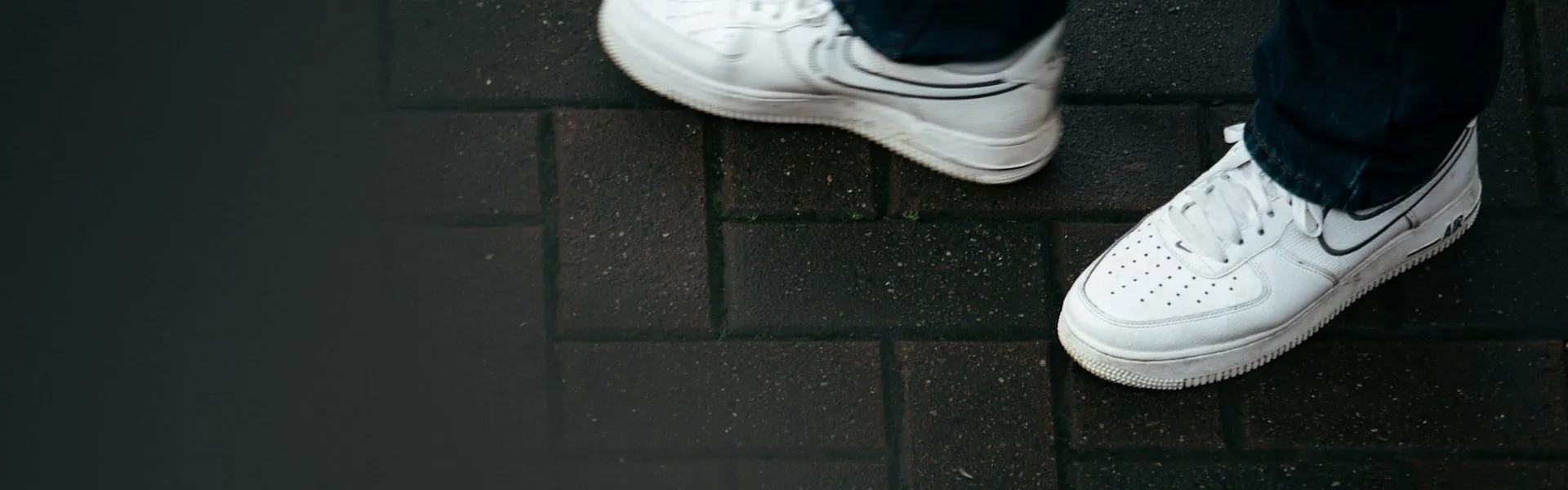
The main rule: the comfort filter
For decades, shoes were chosen by "arch type" and the nature of pronation (the foot rolling inward). It's a neat idea, but in practice it didn't hold up
The takeaway is freeing: you don't have to agonize over diagnosing your arch. Try them on, walk around the store and listen to how they feel. Comfortable right away — buy them. "They'll break in" is a myth; a good shoe is comfortable from the first step
Walking shoes or running shoes?
A good running shoe will do for walking too, but there are nuances. Dedicated walking models are usually:
- More flexible in the forefoot — the foot rolls more from heel to toe when you walk
- With a smaller drop between heel and toe height
- A little lighter and simpler — walking doesn't need the aggressive cushioning made for a running impact
If you want one pair for everything, get comfortable running or walking shoes. The key is that they feel comfortable to you. But dress shoes, flat hard-soled sneakers and "lifestyle" trainers aren't suited to long walks
What to look at when trying them on
- Toe room. About a thumb's width (~1 cm) between your big toe and the front of the shoe. The foot lengthens as you walk
- Try them on in the evening. By the end of the day the foot swells a little — that way you won't get the size wrong
- Try on both feet and in the socks you'll actually walk in
- The heel stays put. It shouldn't slip out as you step — that's a source of blisters
- The flex point. The sole should bend at the forefoot (under the toes), not in the middle
- Walk around the store. Don't judge a shoe standing still — only in motion
- A breathable upper — mesh materials let the foot sweat less
Price and brand are secondary: expensive models aren't "safer." Fit and comfort are what decide it
When to replace your shoes
Cushioning wears out before the upper tears. A worn, "tired" midsole absorbs load worse, and extra impact reaches your joints
- Mileage: roughly 500-800 km of walking (for most people — every 6-12 months with regular walks)
- A worn-down tread or a sole that's compressed and has lost its bounce
- New aches "out of nowhere" in the feet, shins or knees — a common sign the shoes are done
- Lean: set the shoes on a table from behind — if they tilt noticeably, it's time to replace them
Special cases
- Flat feet or foot pain: go by comfort, and for persistent pain see a podiatrist — you may need insoles
- Diabetes: reduced foot sensation means you need shoes with no hard seams or rub points, and a foot check after walks (see walking and blood sugar)
- Nordic walking and trekking: those have their own requirements for grip and support — see Nordic walking
- Sensitive knees: good cushioning and flat surfaces reduce the load (see is walking bad for your knees)
Bottom line
Choosing walking shoes is simpler than it seems. Forget "arch type" and the stability marketing — science puts comfort first. Try them on in the evening, leave toe room, check that the heel stays put and the sole bends under the toes, and be sure to walk around the store
After that, keep an eye on wear: replace your shoes every 500-800 km or when new aches appear. Good, comfortable shoes aren't about the brand and price — they're about making walking easy and consequence-free. And the right walking technique will finish the job
Sources
- Nigg BM, Baltich J, Hoerzer S, Enders H. "Running shoes and running injuries: mythbusting and a proposal for two new paradigms: 'preferred movement path' and 'comfort filter'." British Journal of Sports Medicine, 2015. → BMJ
- Knapik JJ, Trone DW, Swedler DI et al. "Injury reduction effectiveness of assigning running shoes based on plantar shape in Marine Corps basic training." The American Journal of Sports Medicine, 2010. → SAGE
- Ryan MB, Valiant GA, McDonald K, Taunton JE. "The effect of three different levels of footwear stability on pain outcomes in women runners: a randomised control trial." British Journal of Sports Medicine, 2011. → BMJ
- Cook SD, Kester MA, Brunet ME. "Shock absorption characteristics of running shoes." The American Journal of Sports Medicine, 1985. → SAGE

Shoes sorted — now hit the road
Qozgal automatically counts every step and tracks your daily goal. Free