First choose the conditions, not the route
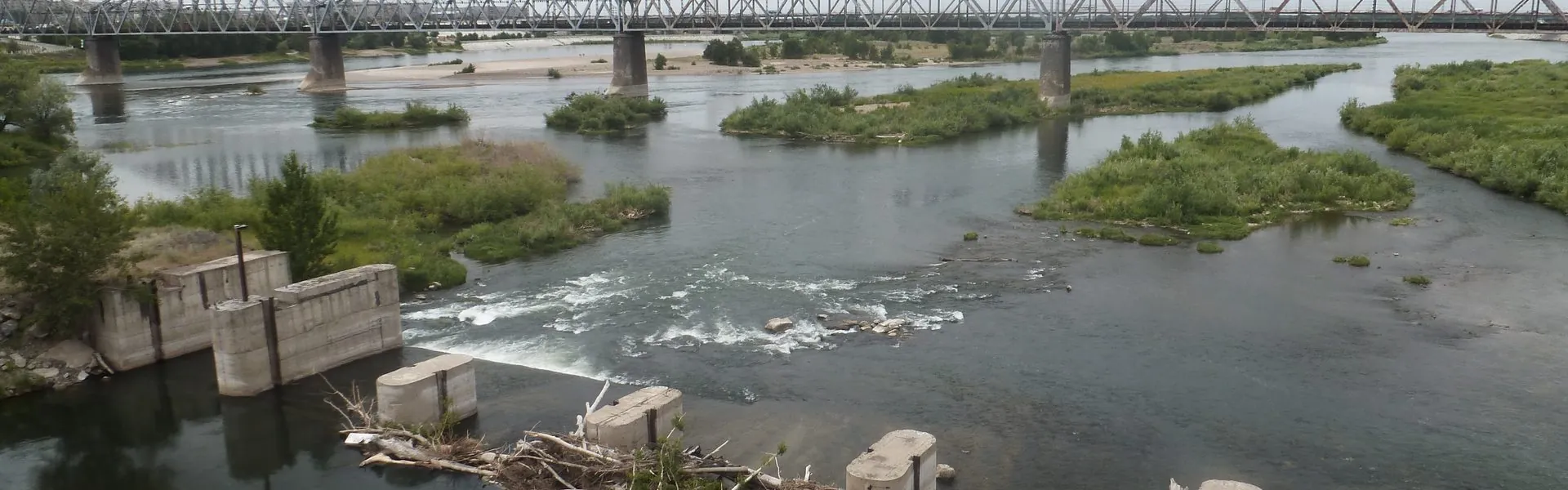
A walk along the Irtysh has one simple advantage: almost flat terrain, a wide horizon, and a clear line of movement. But it also has a downside: on the open embankment, by the Suspension Bridge, and on the approaches to Polkovnichy Island, the wind feels stronger than it does in a courtyard. So in Semey it’s better to choose your route not by beauty, but by three questions: is there light, is there grip underfoot, and is there a place for a quick turnaround.
A realistic goal for an ordinary day is 30–60 minutes without heroics. If you’re just getting back into walking, start with 20–30 minutes and don’t try to hit 10,000 steps right away. If you want a broader overview of city routes, see the basic guide where to walk in Semey; here we’ll focus specifically on riverside tactics: the embankment, bridges, island, wind, ice, and evening lighting.
A good walk by the Irtysh isn’t the one where you reach the end at any cost. It’s the one after which your feet are warm, your breathing is steady, and tomorrow you want to go out again.
Pace by the Irtysh: count steps, but listen to your breathing
The most convenient city reference point is cadence, meaning steps per minute. For an easy warm-up, keep 80–90 steps per minute. For the main part, aim for about 95–110. If the surface is dry, there’s no strong wind, and you feel good, you can briefly move up to 110–115. But by the Irtysh, pace should give way to weather: on ice, in gusts of wind, and on poorly lit stretches, speed is the first thing to reduce.
In a laboratory study of adults aged 41–60, the threshold of 100 steps per minute was confirmed as a practical marker of moderate intensity, while around 130 steps per minute was a marker of vigorous intensity. For a walk in Semey, this means you don’t need to run across the bridge; 95–110 steps per minute is already brisk enough for most ordinary days.
Tudor-Locke et al., 2020, DOI: 10.1186/s12966-020-01045-zThe second reference point is the talk test. At the right city pace, you can speak in phrases, but singing already feels uncomfortable. If you need to go quiet after every 5–6 words, slow down. If you can calmly sing a verse, add a little pace or choose a stretch with a slight climb — but not on ice.
The study showed that the talk test can be used to regulate exercise intensity without complex equipment. For walks, this is especially useful: you may not have a heart-rate monitor, but your breathing is always with you. If your speech starts breaking up, the walk has already become too hard for a recovery day.
Woltmann et al., 2015, DOI: 10.1519/JSC.0000000000000811How to build 30–60 minutes without overload
The plan is simple: 5–10 minutes of warming up, 20–40 minutes of main walking, and 5–10 minutes of an easy finish. Don’t speed up straight from your entrance. The first minutes are there to understand the surface: dry asphalt, wet paving, packed snow, or a thin glaze of ice create completely different levels of risk.
- First 5–10 minutes: walk at 80–90 steps per minute, check your breathing, shoes, and wind direction.
- Main part: keep 95–110 steps per minute, but on the bridge and on ice, shorten your stride and reduce speed.
- Every 10 minutes: ask yourself whether your fingers are getting cold, your shoulders are tensing, or you’ve started hunching against the wind.
- Finish: slow down for the last 5 minutes and leave the open riverbank toward courtyards, a stop, or a park.
- After the walk: if your legs feel heavy for more than a day, shorten the route by 10–15 minutes next time.
How many steps is that? At 90–110 steps per minute, 30 minutes gives about 2700–3300 steps, and 60 minutes gives 5400–6600 steps. That’s a proper workout, even if you didn’t reach 10,000 for the day. If you want to convert steps into kilometers, keep this breakdown handy: how many kilometers are in 10,000 steps.
Routes by the water: what you can realistically walk
The distances below are practical roundings for a walk, not sports markings. Your tracker may show a little more or less: stride length, turnarounds, detours to benches, and avoiding ice all affect it. In Semey, it’s more useful to think not in one long line, but in loops with a backup exit.
| Stretch | Distance and steps | When to go | When to turn back |
|---|---|---|---|
| Irtysh embankment | ~2–3 km, 3000–4500 steps | Morning, daytime, early evening | Strong wind, ice by the water, few people |
| Suspension Bridge out and back | ~2.2 km, 2800–3300 steps | Dry weather, good light | Gusts of wind, slippery deck, fatigue |
| Embankment + Central Park | ~3–4 km, 4500–6000 steps | When you need a safe finish | If it’s dark or windy by the river |
| Victory Park + approach to the river | ~2.5–3.5 km, 3500–5200 steps | For an easy pace | If it’s cold on the open bank |
| Polkovnichy Island, short | ~3–4 km, 4500–6000 steps | Only daytime and weather permitting | If lighting is weak or paths are icy |
| Polkovnichy Island, long | ~5–7 km, 7000–10000 steps | Warm season, day off | If you don’t have water, signal, or energy for the way back |
If you only have half an hour, the best choice is the embankment with a turnaround before you get cold. If you have 45 minutes, add Central Park. If you have an hour and the weather is dry, you can walk the bridge stretch or a short loop on Polkovnichy Island, but only in daylight.
The study tested the 100-steps-per-minute threshold not on a treadmill, but during overground walking. The threshold correctly classified moderate intensity in roughly three out of four cases. For a real city, that’s an important nuance: 100 steps per minute is a good guide, but surface, shoes, wind, and fatigue still change how the effort feels.
Aguiar et al., 2023, DOI: 10.1111/sms.14274When to leave open stretches
By the Irtysh, there’s no need to argue with the weather. An open bridge, an empty embankment, and the riverbank are good as long as you’re in control of your step. If a side wind appears, your face goes numb, your hood blocks your view, or you start looking only at your feet, it’s time to change the environment: head into a courtyard, toward Central Park, toward Victory Park, or onto a busier, well-lit street.
- Leave the bridge if the wind makes you change your path or hold on to the railing.
- Don’t continue along the water if you can sense smooth ice under the snow: the embankment doesn’t have to be a training ground.
- In the evening, choose a stretch with lamps and people, not the prettiest view of the river.
- If you’re walking alone, don’t plan a route where the way back is longer than 20–25 minutes.
- In fog, snowfall, or wet ice, reduce the goal to 15–30 minutes and count it as a full walk.
Red flag Chest pain or pressure, severe shortness of breath that doesn’t match the pace, dizziness, numb fingers, or sharp pain in the knee or ankle — this is not the moment to tough it out. Stop, get somewhere warm, and seek medical help if needed.
Ice, wind, and light: the winter protocol
In winter, the main enemy isn’t the cold by itself, but the combination of cold, wind, ice, and poor visibility. On ice, shorten your stride, place your foot more softly, don’t speed up on turns, and don’t keep your hands in your pockets. A backpack is better than a bag in one hand: it makes balancing easier.
Choose shoes with soft, grippy soles. If the forecast promises freezing rain or a sharp shift through zero, it’s better to move the walk to a park, a courtyard with clean paths, or even indoors. Qozgal has a separate breakdown of when the street loses to the gym or treadmill: walking indoors and outdoors.
The light rule Leave Polkovnichy Island and quiet approaches to the water for daytime. In the evening, choose Central Park, Victory Park, central streets, and those embankment sections where you can see the surface at least 10–15 meters ahead.
How to get there and where to start
For the embankment and the Suspension Bridge, the clearest starting point is the area around the Suspension Bridge over the Irtysh. From the center, you can walk, take a taxi, or get off at the nearest stops by the bridge. Once there, assess the surface right away: if it’s slippery by the water, don’t start with the bridge — make a short loop along more sheltered streets instead.
For Central Park, use the intersection of Kaiym Mukhamedkhanov and Dulatov streets as your reference point; city buses run to the park, and the park itself works well as a warm finish after a windy embankment. For Victory Park, the goal is different: an easy pace, less open wind, and the ability to walk loops without going far from people and light.
- If you start from the Suspension Bridge: first spend 5 minutes on the approaches, then decide whether to go onto the bridge.
- If you start from Central Park: go to the embankment only in good light, and return through the park.
- If you start by Victory Park: use it as a safe base and add the river as a short segment.
- If you’re going to Polkovnichy Island: plan a daytime walk, water, a charged phone, and extra time to return.
- If the route is unfamiliar: don’t go for the maximum the first time; scout it for 25–35 minutes.
In short: a safe walk by the Irtysh
- For an ordinary day, aim for 30–60 minutes, not mandatory 10,000 steps.
- A working pace is 95–110 steps per minute; on ice and in wind, slow down without guilt.
- The embankment and bridge are good in dry weather and in light; the island is better left for daytime.
- If the wind disrupts your step, the surface shines, or lamps are rare, head into courtyards, Central Park, or Victory Park.
- The route must allow a quick turnaround: a walk ends not on the map, but where it’s safe for you to return.
FAQ: questions
Can you walk across the Suspension Bridge in windy weather?
Only if the surface is dry, visibility is good, and the wind isn’t disrupting your step. If you have to tense your shoulders, hold on to the railing, or walk sideways into the wind, it’s better to turn around and choose the embankment, a park, or streets inside the blocks.
How many steps should you plan for a walk by the Irtysh?
For 30 minutes, aim for 2700–3300 steps; for 45 minutes, 4000–5000; for an hour, 5400–6600. That’s enough for a good load. You can add the remaining steps during the day if you feel like it.
When is the best time to go in summer?
In summer, choose morning or evening. During the day, the open embankment can be hot and dry, and reflection from the water adds fatigue. If you go during the day, shorten the route, bring water, and look for shade in parks.
What should you do if the embankment is icy?
Don’t try to complete the plan at any cost. Shorten your stride, put your phone away, turn toward cleaner paths, or move the walk to Central Park, Victory Park, a courtyard with treated sidewalks, or indoors.
Is Polkovnichy Island suitable for an evening walk?
Better not, unless you’re sure about the lighting, surface, and return route. For the island, choose daytime, dry weather, and leave yourself enough energy. In the evening, it’s safer to walk where there are lamps, people, and a quick exit to transport.
Sources
- Tudor-Locke C. et al. Walking cadence and intensity in 41 to 60-year-old adults: the CADENCE-adults study. International Journal of Behavioral Nutrition and Physical Activity, 2020. DOI
- Aguiar E.J. et al. Cadence-based classification of moderate-intensity overground walking in 41- to 85-year-old adults. Scandinavian Journal of Medicine & Science in Sports, 2023. DOI
- Woltmann M.L. et al. Evidence that the Talk Test can be used to regulate exercise intensity. Journal of Strength and Conditioning Research, 2015. DOI
- Bull F.C. et al. World Health Organization 2020 guidelines on physical activity and sedentary behaviour. British Journal of Sports Medicine, 2020. DOI
- Saint-Maurice P.F. et al. Association of Daily Step Count and Step Intensity With Mortality Among US Adults. JAMA, 2020. DOI
- Hippi M. et al. RoadSurf-Pedestrian: a sidewalk condition model to predict risk for wintertime slipping injuries. Meteorological Applications, 2020. DOI
- Welcome.kz: Central Park of Semey — address, description, and transport options to Semey Central Park. Welcome.kz
- Visit Abay: Victory Park in Semey — reference information about the memorial park. Visit Abay
- Abay Life: Polkovnichy Island, or Beybitshilik Island, as an urban green area in the middle of the Irtysh. Abay Life
- Komandirovka.ru: Suspension Bridge in Semey — description, coordinates, and total length of 1086 meters. Komandirovka.ru
- Kazhydromet: climate data and temperature extremes for the city of Semey. Kazhydromet