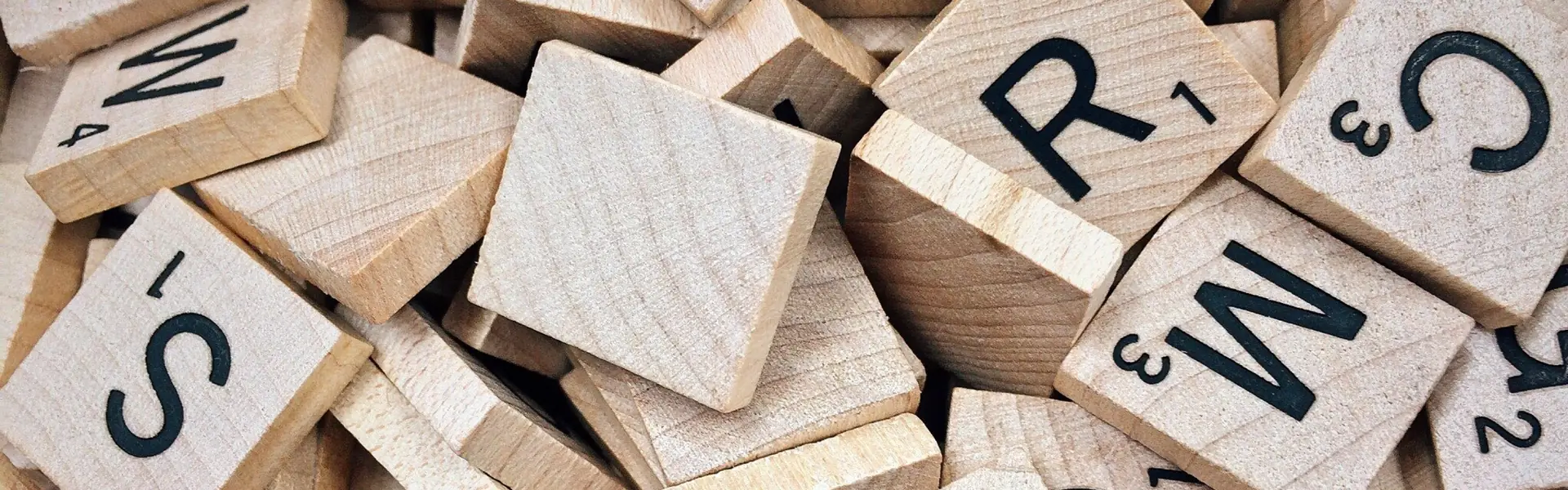
Wordle with an opponent
Plenty of people study English for years and still get stuck on simple words. You know the rules, yet the word you need just doesn't come up in a conversation. Often the problem is how we study: we mostly reread words in lists and textbooks and almost never pull them out of memory ourselves. Worduel offers a new way to learn languages through play. It's a duel where you and an opponent guess the same five-letter word on a shared board, taking turns. You can play in English, Spanish, Portuguese and Russian, right in your browser and for free
First we'll look at how a duel works and what you take away from every game. Then we'll dig into the research: why a word you recalled yourself stays in memory longer than one you read, and how a light walk helps the brain take in new things. Qozgal is about steps after all, so at the end there's a simple daily plan where a walk and a couple of Worduel games work together. No two-hour study sessions, it all fits into an ordinary day. This will come in handy for school students and for adults who want to brush up their English for work or travel
How a Worduel duel works
You press “Play” and Worduel finds an opponent with a similar rating. You both chase the same hidden five-letter word, and every guess lands on one shared board. The hints are familiar: a green letter is in the right spot, a yellow one is in the word but in a different spot, and a gray one isn't in the word at all. You get 45 seconds per move, and if the time runs out, the turn passes to your rival. There's no cap on guesses, the board just keeps growing until someone gets it. Whoever guesses first takes rating points, and everyone starts at 500. You can leave a duel halfway, but it counts as a loss. The game is independent and has nothing to do with The New York Times, which owns Wordle
Worduel is built on the same principle. Every guess makes you pull a five-letter word out of memory yourself, one that fits the hints on the board, and that's exactly the active recall the study was about. The level of difficulty matters too. A meta-analysis by Chen and colleagues on learning games found that their effect on vocabulary depends on how the game is designed, while the learners' age and native language made no noticeable difference. The authors link this to the balance between how hard the task is and how skilled the player is. In Worduel the rating keeps that balance: you get matched with someone close to your level, so games are usually even
- Vocabulary: in a single game you run through dozens of five-letter words in your head
- Spelling: the game only accepts real words, so you have to spell them correctly
- A feel for the language: over time you notice which letters tend to go together, like sh and ck in English or ll in Spanish
- Reading your rival's moves: their guesses sit on the shared board, and an unfamiliar word from their row sticks in your memory too
- Speed: 45 seconds per move means no leafing through a dictionary for ages, you have to recall the word fast
- A relaxed attitude to mistakes: a wrong guess still reveals letters, so you quickly stop being afraid of getting words wrong
Steps first, words second: what the science says
Now for where walking comes in. In an experiment at the University of Mississippi, students walked on a treadmill at a moderate pace for 15 minutes and then learned a list of words. A day later they recognized those words better than the students who walked after the lesson. In another study, Chinese students with basic English remembered new English words better when they pedaled an exercise bike during the lesson, and a few weeks later the difference showed up even in understanding whole sentences. And a year-long walking program for older adults increased the volume of the hippocampus, the part of the brain responsible for memory, by about 2%
Scientists still argue about whether it's better to move before studying or during it. For Worduel the first option is more convenient: walk 15-20 minutes at a brisk pace, sit down on a bench and play a couple of games. Don't guess words on the go, especially near a road: your eyes are needed for the traffic lights there. During the walk itself you can go over words from yesterday's games in your head, no phone needed
Worduel, regular Wordle and flashcards: what's the difference
The most useful part for language learners starts after the game ends. Worduel shows the hidden word in full: its part of speech, its meaning and two examples. The meaning comes in your language, while the examples stay in the language of the word, so you immediately see how it's used in a real sentence. Even a loss leaves you with a new word. There's also a daily streak: one game a day, won or lost, and the flame in the corner of the screen grows. It gets you used to short daily sessions, and according to a large review by Cepeda and colleagues, spaced practice builds more durable memory than cramming in one sitting
| What we compare | Word flashcards | Daily Wordle | Worduel |
|---|---|---|---|
| How you recall a word | You see a word and recall its translation | You find the word from hints | You find the word from hints, racing an opponent |
| Words per day | As many as you like | One | No limit, the next game is one click away |
| Languages | Any | Only English in the original | English, Spanish, Portuguese, Russian |
| What's left after the game | The word and its translation | A result in colored squares | The word's meaning and two examples |
| Excitement | Hardly any | Competing with yourself | A live opponent and a rating |
| Price | Depends on the app | Free | Free, no ads and no sign-up |
Lost the duel, but walked away with a new word. For a language learner, that's a fair trade
How to fit Worduel into your day
You won't need a separate schedule. A game takes a few minutes, so it's easy to slot in wherever you already have a pause: after a walk, during a lunch break, in a queue or in the evening instead of scrolling social media. Pairing it with steps works best. If you already keep a step streak in Qozgal, add two or three duels on a bench to your daily walk. Then both habits share a set time during the day, and keeping them up gets easier. Over a month this adds up to a few dozen words you've worked through, each with two examples. If the day has been rough, one game is enough: the streak counts even when you lose
- Open worduel.gg in your phone or computer browser, no sign-up needed
- Above the “Play” button, choose the word language: English, Spanish, Portuguese or Russian
- For the first couple of days, warm up in the solo mode Wordle Unlimited: six tries, no timer and no opponent
- Then move on to ranked duels, and play with friends or classmates in a room with a four-letter code
- After each game, read the word's meaning, say one example out loud and jot unfamiliar words down in your notes, then look at them again a couple of days later
- Keep the streak going: a 15-20 minute walk first, then at least one game, every day
- Worduel turns Wordle into a one-on-one duel: a shared board, 45 seconds per move and a rating
- Words come in English, Spanish, Portuguese and Russian, and the interface is translated into Kazakh too
- Every guess trains active recall, and words stay in memory longer than after rereading
- After each game you get the word's meaning and two examples, so even a loss counts for something
- A walk before playing and one game a day help turn this into a habit
- Worduel is free and runs in the browser without sign-up, and there's a Wordle Duel app for iPhone
Frequently asked questions
Is Worduel really free?
Yes. There are no ads, no subscription and no required sign-up. You open the site, press “Play”, and a duel starts within seconds. All modes, from ranked duels to solo, are open right away
Do I need to create an account?
No. Your rating and streak are stored on your device. If you want your progress to survive a new phone or a cleared browser, you can sign in with Apple. Then your rating and streak move with you to another device
Which languages can I play in?
Words come in English, Spanish, Portuguese and Russian, and you pick the language right above the “Play” button. The interface is translated into about a hundred languages, including Kazakh, Uzbek, Kyrgyz, Tajik and Uyghur. Menus and hints will be in your language, and the words in the game itself in the one you chose
Can I play with a friend?
Yes. Choose the “With a friend” mode and create a room: you'll get a four-letter code and a link. Your friend lands on the same board with the same word, even without the app. These games don't change your rating, but the series score is kept. Whoever moved first in the previous round moves second in the next one
Is Worduel enough to learn a language?
For vocabulary and spelling it's a good daily workout. It won't replace grammar or real conversation, so it works best alongside a course or lessons. A good rule of thumb: one or two games a day plus a bit of live practice, like a conversation or a podcast in that language
Is there a phone app?
On iPhone there's the Wordle Duel app in the App Store with the same duels, streak and word cards. On Android, just open the site in your browser, the game works without installing anything. If you sign in with Apple, your rating and streak will be the same on the site and in the app
Sources
- Worduel: Wordle 1v1 online, the official site of the game worduel.gg
- Karpicke JD, Roediger HL. “The Critical Importance of Retrieval for Learning”, Science, 2008 Science 2008
- Roediger HL, Karpicke JD. “Test-Enhanced Learning”, Psychological Science, 2006 Psychol Sci 2006
- Chen MH, Tseng WT, Hsiao TY. “The effectiveness of digital game-based vocabulary learning: A framework-based view of meta-analysis”, British Journal of Educational Technology, 2018 BJET 2018
- Cepeda NJ et al. “Distributed practice in verbal recall tasks: A review and quantitative synthesis”, Psychological Bulletin, 2006 Psychol Bull 2006
- Schmidt-Kassow M et al. “Physical Exercise during Encoding Improves Vocabulary Learning in Young Female Adults”, PLoS ONE, 2013 PLoS ONE 2013
- Sng E, Frith E, Loprinzi PD. “Temporal Effects of Acute Walking Exercise on Learning and Memory Function”, American Journal of Health Promotion, 2018 Am J Health Promot 2018
- Liu F et al. “It takes biking to learn: Physical activity improves learning a second language”, PLoS ONE, 2017 PLoS ONE 2017
- Erickson KI et al. “Exercise training increases size of hippocampus and improves memory”, PNAS, 2011 PNAS 2011
Count your steps with Qozgal
A free app that counts your steps, keeps your streak and motivates you to walk every day.