Choose a short route, not a target distance
When walking with a child, it’s easier to plan a simple route with a clear way back than to focus on “how far we have to go”: a park, the riverside, or a short out-and-back walk. This is especially practical in Semey: by the Irtysh, you can choose just part of the long riverside route, and in the city center, walk within a single park and finish near your starting point.
As a first plan, try a short stretch of around 300–500 meters one way, then take a break and decide whether to head back the same way. This is a parent’s planning guide, not a medical recommendation: a preschooler may want to stop after a couple of minutes, while an older child may ask to keep going. Choose the distance based on your child’s mood and the conditions around you.
These are distances for longer routes listed in a city guide, not a must-do plan for families. You can shorten them: choose a turnaround point in advance or head back when your child gets tired. Converting kilometers into steps is only an estimate for adults, and children’s steps will be different. If you like counting steps, check out our step-count guide, but don’t make the number on your tracker a measure of success.
Four walks that are easy to shorten
Here are some places where you can put together a route that suits your family. Before setting out, check the starting point and access in a map: paths and routes may change. For a broader overview of places to visit, see our guide to walks in Semey.
| Place and starting point | Approximate distance | How to get there and shorten the route |
|---|---|---|
| Central Park | Large loop — around 1.8 km | Search for “Central Park” on the map. Choose an avenue and turn back before your child gets tired. |
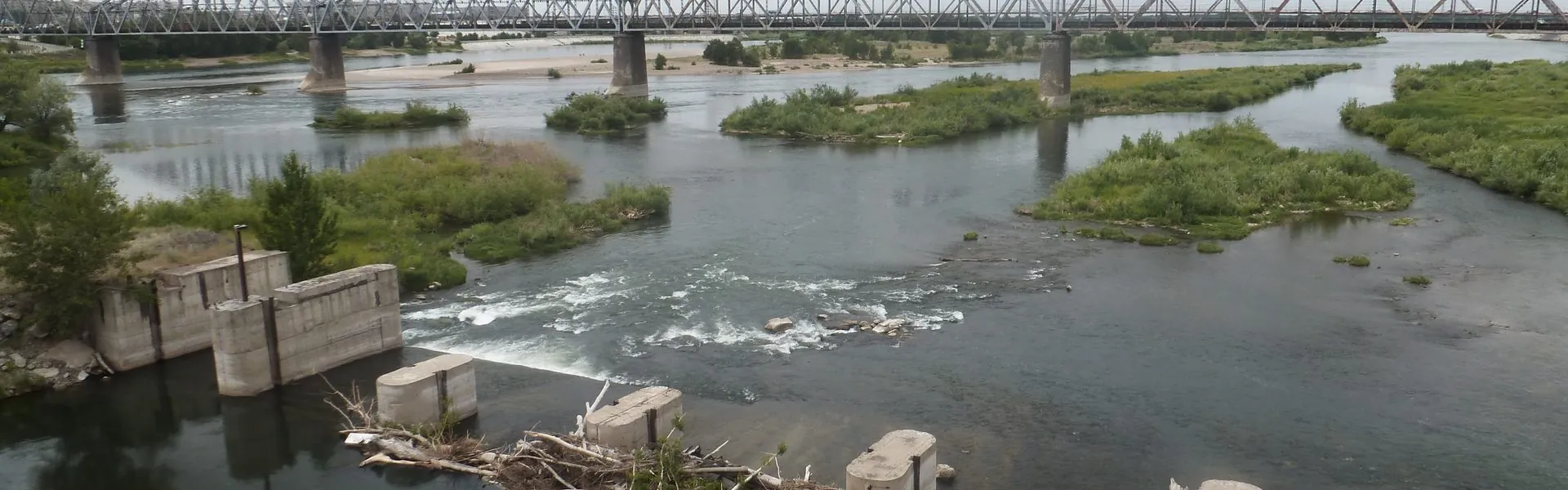
| Irtysh riverside | Around 2.5 km from the bridge area to Abai Park | Start by the riverside on the left bank, near the bridge and Shakarim Street. Walk part of the way and turn back. |
| Public space beneath the suspension bridge | Around 370 m of sidewalk in the landscaped area | Head for the area beneath the bridge on the left bank. There and back is around 740 m, if the path is open. |
| Polkovnichy Island | Full loop — around 7.5 km | Check that the ferry crossing is open; with a child, walk a short stretch and turn back. |
Central Park is convenient because you can finish your walk where you started, and there are easy-to-recognize landmarks in the area. If you’re taking public transport for a short outing, look for the “Central Park” stop and check the current route in an app: bus numbers and routes may change. The historic intersection of Naimanbayev and B. Momyshuly streets is not far from Central Park. You can add it as a separate stop, but you don’t have to join every location into one long walk.
Before walking to a crossing Access and conditions on bridges can change because of construction work. Don’t plan a route across a bridge or onto the island until you’ve checked that the route is currently open on a map or in local updates. This is especially important with a stroller: a detour or stairs can turn a short walk into an inconvenient one.
Let your child’s pace guide the way
The same distance can feel very different from one walk to another: your child may spend a long time looking at the water, leaves, and cars, then get tired quickly. So leave plenty of time and don’t pack in a full “park — riverside — museum” itinerary in one outing. To make the walk more fun, suggest finding three unusual things along the way, counting bridge spans, or choosing a bench for a break.
Try alternating easy walking with short stops. For example, walk to a tree or bench, then sit down, have some water, and ask your child if they’d like to continue. There’s no need to keep a steady pace: a walk can be made up of several short stretches, with time to play and look around in between.
A good family walk is one that leaves your child ready to go out again, not one where you completed the whole loop at any cost.
If your child slows down noticeably, asks to be carried, starts getting upset, or feels cold, shorten the plan. Turning back early is a normal part of the route, not a failure. For a very short outing, choose a loop near home or one section of a park; if everyone’s in good spirits, add another stop rather than more kilometers.
Decide in advance where you’ll take a break
Plan not only the route but also places to stop. In a park, this could be a bench or a familiar playground; by the riverside, choose a spot where you can stop safely, away from the water’s edge and bicycle traffic. Don’t assume a convenient bench will be exactly where your child gets tired: check the map, and choose a few backup options when you arrive.
- Before you leave, mark your starting point and turnaround point — it’s easier for a child when they know where you’re going.
- Bring water, wipes, and a small snack if your family needs them; don’t wait until your child is very hungry.
- After the first stop, check how your child is feeling: continue only if they’re comfortable.
- Include a quick way back to a bus stop, home, or the car, so you can end the walk without a long return journey.
If your child likes walking independently, let them choose the next stop from two options: for example, the nearest path or a bench. This can help keep them interested and avoid arguments over every step. If your child is still very young, remember that a stroller ride and walking are different activities for them; switch between them as needed, not to reach a preset number.
If you’re going with a stroller
Central Park or a landscaped stretch by the Irtysh are usually the easiest places to start with a stroller, but how convenient they are depends on the specific entrance and the condition of the path that day. Check the route before you set out: is there a curb, stairs, a narrow passage, or a section without a firm surface? A map shows the direction, but not always the surface condition or whether the route is clear.
- For a regular stroller, choose a firm, even path and somewhere to turn around without going onto the road.
- For dirt paths and uneven surfaces, check in advance whether your stroller’s wheels are suitable; don’t assume the entire island route is paved.
- By the water, on a bridge, and in open areas, pay attention to the wind and pedestrian traffic. Keep control of the stroller and stay away from the riverbank edge.
- In cold weather, check for ice, slush, and grit on the path. If the stroller starts to slide or is difficult to push, choose a shorter route.
With a stroller, it’s helpful to plan a walk with several ways to leave: start in a park, cover an accessible stretch, and return to the same entrance. If you’re planning to walk with your baby in a carrier, see our separate advice on walking with a stroller and using a carrier: compare it with the manufacturer’s instructions and your child’s usual routine.
Weather: choose the surface and shelter
The riverside is open, so you’ll feel the wind and sun more strongly there. On hot days, it’s more comfortable to go out in the morning or toward evening, bring water, and avoid a long stretch without shade. In Central Park, you can alternate a walk along the paths with a rest in the shade, if a shady spot is available.
When it’s raining or has just rained, check whether tiles, wooden walkways, or areas by the water have become slippery. For a short outing, choose a familiar, even path rather than a route with dirt trails. In winter, watch out for ice and wind: the open riverside may feel less comfortable than a walk in the park or a short loop in the city center. If the surface is slippery, shorten the route or postpone your outing.
A simple rule if you’re unsure Don’t choose the prettiest place; choose a stretch where it’s easy to stop, turn around, and get back quickly. In bad weather, a short, familiar route is often more convenient than walking through several neighborhoods.
Before you leave, also check the latest forecast and local alerts. For winter paths, see our separate guide to icy conditions in Semey; for rainy days, read our tips for walking in wet weather.
What research says about short bursts of activity
Research helps explain why a family walk doesn’t have to be a continuous march. But it doesn’t establish an ideal route length for Semey or promise that every child will keep the same pace. Use it as a reason to keep your plan flexible, not as a schedule your child has to follow.
Amy Bryan and colleagues observed the activity of 67 preschoolers. Children’s movement during free play was often brief and interspersed with stops. This observational study did not examine family walks in a city, but it supports a practical takeaway: pauses, changes of activity, and play along the way are normal for preschoolers.
Bryan AE et al. IJERPH, 2022. DOI: 10.3390/ijerph19063354.Brooke and colleagues analyzed accelerometer data from 2,737 children and adolescents aged 6–19. The frequency and duration of moderate-to-vigorous activity bouts were associated with overall activity levels. This doesn’t prove that a short walk replaces all physical activity recommendations, but it’s a reminder that several separate active periods can matter too.
Brooke HL et al. Preventive Medicine Reports, 2016. DOI: 10.1016/j.pmedr.2016.10.007.- Start with a short stretch that’s easy to walk back.
- In Semey, Central Park, a section of the riverside, and the landscaped space beneath the bridge are convenient options; check access before you go.
- Plan breaks in advance and adapt the route to your child’s mood.
- With a stroller, check the surface, curbs, ice, and whether you can turn around quickly.
- Don’t make step counts or completing the full loop a must-do goal.
A ready-made plan for your first outing
Choose Central Park or the landscaped area beneath the suspension bridge. Before you leave, check how to get to the starting point and mark the nearest bus stop or a place you can return to. Once there, choose a short path, walk part of it, take a break, and ask your child if they’d like to continue. If they say yes, add another stretch; if not, turn back.
For a walk by the Irtysh, use the same approach: start near the riverside, follow an even stretch along the water, and return the same way. You don’t have to reach Abai Park or cross the bridge. If your child gets tired, the stroller is uncomfortable to push, or the weather turns bad, consider the walk over — even a short outing can become a lovely family habit.
How many kilometers should you walk with a child in one outing?
There’s no one-size-fits-all distance. For your first outing, choose a short stretch of a few hundred meters one way and see how your child feels. The distances in this article are estimates for city routes, not required targets.
Which route should you choose if your child gets tired quickly?
Start with Central Park or a short section of the riverside: it’s easier to choose a turnaround point in advance and return the same way. Don’t add the island or a bridge crossing if it means a long walk without an easy way back.
Can you walk around Polkovnichy Island with a stroller?
It depends on the path you choose, the surface, and current access to the island. The full loop is around 7.5 km — a long route. With a stroller, check the crossing and path surface first, and stick to a short, familiar stretch once you’re there.
What should you do if your child doesn’t want to walk any farther?
Stop, offer some water or a rest, and ask whether your child would like to head back. You don’t have to finish the loop at any cost: choose the nearest safe exit and shorten the route.
Sources
- Brooke HL, Atkin AJ, Corder K, Brage S, van Sluijs EM. Frequency and duration of physical activity bouts in school-aged children. Preventive Medicine Reports, 2016. DOI: 10.1016/j.pmedr.2016.10.007
- Bryan AE et al. Total Play Time Needed for Preschoolers to Reach Recommended Amount of Non-Sedentary Activity. International Journal of Environmental Research and Public Health, 2022. DOI: 10.3390/ijerph19063354
- Qozgal. Where to walk in Semey — routes along the Irtysh and through parks. City routes and distance estimates
- Semey City Akimat. Information about the landscaped public space beneath the suspension bridge. City space and sidewalk beneath the bridge
- Visit Abay. The historic intersection and nearby Central Park and Arbat. Historic intersection in Semey
- Yandex Maps. “Central Park” stop, Semey. Public transport stop

