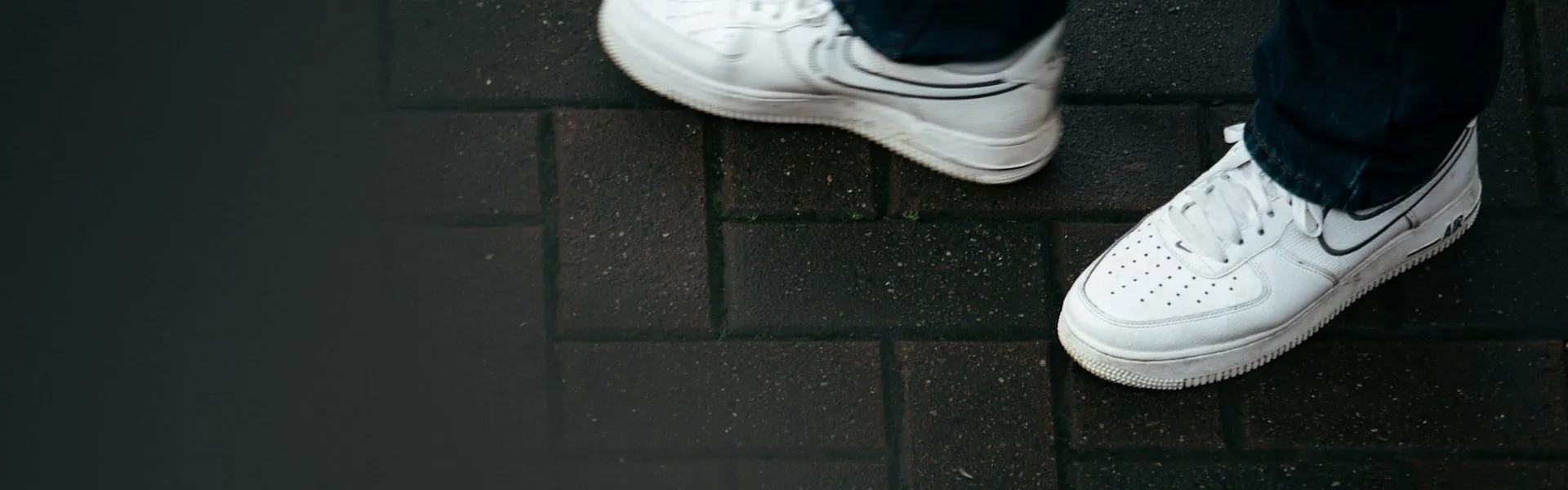
Rain is no reason to reset your streak
The biggest mistake in the rain is thinking only about motivation. In reality, three things decide it: traction, visibility, and plan B. If you have them, a walk stops being a wet act of heroism and becomes a normal short task: go out, walk a safe loop, come back, dry your things.
- In the rain, it’s better to keep a minimum walk than try to complete the perfect plan at any cost.
- Shoes with real tread matter more than a fashionable membrane: a smooth sole on wet tile is a bad idea.
- Shorten your stride and slow down before turns, tiles, metal grates, leaves, and descents.
- If you hear thunder, postpone the walk: it is unsafe outside until after a pause following the last thunder.
- After the walk, take out the insoles, stuff the shoes with paper, and dry them at room temperature.
First decide: go, shorten, or postpone
Rain comes in many forms. Light drizzle is a normal backdrop for walking. A downpour, thunderstorm, strong wind, poor visibility, flooded underpasses, and wet ice are no longer “character-building” — they are risk. On days like this, the Qozgal goal is not to prove your toughness, but to stay connected to the habit and avoid injury.
- Go if the rain is light or moderate, you can see the road, and underfoot is a normal sidewalk without ice.
- Shorten the route if getting wet is inevitable, but the road is familiar and there are places nearby where you can take shelter.
- Move the walk indoors if there is thunder, lightning, flooding, strong wind, or slippery tile along the whole route.
- Split your steps into several short outings if it rains all day: it’s easier to keep the streak without getting chilled or exhausted.
- Don’t argue with the weather if you’re recovering from illness, very tired, or walking with a child, dog, or stroller.
A thunderstorm is not walking weather NOAA and the U.S. National Weather Service put it simply: if you hear thunder, go indoors. Return to outdoor activity only after a safe pause following the last thunder. An umbrella, tree, bus stop, or canopy does not make a thunderstorm safe.
Shoes: tread matters more than the brand
For rain, you don’t need the “most waterproof” shoes; you need a pair that grips wet asphalt, tile, and descents. Look at the sole: if the tread has worn down to smooth rubber, that pair is no longer a rainy-day option. We covered how to choose a pair in detail in our article about walking shoes, but the short rule here is simple: wet surfaces do not forgive smooth soles.
In an experiment with a wet-slippery zone, the combination of transverse grooves on the sole and the floor produced a better coefficient of friction and fewer severe slips. The practical takeaway is simple: deep, directional tread helps, while a smooth or worn-down sole increases the risk of your foot sliding out.
Liu et al., PLoS ONE, 2013, DOI 10.1371/journal.pone.0068989A membrane is useful if the rain is moderate and you won’t be out for long. But in a heavy downpour, water often gets in from above, through the tongue and cuff. So don’t just choose “waterproof”; choose the whole setup: a proper sole, secure heel fit, non-slip rubber, socks without cotton’s wet heaviness, and a route where you don’t have to jump over puddles.
- Check the sole with your finger: if you can barely feel the pattern, save that pair for dry weather.
- Don’t wear new boots in heavy rain: first check on a short walk that they don’t rub.
- Avoid shoes with flat, fashionable soles on wet tile, marble, metal, and smooth concrete.
- If you often walk in the rain, keep a separate pair “for wet days” so you don’t have to choose in a rush in the morning.
- The laces should hold the foot, but not squeeze it: wet socks and swelling can quickly turn a walk into blisters.
How to walk on wet surfaces
On slippery ground, your technique changes. You don’t need to shuffle in a panic, but it’s better to drop your usual long stride. Your task is to keep your center of gravity closer to the supporting foot: shorter stride, calmer torso, wider turns, phone in your pocket, eyes not on the screen but two to three meters ahead.
Researchers compared walking on surfaces with different levels of slipperiness and found that neuromuscular control changes, especially around the ankle, knee, and hip. For an ordinary walk, this means: on wet surfaces, your body needs more attention, so it’s better to reduce speed and distractions.
Whitmore, Hargrove, Perreault, IEEE TBME, DOI 10.1109/TBME.2015.2497659- Before tile, a ramp, stairs, a crosswalk, or a metal grate, slow down in advance.
- Place your foot more softly and a little flatter; don’t drive your heel far out in front of you.
- Don’t speed up on turns: a turn plus a wet surface demands more traction.
- Go around leaves, mud, road markings, manhole covers, and wooden decking, even if they look “almost dry.”
- On a descent, shorten your stride and keep your hands free: a bag in one hand and a phone in the other make balance worse.
A rainy walk is successful not when you get soaked to the skin, but when you come back in one piece, keep the ritual, and can go out again tomorrow.
Clothing: a dry core and free hands
Rain clothing should solve two tasks: stop you from getting soaked quickly and keep you from overheating. If you dress as if you’re going on a storm hike but walk briskly through the city, the inside of your jacket will get damp from sweat. A thin layer, light rain protection, an adjustable hood, and details that make you more visible to drivers usually work better.
| Weather | Top | Bottom | What matters |
|---|---|---|---|
| Drizzle | Light windbreaker or rain jacket | Regular pants if they dry quickly | Not overheating |
| Moderate rain | Jacket with a hood and closed zipper | Synthetic pants or leggings | Dry core |
| Downpour without thunder | Short route or postponing | Pants that don’t soak up water | Quick return |
| Cold rain | Thin warm layer under protection | Dry socks after the walk | Not cooling down afterward |
| Rain in the dark | Reflective details | Any comfortable bottom | Visibility |
An umbrella is not always the best choice An umbrella is good for calm drizzle and a short route. But in wind, it takes up one hand, blocks your view, and interferes with balance. For walking at a steady pace, a hood, a brimmed cap, and a small backpack that keeps your hands free are often more comfortable.
Route: choose traction, light, and an exit plan
In the rain, the route matters more than the step count. Choose a familiar loop near home with lighting, proper curbs, shops, or entrances where you can take shelter if needed. If you want to compare options, read our breakdown of walking indoors and outdoors: in the rainy season, plan B is not weakness — it is a system.
- Flat asphalt is better than beautiful smooth tile.
- A loop near home is better than a long route with no way to return quickly.
- Well-lit streets and crossings with traffic lights are better than dark shortcuts through courtyards.
- A park with a firm surface is better than a dirt path that turns into mud.
- Switching to an indoor route is better than walking through a flooded underpass or along the roadside.
Rain is linked to an increase in road crashes and injuries in transportation studies, so your job as a pedestrian is to be predictable and visible. Don’t run across, don’t step out from behind parked cars, and don’t assume a driver will notice you in time through wet glass and headlight glare.
After the walk: ten minutes of care
- Take off wet shoes right away; don’t walk around the house in them for “just a little longer.”
- Remove the insoles and loosen the laces so the shoes open up.
- Stuff paper or a towel inside, then replace it when it becomes damp.
- Dry at room temperature; don’t place shoes right next to a radiator or heat them with a hair dryer.
- Hang the jacket open so the lining and cuff area can dry.
- Mark the walk as done, even if it was short: you kept the chain.
Care is part of the habit. If wet shoes are left in a heap in the entryway, the next rainy day will start with irritation. If the pair is dry, the socks are ready, and the jacket hangs by the door, the decision to go out becomes easier.
Plan B: keep the habit without heroics
A streak is supported not by perfect days, but by a minimum you thought through in advance. In the rain, the minimum can be almost funny: a short loop, walking in the stairwell, a shopping mall, a covered gallery, or a home warm-up. If the goal is not kilometers but behavioral stability, that day still counts. We have a separate article on the mechanics of chains about the psychology of streaks.
In a real-world observation, habits strengthened gradually through repeating an action in a stable context. For walking, this matters more than one-off heroics: it’s better to get through a rainy day with a short but clear ritual than to skip it completely and then have to talk yourself into starting again.
Lally et al., European Journal of Social Psychology, DOI 10.1002/ejsp.674- Rainy-day minimum: leave home and walk a safe short loop.
- If there is a thunderstorm outside, the minimum moves indoors, with no guilt.
- If you get soaked, don’t finish your steps through discomfort; come back and complete the day later.
- If it rains for a week, alternate outdoor and covered routes so you don’t burn out.
- If your goal is big, keep two versions: the regular one and the rainy-day one.
Questions and answers
Can you walk in the rain every day?
Yes, if there is no thunderstorm, ice, flooding, or dangerous visibility. But don’t turn it into an obligation: in bad weather, use a rainy-day version of the route and keep an indoor plan B.
What is better for rain: waterproof sneakers or regular ones with good soles?
If you have to choose one, start with the sole. Good traction matters more than a dry upper. Ideally, choose a pair with real tread, a stable heel, and moderate water protection.
Should you walk faster so you get less wet?
No, not if speed makes you control your stride worse. On wet surfaces, it is safer to walk calmly, especially before turns, tiles, stairs, and crossings.
How do you keep your steps if it rains all day?
Break the goal into short segments: one safe outing, some steps at home, some in a covered place. If you count steps, you’ll find our guide on choosing your own step target useful.
When is it definitely better to cancel the walk?
When there is thunder and lightning, strong wind, poor visibility, wet ice, flooded underpasses, pain, serious fatigue, or if your shoes do not grip the surface. A streak is not worth a fall.
Sources
- Chan C.B., Ryan D.A. Assessing the effects of weather conditions on physical activity participation using objective measures. International Journal of Environmental Research and Public Health, 2009. DOI 10.3390/ijerph6102639
- Tucker P., Gilliland J. The effect of season and weather on physical activity: a systematic review. Public Health, 2007. DOI 10.1016/j.puhe.2007.04.009
- Liu L.W., Lee Y.H., Lin C.J., Li K.W., Chen C.Y. Shoe Sole Tread Designs and Outcomes of Slipping and Falling on Slippery Floor Surfaces. PLoS ONE, 2013. DOI 10.1371/journal.pone.0068989
- Whitmore M.W., Hargrove L.J., Perreault E.J. Gait Characteristics When Walking on Different Slippery Walkways. IEEE Transactions on Biomedical Engineering, 2016. DOI 10.1109/TBME.2015.2497659
- Lally P., van Jaarsveld C.H.M., Potts H.W.W., Wardle J. How are habits formed: Modelling habit formation in the real world. European Journal of Social Psychology, 2010. DOI 10.1002/ejsp.674
- Black A.W., Villarini G., Mote T.L. Effects of Rainfall on Vehicle Crashes in Six U.S. States. Weather, Climate, and Society, 2017. DOI 10.1175/WCAS-D-16-0035.1
- NOAA National Weather Service. Lightning Safety Overview: recommendations on taking shelter during a thunderstorm and waiting after the last thunder. NWS Lightning Safety