Walking with Kids in Kostanay: Plan a Short Loop
The easiest format for a family walk is a short loop with an easy-to-find rest spot and a simple way back. Don’t go far from an entrance, a bus stop or somewhere you can take shelter from the wind. For your first outing, choose one park, walk for 10–15 minutes, stop for playtime and see if you feel like going farther. If your child gets tired sooner than expected, the walk still counts—you can turn back at any time.
- Start with a route that’s easy to shorten or retrace.
- Follow your child’s energy and interest, not a step-count goal.
- For your first walk, choose a park or a short stretch of embankment with somewhere to stop.
- Check the wind before heading to the open riverbank, and check the path conditions in spring and winter.
- Check the route and bus numbers on an up-to-date map before setting out.
The first two figures are practical planning guides, not medical guidelines. Distances within parks are approximate: the actual length depends on your entrance and the paths you choose. For a 1-kilometer stretch, an adult’s pedometer may show about 1 200–1 500 steps, but children have shorter strides, so they’ll usually take more steps over the same distance. Don’t compare your child’s step count with an adult’s or turn the walk into a race for a number. If you’d like to learn how kilometers convert to steps, take a look at our separate guide.
How to Choose a Walking Time by Age
Age can help you choose a starting point, but it can’t predict how far your child will want to walk today. Sleep, mood, wind, path conditions and playtime all make a difference. The suggestions below aren’t standards, just gentle starting plans for an everyday walk. Times include short breaks; if your child wants to finish sooner, shorten the route.
| Age | Starter plan | What to keep in mind |
|---|---|---|
| Under 3 | 15–30 minutes; part of the way in a stroller | Choose a flat path and a route close to an exit |
| 3–5 | 20–40 minutes; about 0,5–1 km | Alternate short stretches of walking with play breaks |
| 6–9 | 30–50 minutes; about 1–2 km | Agree in advance where you’ll take a break and turn back |
| 10 and up | 40–70 minutes; about 2–3 km, depending on their usual activity level | Let your child choose part of the route |
These are starting points, not a required goal or a demand to walk the whole way without stopping. For children aged 5–17, the WHO recommends an average of at least 60 minutes of moderate- to vigorous-intensity activity a day. This can include play, sports, walking to get somewhere and other kinds of movement. You don’t need to fit it all into one walk: activity can add up across different parts of the day.
Where to Go: Short Routes in Kostanay
Central Park: Leave Time for Play
If the city center is convenient for you, start at Central Park and choose a short loop along the paths in advance: about 0,6–1,2 km, or roughly 800–1 800 steps on an adult’s pedometer. Walk from the entrance along one path, stop at a playground or a bench, then return to the same spot. It’s easy to shorten this route if your child gets tired. To find your bearings downtown, look for Central Park or Central Square. If you’re taking public transport, plan your trip to the nearest stop to the park using an up-to-date map: stop names and routes may change.
Victory Park: A Green Loop Without Going Too Far
At Victory Park, plan a walk between the paths you’ve chosen and decide where you’ll turn back in advance. For a short outing, you can aim for 0,5–1 km—about 700–1 500 steps on an adult’s pedometer—but you don’t have to walk the whole distance without a break. Use a map to plan your route to Victory Park and see where it’s safest to reach the entrance or a bus stop. If your child is very young, don’t add a long walk along busy streets to your loop: get closer by bus or choose a park near home.
Shagal Embankment: Start with a Short Stretch
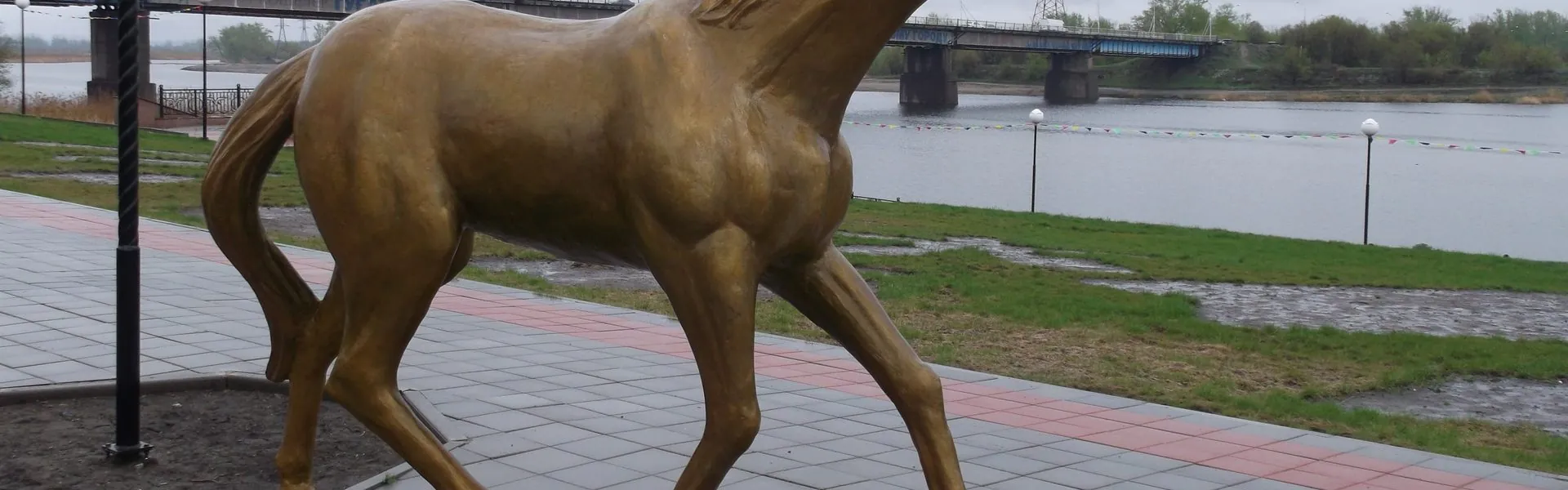
The Kostanay city administration describes the walking area from the Shagal Embankment to Triathlon Park as a stretch of about 2,5 km. That doesn’t mean your family needs to cover all of it: choose a short section along the Tobol, for example 300–500 m one way, and return the same way. That makes about 0,6–1 km round trip, or around 800–1 500 steps on an adult’s pedometer. Before setting out, check the map to see where it’s easiest to start, and don’t plan to cross a bridge unless you can see a marked pedestrian path. Keep your child close to you by the river and away from the water’s edge.
The Park Along Gashek: A Place for Breaks and Play
The city administration’s list of public spaces mentions walking paths and children’s playgrounds at the park along Gashek. It’s a good place to plan a “path — play — bench — back” outing rather than a loop to complete as quickly as possible. For your first visit, plan about 0,5–1 km along the paths, but check the entrance you want to use and whether the area you need is accessible on a map beforehand. If your child is in a stroller, check the route for stairs and look at the path surface in advance. You’ll find more tips in our guide to walking with a stroller.
For a longer outing, you can link several central spots, but don’t start with a big route that combines parks and the embankment. Our guide to walking routes in Kostanay offers options of different lengths; for a family walk, choose just part of a route and leave yourself the option of retracing your steps.
Why Safety and Breaks Matter More Than Kilometers
When walking with a child, the distance isn’t the only thing that matters—so does how comfortable you feel on the route. A systematic review of studies on primary-school-aged children found that concerns about traffic were associated with less outdoor activity. This doesn’t prove that any one type of route is automatically safe, but it supports a practical approach: fewer complicated crossings, easy-to-follow paths and places to stop.
A more recent review examined 149 papers on how parents perceive the environment around their homes and the kinds of activity children and teenagers take part in. The authors note an association between perceived safety and access to places for activity and certain types of movement, but the quality of evidence for different associations ranged from very low to low. So don’t conclude from research that any particular park in Kostanay is automatically safe: assess the conditions on the ground.
A good route for kids is one where it’s easy to say: “That’s enough for today—let’s head back.”
Weather and Path Conditions: Have a Plan B
A short stretch of the embankment is exposed to the wind, while paths among the trees often offer more shelter. On a windy day, choose a park and don’t expect your child to walk quickly: walking into the wind is tiring, and breaks make the outing longer. In hot weather, head out in the morning or evening, bring water and shorten the exposed part of your route. In fall and spring, check whether your chosen path is muddy or covered in puddles; in winter, check for ice ahead of time. Find local tips in our articles about ice and wind in Kostanay and the muddy shoulder seasons.
Before setting out, choose a short stretch you can finish without a tricky crossing or a long walk back. If the weather turns, your child gets cold or they’re tired, don’t keep going just because you’ve already left home.
How to Cross Streets and Keep Your Route Safe
- Use a marked pedestrian crossing; if there’s a traffic light, wait for the signal to cross.
- Stop at the edge of the sidewalk and make sure your child is with you—don’t run into the road to retrieve a toy or ball.
- Hold a young child’s hand, and take the stroller down an accessible curb ramp instead of wheeling it between parked cars.
- Put your phone away at the crossing and check traffic in every direction, even when the light is green.
- By the water, keep your child close to an adult and choose a path away from the water’s edge and slippery slopes.
- If you’re on a shared path, agree in advance that your child will stay close and won’t run in front of bicycles or scooters.
Before you go, give your child an easy-to-understand landmark: for example, “Let’s walk to the bench and decide whether to keep going.” Bring water, a layer to block the wind and a phone with a charged battery. In cool weather, check not just the temperature but also the wind; after rain or snowfall, be ready to switch to a shorter route. If your child is sick or the walk causes unusual tiredness, don’t try to stick to the plan at all costs.
Frequently Asked Questions About Walking with Kids
How many steps should a child take on a walk?
There’s no universal step-count goal for a single walk. Consider the distance, time, your child’s mood and their usual activity level. Children have shorter strides, so adult pedometer readings don’t apply to them.
Do we need to walk the entire Shagal Embankment?
No. Choose a short stretch and return the same way. The 2,5 km figure given by the city administration is the length of the walking area to Triathlon Park, not a required distance for families.
Which route should I choose with a stroller?
Start with a short stretch inside a park where you can turn around without stairs or complicated crossings. Check the path surface and accessible entrance on an up-to-date map before setting out; after rain or snowfall, the route may become difficult.
What should I do if my child gets tired sooner?
Stop, offer some water and calmly shorten the route. That’s why a loop near an exit or an out-and-back route is handy: you won’t have to look for a distant alternative exit.
The Main Thing Is to Finish the Walk on Time
In Kostanay, you can choose a short path in Central Park, walk through Victory Park, take a play break at the park along Gashek or enjoy a short stretch of the Shagal Embankment overlooking the Tobol. Start somewhere convenient, decide where you’ll rest in advance and give yourself permission to turn back. That way, the walk will feel manageable for both your child and you.
Sources
- Zougheibe R. et al. Is there a correlation between children’s outdoor active mobility behaviour and neighbourhood safety? A systematic review of the evidence. BMJ Open, 2021. DOI
- Xing R. et al. Associations between parental perceptions of neighbourhood environment and physical activity in children and adolescents: a systematic review including 149 studies. International Journal of Behavioral Nutrition and Physical Activity, 2025. DOI
- World Health Organization. WHO guidelines on physical activity and sedentary behaviour. Recommendations for children and adolescents aged 5–17, 2020. WHO publication
- Kostanay City Administration. Kostanay — the capital of comfortable living. Information about the Shagal Embankment, Triathlon Park and public spaces in the city. Source
- Kostanay City Administration. Housing and communal services. Information about city parks and walking areas. Source

Count your steps with Qozgal
A free app that counts your steps, keeps your streak and motivates you to walk every day.