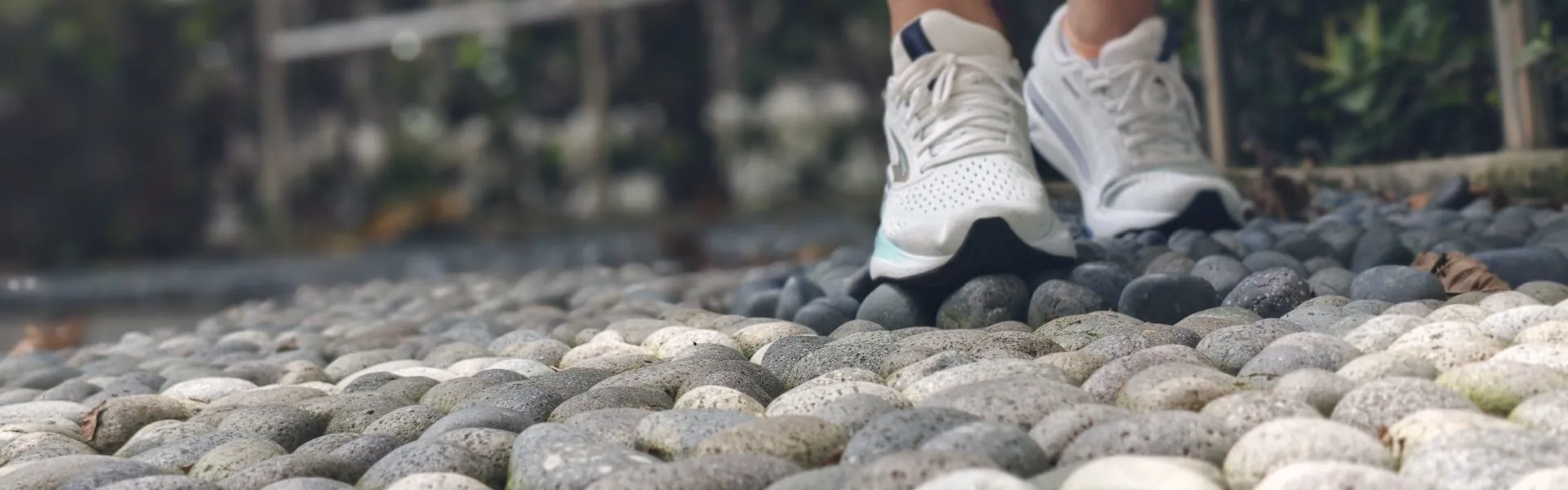
When can you start walking?
If the surgery went smoothly and your doctor has not given you special restrictions, you can usually walk around the house on the same day. The British NHS says that after discharge, a patient should be able to walk safely, but stairs require caution. For an outdoor walk, it is better to wait until you can see the route well, no longer feel dizzy from anesthesia, and have someone with you. Source: NHS
The main guideline Your ophthalmologist’s postoperative instructions matter more than any general timeline. If glaucoma, the retina, or another condition was treated along with the cataract, the timing for returning to activity may be different.
These figures do not mean that you must wait exactly that long. They show common time frames from postoperative guidance: light activity returns earlier than strength exercises, swimming, gardening, or contact sports. Recommendations differ between clinics, so do not replace your surgeon’s individual instructions with these figures. Moorfields Eye Hospital and Guy’s and St Thomas’ NHS
What should your first walk look like?
During the first 24 hours, the goal is not to “get your steps in,” but to calmly see how your eye responds to ordinary movement. Start with a short walk around your home or along a quiet, level route near your house. Walk at a conversational pace, do not speed up on hills, and do not turn the walk into an endurance workout.
- Make your first outings 5–15 minutes long, preferably with someone accompanying you.
- Choose a level path without ice, potholes, steps, or heavy foot traffic.
- Wear glasses if your surgeon recommended them; outdoors, they also protect against wind and dust.
- Do not touch or rub your eye, even if you feel as though there is grit in it or notice mild itching.
- If your vision becomes cloudy, you feel weak, or your eye starts to hurt, stop and return home.
In a prospective study of 55 adults with bilateral cataracts, surgery was associated with an increase in moderate physical activity: after the first operation, participants spent approximately 20 more minutes per week in this type of activity, and after the second, they spent a further 32 minutes more compared with the previous stage. Walking itself, however, did not change statistically significantly throughout the process. This is not a first-day instruction, but it is a good reason not to view surgery as a reason to stop safe movement for a long time.
Meuleners LB, Feng YR, Fraser M, Brameld K, Chow K. DOI: 10.1136/bmjopen-2018-024491The practical takeaway: calm, ordinary walking after standard surgery is generally considered low-risk activity, but vision does not recover evenly. During the first hours, your pupil may remain dilated, your vision may be cloudy, and the depth of steps and curbs may feel unfamiliar. That is why the risk of falling can sometimes matter more than walking’s effect on the eye itself.
If you are worried about feeling unsteady after surgery, temporarily shorten your route and choose a familiar surface. You can also find useful balance-safety guidance in the article about walking and fall risk.
A step-by-step return plan
The day of surgery and the first 24 hours
Walk calmly and only as needed: to the bathroom, kitchen, car, or examination room for your follow-up appointment. If your doctor permits a short outing, choose a level route without heat, wind, dust, or bright sunlight. Do not drive yourself: your vision after the drops and surgery may not yet be stable enough. The American Academy of Ophthalmology recommends asking your surgeon when it is safe to return to physical activity and driving.
Days 2–7
If your pain is not getting worse, your vision is gradually improving, and your doctor has not given you other instructions, you can slowly lengthen your walk. Keep the intensity low: you should be able to speak freely in full sentences and not hold your breath. Do not use your usual step count as a target—in this period, the absence of symptoms and a safe surface matter more.
- Increase duration before speed: for example, add 5–10 minutes at a time.
- Keep the route flat; use stairs only when necessary, holding the handrail.
- Do not combine a walk with carrying bags, groceries, water, or another heavy load.
- Avoid dusty places, construction, windy waterfronts, and situations where dirt could get into your eye.
- Do not swim or use a sauna until your doctor gives permission.
The second week and beyond
At many clinics, the first 2 weeks are considered a period when you should avoid heavy lifting, vigorous exercise, intense bending, and gardening. A light walk when you feel well usually returns earlier. Moorfields specifically advises avoiding strenuous activity and bending, while some NHS guidance allows ordinary walking but keeps restrictions on heavy exertion for two weeks. Moorfields and Leeds Teaching Hospitals
Bending, stairs, and hills
The instruction “do not bend over” is often understood too broadly. Slowly bending to tie your shoelace and working with your head down for a long time are different types of strain. During the first days, the risk is related not only to head position, but also to straining, holding your breath, losing your balance, and possibly hitting your eye.
| Situation | What to do early on | When to resume |
|---|---|---|
| Calm walking on a level surface | Usually allowed if you feel well | From the first 24 hours, according to your surgeon’s instructions |
| Stairs | Go slowly, use the handrail, and do not rush | When your vision allows you to judge the steps confidently |
| A long hill or brisk walking | Do not use it as a workout | After permission and a gradual test on a level route |
| Bending with your head down | Do not stay in that position or combine it with effort | Gradually; if your surgeon has imposed a strict restriction, wait for permission |
| Heavy bag, backpack, or strength work | Avoid | Often after 1–2 weeks, depending on the individual |
There is a small study that helps distinguish actual risk from outdated restrictions. But it does not give permission for every type of exertion and does not override your discharge instructions.
M. M. Quraishy and A. G. Casswell studied 21 cases of traumatic wound dehiscence after surgery. The most common causes were a hand striking the eye and falling; no case was associated with bending down itself. The study’s limitation is clear: it was a retrospective review of injuries, not a trial of different walking routines. The result therefore suggests that an ordinary controlled bend is not the same as dangerous exertion, but falls, impacts, and straining should still be avoided.
Quraishy MM, Casswell AG. Eye. 1996;10:92–94. DOI: 10.1038/eye.1996.14Calm walking is not the same as walking uphill. If the route makes you strain noticeably, hold your breath, or raise your heart rate quickly, postpone it until your ophthalmologist gives you permission.
The last sentence is a practical takeaway, not a separate clinical threshold. There is little direct research specifically on hill walks after phacoemulsification. But hospitals consistently advise temporarily avoiding vigorous exercise, heavy lifting, and activities that may raise pressure or cause injury. So first test level walking, then a short gentle incline, and only after that return to your usual route.
How to climb more safely Shorten your stride, do not hold your breath, do not carry a heavy bag, and do not keep looking at your feet by sharply bending your head. It is better to choose a path with good footing and walk beside someone who can help on a difficult section.
Which symptoms should not be dismissed as recovery?
A mild foreign-body sensation, moderate light sensitivity, tearing, and slight redness can occur after surgery. But symptoms should gradually ease rather than worsen. Severe pain or worsening vision is not a reason simply to cancel your walk and wait several days.
- Contact your surgeon or the ophthalmologist on duty urgently if the pain is getting worse, your eye becomes noticeably redder, or pus-like discharge appears.
- You need urgent assessment if your vision suddenly worsens, becomes significantly cloudier after improving, or you develop marked swelling and light sensitivity.
- Flashes of light, a sudden increase in new floaters, a dark curtain, or a shadow in your field of vision may indicate a retinal problem—seek emergency care.
- Do not wait for a routine appointment if symptoms appear after a fall, impact, vigorous rubbing of the eye, or accidental contact with a chemical product.
Canadian clinical guidance considers reduced vision, increasing pain, progressive redness, flashes, new floaters, and signs of retinal detachment reasons for urgent referral within 24 hours. If an infection of the intraocular tissues is suspected, emergency care is needed. BC Guidelines
What helps you return to walks with less risk?
- Remove rugs, cords, and other obstacles at home in advance, especially if your vision is still unsteady.
- Outdoors, choose daylight and a familiar route; curbs and steps are harder to judge in the dark.
- Continue using your drops as prescribed and wash your hands before applying them.
- Do not change the frequency of your drops yourself or add painkillers or anti-inflammatory eye medications.
- If one eye has already been operated on, account for the difference between your eyes: your brain may need time to adjust to the new sharpness and colors.
- To gradually return to your usual routine, you can use the principle from the article about returning to walking after illness: keep it short and regular, and assess how you feel the next day.
Frequently asked questions
Can I go for a walk on the day of surgery?
After uncomplicated surgery, you are usually allowed to walk around the house and sometimes go out briefly if your vision and general condition allow it. Do not walk alone, drive, or choose a difficult route. The exact recommendation depends on the type of surgery and your surgeon’s instructions.
Can I walk briskly after cataract removal?
During the first days, choose a calm pace. Gradually return to brisk walking when you have no pain, increasing redness, worsening vision, or feeling of instability. If the pace makes you hold your breath or strain noticeably, it is still too much exertion.
When can I walk uphill?
It is reasonable to test a gentle incline after you can confidently tolerate a level walk. Start with a short section, without a heavy backpack and without speeding up. After complex surgery, or if you have glaucoma, retinal problems, or a strict medical restriction, get individual permission first.
Can I bend over to pick something up?
A short, controlled bend is not the same as strength work with your head down, but during the early days it is better to squat with your back straight or ask for help. Do not stay bent over for long, lift heavy objects, or hold your breath. If your surgeon has prohibited bending, follow that specific timeline.
Which symptoms after a walk require urgent advice?
Increasing pain, worsening redness, sudden deterioration in vision, pus-like discharge, flashes, a sudden increase in floaters, a dark curtain, or a shadow are reasons to contact an ophthalmologist urgently. After an impact or fall, do not wait for symptoms to go away on their own.
- Calm walking on a level surface often returns during the first 24 hours after uncomplicated surgery, but only if you can see safely and do not feel weak.
- Make your first walks short and slow, without hills, heavy bags, dust, wind, or fall hazards.
- Bending and stairs are not prohibited in the same way for everyone: avoid prolonged head-down positions, straining, and sudden movements, and put your surgeon’s advice first.
- Vigorous workouts, heavy lifting, swimming, gardening, and contact sports return later—often after 2–4 weeks, but timing depends on the surgery.
- Severe pain, worsening vision, increasing redness, flashes, new floaters, or a dark curtain require urgent ophthalmic assessment.
Sources
- NHS. Cataract surgery: recovery, walking, restrictions, and warning symptoms. NHS: Cataract surgery
- Moorfields Eye Hospital. Aftercare: restrictions after eye surgery and symptoms that require help. Moorfields Eye Hospital: Aftercare
- American Academy of Ophthalmology. Cataract Surgery: a patient guide to recovery and returning to activity. AAO: Cataract Surgery
- Meuleners LB, Feng YR, Fraser M, Brameld K, Chow K. Impact of first and second eye cataract surgery on physical activity: a prospective study. BMJ Open. 2019. DOI: 10.1136/bmjopen-2018-024491. BMJ Open, 2019: physical activity
- Quraishy MM, Casswell AG. May I bend down after my cataract operation, doctor? Eye. 1996;10:92–94. DOI: 10.1038/eye.1996.14. Eye, 1996: bending after surgery
- Porela-Tiihonen S, Kokki H, Kaarniranta K, Kokki M. Recovery after cataract surgery. Acta Ophthalmologica. 2016;94:1–34. DOI: 10.1111/aos.13055. Acta Ophthalmologica, 2016
- British Columbia Guidelines. Cataract: postoperative monitoring and red flags. Guidance for recognizing complications after surgery. BC Guidelines: Cataract
- Guy’s and St Thomas’ NHS Foundation Trust. After cataract surgery: restrictions on bending, vigorous exercise, heavy objects, swimming, and contact sports. Guy’s and St Thomas’: After cataract surgery

