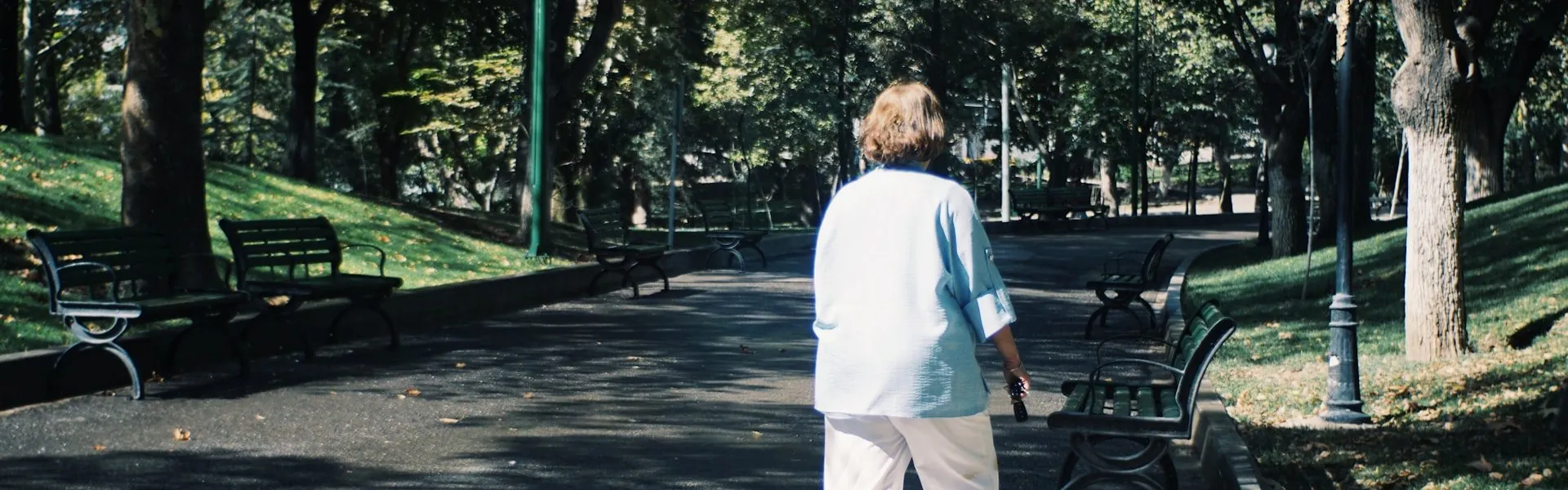
Can You Walk with Scoliosis?
In most cases—yes. The Scoliosis Research Society considers physical activity generally beneficial and does not advise avoiding activities you enjoy if they do not cause pain and your doctor has not given you other restrictions. The NHS also notes that most people with scoliosis can lead normal lives and take part in physical exercise and sports.
The main point: walking helps maintain overall fitness, but it does not “straighten” the spine and does not replace monitoring, bracing or specific exercises if they have been prescribed for you.
Scoliosis can take different forms: adolescent idiopathic, adult degenerative, congenital, neuromuscular or postoperative. So the same route may be well tolerated by a teenager without pain but unsuitable for an adult with compression of nerve structures. If your diagnosis has not yet been confirmed, see a doctor first: the NHS recommends assessing suspected scoliosis, rather than diagnosing it from a photo or from how your clothes fit.
Before Your First Walk
Before you start, assess more than just your back—pay attention to your legs too. For a safe start, it is important to understand what exactly limits your walk: local muscle fatigue, lower-back pain, pain radiating to the buttock or leg, numbness, weakness, shortness of breath or fear of losing your balance.
- Choose a flat surface without long uphill sections, stairs or uneven paving.
- Wear shoes you have already walked in, rather than a new pair for your first long walk.
- Start when you feel settled and your pain has not increased after sleep, work or training.
- Plan your first outings close to home, so you can turn back without the pressure to “reach the end at any cost.”
- If you wear a brace, use a cane, have had surgery or have significant pain, ask your doctor in advance about your activity limits.
This Is Not a Test of Willpower If you need several hours to recover after a walk, start noticeably limping or feel a sharp deterioration the next day, the load was too high. Reduce it and discuss your symptoms with a specialist.
How to Choose Your Pace and Duration
For most people with a stable condition, a sensible starting point is a conversational pace. You can speak in full sentences, your breathing stays controlled and each step does not become a struggle against pain. You can use your heart rate as a guide, but there is no universal “correct” speed for scoliosis: it depends on your age, fitness, other health conditions and type of curvature. We have covered the practical talk test in a separate article.
| Situation | What to do | What to avoid |
|---|---|---|
| Starting after a break | Walk slowly on a flat surface and assess your body’s response | Do not try to immediately return to your previous distance |
| Pain appears at the start | Warm up for longer and shorten your stride | Do not speed up to “push through” the pain |
| One side gets tired | Slow down, check your shoes and technique, and see a doctor if it happens repeatedly | Do not compensate for the imbalance by strongly leaning your torso |
| You feel unsteady | Choose a well-lit, flat route and use support if needed | Do not start with stairs, ice or steep descents |
| You feel worse after walking | Return to a shorter duration or split it into parts | Do not increase the distance while symptoms are getting worse |
A practical starting template is a short 5–10 minute walk at an easy pace. This is not a treatment dose or a mandatory target, but a way to check how well you tolerate the activity. If several outings go smoothly, add a few minutes or split the walk into two short outings during the day. Increase duration first, and only then speed and route difficulty.
How to Tell Whether the Pace Is Right
- You can speak without constant pauses to catch your breath.
- Your steps stay even, without noticeable limping or a sudden shortening of one leg’s stride.
- Your shoulders and hands stay relaxed, and you do not need to hold your breath.
- The pain does not build with every minute or change into a shooting or burning sensation.
- After you stop, your condition gradually returns to normal rather than getting worse.
A meta-analysis showed that walking parameters in adolescents with idiopathic scoliosis may differ from those of people without scoliosis. The researchers examined speed, step length, cadence, pelvic and trunk movements, as well as muscle activity. The practical conclusion is limited but important: you do not need to copy someone else’s speed or force your steps to be symmetrical. Your technique should be stable and well tolerated by you. The data do not allow these findings to be directly applied to adults with degenerative scoliosis.
DOI: 10.1016/j.jocn.2020.09.035Technique: Do Not Force Yourself Straight
With scoliosis, it is easy to turn a walk into constant monitoring of your shoulders, pelvis and back. But trying to keep yourself “perfectly straight” all the time can increase tension. It is better to think about gentle body organization: the crown of your head reaches upward, your gaze points ahead, your chin does not jut forward, your shoulders stay relaxed and your ribs do not flare with every breath.
- Look a few meters ahead rather than constantly watching your feet.
- Keep your torso organized, but do not brace your abdomen or hold your breath.
- Let your arms move naturally, without excessive swinging or tension in your hands.
- If your lower back reacts to a long stride, shorten it slightly and slow down.
- Do not consciously shift your weight only to one side or try to “twist” your spine while walking.
- On turns, rotate your whole body gradually rather than sharply twisting your lower back.
Posture cues are best used as suggestions, not as an exam. In a separate article about walking technique and posture, we explain the same principle: a neutral position, free breathing and an absence of unnecessary tension matter more than outward symmetry.
A study of college students with idiopathic scoliosis compared muscle activity during walking on a flat surface and on stairs. The authors described differences in trunk-muscle activation patterns compared with a control group. This does not prove that ordinary walking is harmful, but it helps explain why uphill and downhill sections and fatigue may feel different. That is why it is better to increase route difficulty gradually rather than at the same time as distance.
DOI: 10.1186/s12891-024-07954-5Shoes and Route
There is no special “scoliosis shoe” with a proven effect. You need a pair that does not make you change your stride: with secure heel support, comfortable width in the forefoot, a non-slip sole and moderate flexibility at the toe. Shoes that are too soft or worn out can worsen your sense of support, but shoes themselves do not correct spinal curvature.
- Try shoes on while standing and check that your toes do not touch the front.
- Make sure your heel does not slip when you rise onto your toes.
- Choose a sole with good traction, especially in winter or on wet surfaces.
- Do not use homemade heel lifts or inserts to “level your pelvis” without a specialist’s advice.
- If your feet tire quickly or pain appears in your heel, check the recommendations for choosing walking shoes.
For the first few weeks, it is better to walk on a flat surface. Add uphill sections once ordinary terrain feels comfortable. On a downhill, shorten your steps, do not lean sharply forward and use a handrail if needed. If your balance is limited, a route with stairs and cobblestones is not the best way to test your endurance.
Warm-Up and Cool-Down Before heading out, start with a few minutes of very easy walking. At the end, do not stop suddenly after a brisk pace: slow down gradually. Gentle warm-up and cool-down are described in more detail in our article about preparing for a walk.
If You Wear a Brace or Live with Pain
A brace does not mean complete rest. The SRS says that physical activity is usually allowed while wearing a brace if there is no pain and no individual restriction. But the routine depends on the brace design, the treatment goal and how well it has been fitted. If it rubs, increases pain, causes skin numbness or makes it hard to breathe, do not just tolerate it—contact your doctor or orthotist.
In a randomised study, 40 adolescents with idiopathic scoliosis followed an aerobic programme for 12 weeks; one group also performed strength exercises. The combination led to greater improvements in functional exercise tolerance and some respiratory measures than aerobic training alone. The study did not test walking as a stand-alone treatment and does not answer the question of how adults with degenerative scoliosis respond. Its useful takeaway is different: walking can be part of an overall programme, but symptoms often also call for an individually tailored strength component.
DOI: 10.1016/j.jphys.2019.11.012If your pain is constant, limits daily life or makes you change the way you walk, a walk alone will not solve the problem. For adults with symptomatic deformity, the SRS recommends that a physiotherapist familiar with spinal-deformity rehabilitation assess your movement, strength and symptom reproduction. This can help determine whether you need to work on your pelvis, rib cage, breathing, leg muscles or walking strategy itself.
When to See a Doctor
Make a routine appointment if pain keeps returning, your walking distance is gradually decreasing, you develop repeated limping, one leg tires quickly, you often trip or you cannot find a level of activity that does not make you worse. Adults in particular should not automatically blame new pain on “old scoliosis”: the cause may be the joints, discs, stenosis or nerve irritation.
- new or worsening weakness in your leg or foot;
- numbness, tingling or burning pain radiating to your buttock or leg;
- a feeling of unsteadiness, frequent falls or a sudden change in your gait;
- severe pain after an injury, unexplained night pain, fever or marked general malaise;
- new problems with urination or bowel control;
- numbness in the groin, buttocks or inner thighs.
Urgent—Do Not Just “Wait and See” New leg weakness, numbness in the saddle area and sudden problems with bladder or bowel function require urgent medical assessment. These symptoms may indicate compression of nerve structures. North Bristol NHS Trust describes them as possible signs of cauda equina syndrome.
In Short: How to Adapt Your Walks
- Start at a conversational pace on a flat route, rather than aiming for a target number of steps.
- Increase duration first, then speed, uphill sections and surface difficulty.
- Do not force yourself to maintain “perfectly straight” posture: look for easy breathing and a steady stride.
- A brace, surgery, neurological symptoms and significant pain require individual restrictions.
- If symptoms worsen, change character or come with weakness and numbness, see a doctor.
A good walk with scoliosis is not the one where you set a record. It is the one after which your body remains functional: you are not limping, holding your breath or making the pain worse, and you can calmly continue your ordinary day. This approach helps make walking a sustainable habit rather than another test for your back.
Frequently Asked Questions
Can walking straighten the spine with scoliosis?
No, you should not expect walks alone to correct the curve. Walking supports overall fitness, while treatment depends on your age, the type and severity of scoliosis. Specific exercises, bracing or other methods are prescribed separately.
Can I walk fast with scoliosis?
You can if a faster pace does not cause pain, limping, dizziness, shortness of breath or worsening neurological symptoms. Start at a pace where you can talk, and increase speed only after you consistently tolerate ordinary walks well.
Do I need to walk with a straight back and my stomach pulled in?
You do not need to keep “lining up” your body constantly. Simply keep your gaze ahead, your shoulders relaxed and your torso free from a sharp lean, while maintaining natural breathing. Forced correction can create more tension than benefit.
Can I walk while wearing a brace?
Often, yes, if your doctor has approved it and the brace does not cause pain, rubbing, numbness or breathing problems. Follow your own wearing schedule: it depends on the brace design and treatment goal.
What should I do if my back hurts after a walk?
Shorten the duration, slow down, choose a flat route and see whether the symptom repeats. If the pain gets stronger, radiates into your leg, comes with numbness or weakness, or regularly limits walking, contact a doctor or physiotherapist.
Sources
- Kim DS, Park SH, Goh TS et al. A meta-analysis of gait in adolescent idiopathic scoliosis. Journal of Clinical Neuroscience, 2020. DOI 10.1016/j.jocn.2020.09.035
- Xavier VB, Avanzi O, Costa de Carvalho BDM, Dos Santos Alves VL. Combined aerobic and resistance training improves respiratory and exercise outcomes more than aerobic training in adolescents with idiopathic scoliosis: a randomised trial. Journal of Physiotherapy, 2020. DOI 10.1016/j.jphys.2019.11.012
- Schreiber S, Parent EC, Moez EK et al. The effect of Schroth exercises added to the standard of care on quality of life and muscle endurance in adolescents with idiopathic scoliosis. Scoliosis, 2015. DOI 10.1186/s13013-015-0048-5
- Gou Y, Tao J, Sun Y et al. Spinal muscle characteristics during three different types of locomotion activities among college students with idiopathic scoliosis. BMC Musculoskeletal Disorders, 2024. DOI 10.1186/s12891-024-07954-5
- Scoliosis Research Society. Living with Scoliosis: physical activity, exercise and bracing. Scoliosis Research Society — Living with Scoliosis
- National Health Service. Scoliosis: symptoms, treatment and physical activity. NHS — Scoliosis
- Scoliosis Research Society. Non-Operative Spine Care for Adults: recommendations for physical therapy and conditioning in adult spinal deformity. SRS — Non-Operative Spine Care for Adults
- North Bristol NHS Trust. Same Day Emergency Clinic: Cauda Equina Syndrome and urgent neurological symptoms. North Bristol NHS Trust — Cauda Equina Syndrome

