In spring, choose reliable surfaces over a scenic loop
A spring walk in Semey often takes you over different surfaces: dry sidewalks, wet asphalt, patches of ice in the shade, and soggy ground in the park. So don’t plan your route using the map alone. First figure out where you can stay on firm ground and where you can quickly turn around or get back to a street.
Your main guide isn’t speed or step count, but stability. If your soles start slipping, your shoes sink into the ground, or water is hiding potholes, take a detour. A shorter, more predictable walk is better than a long loop that forces you across grass and mud.
- Check the weather and surface conditions before you leave; once you’re there, assess the path during the first few minutes.
- During the thaw, choose shoes with a grippy, patterned tread and a stable heel—not smooth soles.
- For a short walk, stick to firm park paths; use the embankment only where there’s no ice or deep puddles.
- Save Polkovnichy Island and forest trails for when the ground has dried out.
- Shorten your stride, slow down, and keep your hands free on wet or uneven sections.
How to assess a path in a minute
Look not only at the ground right in front of you, but also a few steps ahead. Check the edge of a puddle: if you can already see loose soil, crumbling footprints, or meltwater flowing across the path, don’t try to walk along the very edge. Take a dry detour on the sidewalk, even if it adds distance.
- Firm and even: dry asphalt or cleared paving stones—you can walk at your usual pace.
- Wet, but with no ice or loose ground: shorten your stride, don’t speed up, and avoid sudden turns.
- Soft, standing water, or your sole sinking into the ground: turn back or find an asphalt detour.
- You can’t see what’s under the water: don’t step in blindly; a puddle may hide a pothole, ice, or the edge of the path.
During the thaw, a good route is one where you can choose a dry detour and turn back easily at any time.
A review of 384 studies found that surfaces are often described in too little detail, making results difficult to compare. For a walk, this is a useful reminder: “a wet path” isn’t just one type of surface. Look separately at the slope, unevenness, water, and loose mud; don’t assume a section is safe just because it looks familiar.
Lawson R., Thomas N. D. A. Systematic review of surface characteristics, 2023Shoes for wet asphalt and soggy ground
For a city walk, choose closed shoes that hold your heel securely, don’t slip around on your foot, and flex where your foot bends. A pronounced tread pattern with grooves is useful on wet surfaces and more practical than a smooth sole. Check for wear, too: if the tread is almost gone, the shoes are less suitable for the thaw.
A water-resistant upper helps if you’ll encounter splashes or wet snow, but you don’t need to buy heavy, tall boots just for one walk. Make sure your shoes don’t rub and that your toes stay dry. If you only have your usual sneakers, stick to asphalt and avoid unpaved trails.
| Surface and conditions | What to wear and how to walk |
|---|---|
| Wet city sidewalk | Closed sneakers or boots with a patterned sole; take shorter steps than usual. |
| Slush and small puddles | Shoes with a water-resistant upper and a secure heel; go around deep puddles. |
| Soggy ground | It’s better to change your route; city sneakers won’t make a muddy trail safe. |
| Partly frozen water or ice | Don’t rely on tread alone: choose another section or head back along a dry route. |
In an experiment with shoe soles, grip depended on the material, the condition of the sole, and the surface and contaminant; heavily worn tread is a reason to replace your shoes. This was a laboratory study of industrial footwear on contaminated floors, not a direct test of sneakers on spring mud. So the takeaway is practical but limited: check the condition of your soles, and when in doubt, change your route instead of relying on a brand’s promises.
Grönqvist R. Mechanisms of friction and assessment of footwear soles, 1995Routes in Semey: where to shorten your walk
During the thaw, it’s convenient to walk in places with firm paths and easy access to city streets. Along the Irtysh embankment, stick to dry, open sections; in parks, stay on the main paths instead of cutting across the grass. The distances below are estimates from the Qozgal city guide, not a guarantee of today’s surface conditions. See the detailed guide to routes in Semey and check conditions as you go.
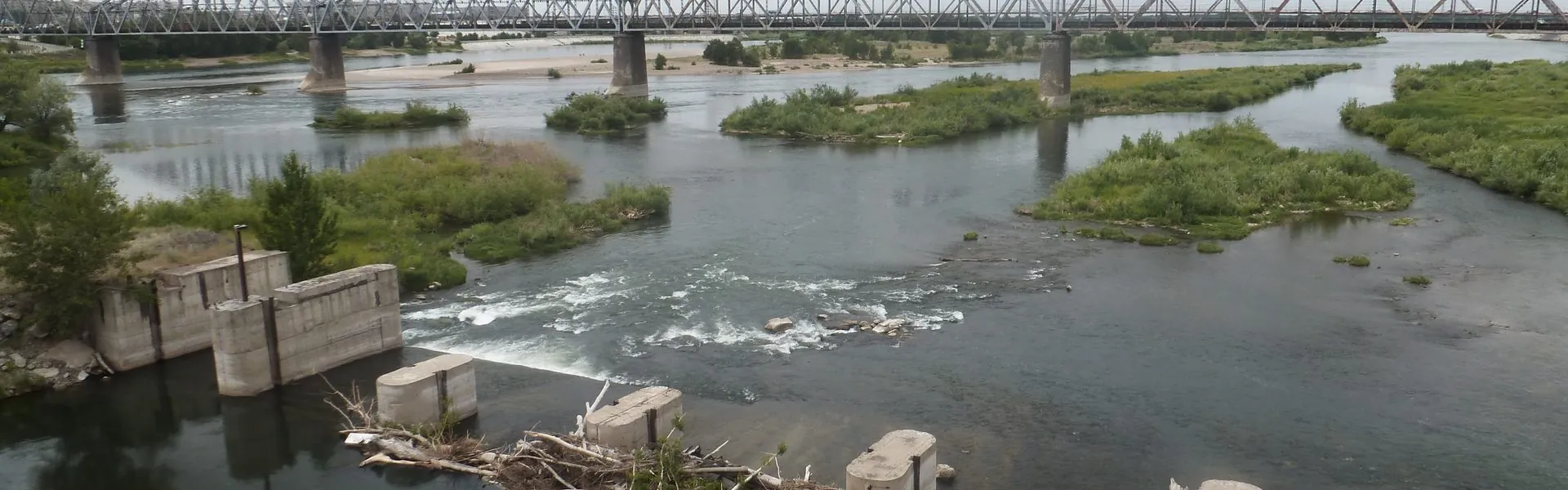
- Irtysh embankment: the city guide lists a section of about 2.5 km, or roughly 3,500 steps. You don’t have to walk the whole way: start near the approach by the suspension bridge, follow the firm path, and turn back at the first puddles or icy patches. You can walk to the embankment from the city center; check the map for a suitable bus before leaving, as routes and stops can change.
- Abay Park: the large loop is about 1.8 km, or roughly 2,800 steps. During the thaw, walk only the dry main path and take a short loop. The park is easy to reach through the city center; if you want a longer walk, add firm sidewalks in the central area.
- Central Park: use the “Central Park” bus stop at the intersection of Kaim Mukhamedkhanov and Dulatov streets as your landmark. Check a current app for bus information; inside the park, choose paths that haven’t turned to mud. You’ll find the address and landmarks in the Qozgal city guide.
- Polkovnichy Island: the city guide estimates the full loop at about 7.5 km, but forest and unpaved paths can be difficult during the thaw. Save the island for when the ground dries out, or stick to a section where the surface is firm and you know how to get back.
There’s a separate guide to the embankment: how to walk by the Irtysh and choose a route along the water. Before you leave, check the map, weather, and any notices about temporary restrictions. Don’t assume yesterday’s dry route will stay the same after overnight snowmelt or rain.
How to change your route if you hit mud along the way
You don’t have to press on to your planned destination. On a soggy section, turn back to the nearest dry sidewalk and adjust your walk to follow the streets or main park paths. If you want to keep your walk the same length, add another short stretch on firm ground instead of veering off across the grass.
- Start with a short stretch near a bus stop, the city center, or somewhere you can easily call a taxi.
- After a few minutes, assess your grip and the state of the path. If your steps feel unstable, shorten your walk.
- Choose a loop with several exits instead of a long, one-way route.
- Treat your step count as a guide, not a requirement: during the thaw, turning back safely matters more than hitting your daily goal.
In a laboratory study, 11 healthy participants walked on an artificially uneven surface. Energy expenditure was about 28% higher than on a flat surface; the researchers also noted greater variability in their steps. This wasn’t a study of spring mud in Semey, but it supports a practical tip: slow down on uneven ground and don’t try to maintain your usual pace at all costs.
Voloshina A. S. et al. Biomechanics and energetics of walking on uneven terrain, 2013How to walk: calmly, with short steps, and without your phone in hand
On a wet or uneven section, take slightly shorter steps and place your foot closer to your body instead of reaching far forward. Walk at a pace that lets you spot the edge of a puddle and choose where to place your next step. Don’t run through the mud, jump off curbs, or make sudden turns on slippery paving stones.
Keep your hands free: put your phone in a pocket or bag so you’re not reaching for the screen if you lose your balance. If you’re walking with a child or a dog, keep some distance from puddles and the edge of the path; don’t let the leash suddenly pull you in a different direction. Before a long walk, mark places where you can stop or turn back.
When it’s better to postpone your walk
Avoid your chosen section if there’s a continuous layer of ice under the water, the riverbank edge is eroding, the path is blocked, or you can’t tell how deep the puddles are. Don’t go around barriers or head down to the riverbank to take a shortcut. If your shoes get wet, your feet feel cold, or you slip several times, end your walk and choose a drier route home.
Don’t test a slippery surface with your own feet Don’t take a sudden test step on ice or sloping, wet paving stones. If the surface looks questionable, go around it using a safe route or turn back. If you feel pain, severe weakness, or dizziness, stop and ask for help.
Frequently asked questions
Can I go to Polkovnichy Island during the thaw?
Only if you can see in advance that the section is dry, firm, and accessible. If the route leads onto soggy trails, it’s better to save the island for another time and choose the embankment or central streets instead. The full loop is a long walk, and it’s easier to turn back early during the thaw.
Are regular sneakers suitable?
Yes, if they fit well, the soles aren’t worn out, and your route stays on firm surfaces. Regular city sneakers don’t guarantee good grip on muddy, unpaved trails. For wet snow and puddles, choose shoes with a water-resistant upper.
How many steps should I plan for?
Choose a short stretch and see how the surface feels. The Qozgal city guide estimates about 3,500 steps for the embankment section and around 2,800 for the large loop in Abay Park. These are estimates: your actual count depends on your stride length and the loop you choose.
What should I do if the embankment turns out to be wet or slippery?
Don’t continue along the water’s edge. Head back to a dry city sidewalk, shorten your route, or postpone your walk. Check current conditions and transport before you leave, and reassess the surface after rain.
Sources
- Lawson R., Thomas N. D. A. A systematic review of the measures that have been used to assess surface characteristics in relation to their impact on walking and falling. Systematic Reviews, 2023. DOI: 10.1186/s13643-023-02315-0
- Grönqvist R. Mechanisms of friction and assessment of slip resistance of new and used footwear soles on contaminated floors. Ergonomics, 1995. DOI: 10.1080/00140139508925100
- Voloshina A. S., Kuo A. D., Daley M. A., Ferris D. P. Biomechanics and energetics of walking on uneven terrain. Journal of Experimental Biology, 2013. DOI: 10.1242/jeb.081711
- Qozgal. Where to walk in Semey: 10 routes along the Irtysh and through Abay’s parks. A city guide with estimated distances and step counts. Guide to routes in Semey
- Welcome.kz. Central Park of Semey. Park address and public transport stop. Semey Central Park
