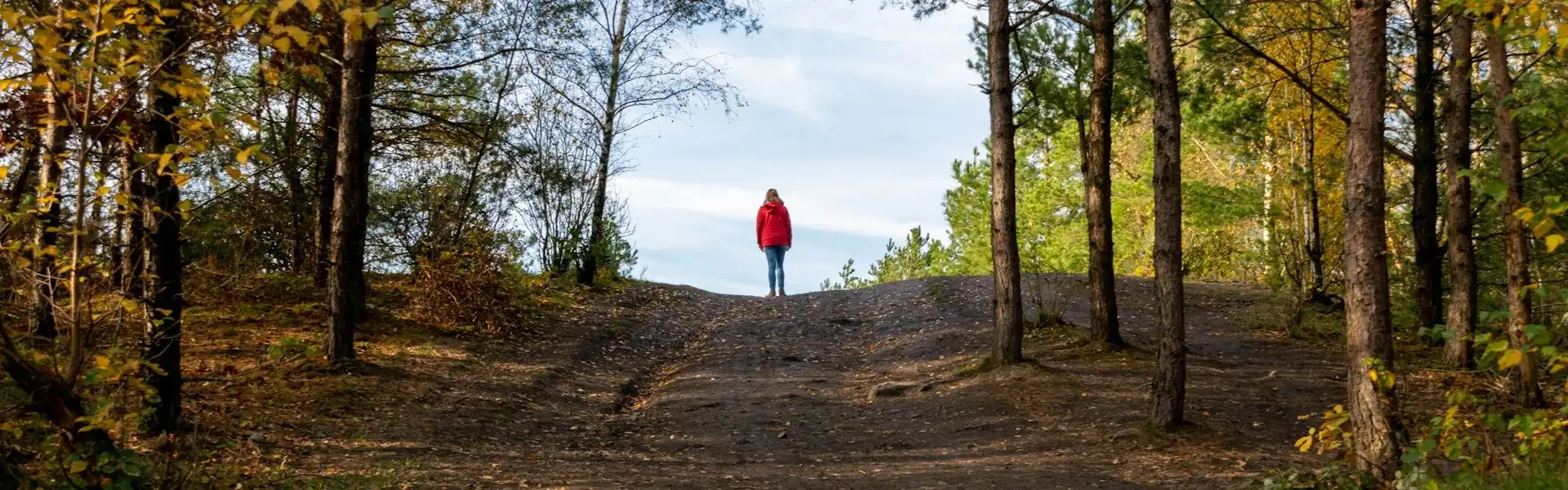
Start by checking the markings and signs
A shared path is a space for different people: pedestrians, cyclists, scooter riders, and sometimes other road users. They travel at different speeds, have different fields of vision, and can stop at different rates. So rule number one is to follow local signs and markings: they may separate traffic or indicate which direction to go. Don’t assume that the rules on a familiar path automatically apply to another one.
- Keep to one side of the path and don’t change direction suddenly.
- Before stepping into or across a bike lane, stop, look both ways, and cross straight over.
- If you hear a bell or a voice, don’t jump to the side: first work out where the person is riding.
- Keep your child close and your dog on a short leash; it’s best to stop outside the main flow of traffic.
- If it’s crowded, noisy, or hard to see, choose a quieter section or route.
On some routes, pedestrian and cycling areas are separated by a line; on others, everyone walks and rides on the same surface. If the zones are marked, stay in yours. If there are no markings, consistently keep to one side—usually the right where that matches local rules and the usual direction of travel. What matters most isn’t whether it’s the “right” or “left” side, but that you don’t weave around or make others guess where you’re going.
| Part of the route | How to walk | What to check |
|---|---|---|
| Separate pedestrian area | Stay within the markings | Don’t step into the bike lane suddenly |
| Shared path with no separation | Keep to one side and don’t take up the whole width | Check for traffic behind you and coming toward you |
| Crossing a bike lane | Stop at the edge and cross quickly and straight | Can you see approaching traffic from both directions? |
Follow the markings, not your habits If a sign or surface indicates a specific direction, follow it. Rules and right of way on paths depend on the location: don’t apply rules from another city or another type of lane to your walk.
Keep a predictable line
Walk in a straight line as much as possible, don’t suddenly take up the whole path, and don’t change direction without looking over your shoulder. If you need to switch sides, go around a puddle, or turn, check what’s happening first, signal your intention with your movement, and only then change course. Don’t step onto the path from behind a tree, parked bike, bus stop, or group of people without checking who’s approaching.
Headphones and your phone can distract you just when someone is coming up behind you or appearing around a bend. On a busy stretch, put your phone away and make sure you can hear people around you. If you’re listening to audio, keep the volume low or leave one ear free. This doesn’t guarantee safety, but it can help you notice a signal or voice.
What they studied: Researchers analyzed 2739 interactions on a Montreal campus using video footage. The frequency of conflict situations was associated, among other things, with pedestrian density and cyclist speed. This was an observational study of interactions, not a count of injuries: it helps explain why a calm speed and predictable path matter especially in crowds, but it doesn’t establish universal safe distances.
Beitel D. et al. Assessing safety of shared space using cyclist-pedestrian interactions and automated video conflict analysis.- Walk closer to your side, leaving room for oncoming traffic and people overtaking.
- Don’t spread out across a narrow section: if you’re walking in a group, stay closer together where space is tight.
- Slow down near bends, on slopes, by bus stops, and wherever visibility is poor; avoid sudden steps.
- If you need to stop, move to the edge or another safe spot instead of stopping in the middle of the flow.
When someone overtakes: give each other time to react
A cyclist or scooter rider may come up behind you almost silently. If you hear a bell or “on your left,” don’t automatically jump away: the person may be passing you on that very side. Keep your direction, briefly check where they are, and move only when you can see where it’s safe to go. If a child or dog is with you, keep them close first.
When passing someone coming toward you, don’t make a sudden move to the side: you could step directly into their path. Gradually make room when you can, and leave a predictable corridor. If the path is narrow and it’s hard to pass, it’s wiser to stop at the edge for a moment than to squeeze between other people.
What they studied: Researchers reviewed video of 208 interactions in Vancouver. People avoided collisions by changing their speed or direction; the maneuvers they used depended on crowding and available space. The practical takeaway isn’t that pedestrians should guess a cyclist’s path, but that sudden changes of direction and limited space make it harder for people to pass each other.
Alsaleh R., Hussein M., Sayed T. Microscopic behavioural analysis of cyclist and pedestrian interactions in shared spaces.On a shared path, the best warning is predictable movement: keep your line, stay aware of others, and change direction only after checking.
A bell is a signal that someone is approaching, not a command to jump out of the way. A study of three busy paths in Sydney recorded instances of close, fast overtaking, as well as overtaking without warning. However, traffic in Australia keeps to the left, so its “keep left” rule shouldn’t be mechanically applied in another city. The useful general takeaway is to follow local markings and avoid sudden maneuvers. Read more about the study of behavior on shared paths.
What they studied: Video surveillance at three sites in Shenzhen identified 337 conflict situations over 12 hours of recordings. People most often avoided one another by changing direction; crowding and the complexity of the traffic flow affected the number of conflicts. The authors analyzed conflict events and compared them with incident data—these 337 cases do not mean 337 collisions or injuries.
Liang X., Meng X., Zheng L. Investigating conflict behaviours and characteristics in shared space for pedestrians, conventional bicycles and e-bikes.How to cross a bike lane
Crossing is when you step into the path of someone moving faster, who may not expect you to move in that direction. Don’t run diagonally across, and don’t rely on sound alone: you may not hear a quiet bike or scooter, especially in a noisy place. If bushes, parked vehicles, or a crowd block your view, first move to a spot where you can see the lane, then decide whether it’s safe to cross.
- Stop at the edge of the bike lane without stepping into it.
- Look both ways, including behind you if the direction of travel isn’t obvious.
- Wait for a gap; don’t assume an approaching person has seen you or will be able to stop in time.
- Where possible, cross the lane at a right angle without stopping in the middle.
- If a child or dog is with you, bring them close and keep them there until you’ve finished crossing.
Don’t stop between traffic flows If you need to wait, stop before the bike lane or in a safe place beyond it. Don’t linger on the dividing line or suddenly turn back.
Walking with a child or dog
For a young child, other people’s speed and direction are often harder to understand than they are for an adult. Hold your child’s hand where traffic is dense, and on a narrow section walk beside them so they don’t suddenly end up on the bike-lane side. Don’t ask a child to “quickly run across” in front of someone approaching—stop and cross together when the way is clear.
A child on a scooter may suddenly swerve, while a tired toddler may stop in the middle of the path. So agree on a simple signal in advance, such as “stop at the edge.” If you need to adjust their clothes, give them water, or explain a rule, move to the side. On a busy route, choose a short stretch with good visibility or a quieter walking path. You’ll find ideas for a family outing in our article on where to go with kids in Tashkent.
- Keep your dog close on a short leash, especially near bends and when a bike or scooter is approaching.
- Don’t let the leash stretch across the full width of the path: someone could trip over it or ride into it.
- If your dog reacts to traffic, stop to the side and hold them until the flow has passed.
- Don’t suddenly let go of the leash or change direction across the path with your dog.
Where to walk When it’s safe and doesn’t get in anyone’s way, keep your child or dog on the side away from bike traffic. Don’t move them across someone else’s path at the last moment.
Choose your route based on the conditions
Even an attentive pedestrian can’t make up for poor visibility, crowds, or a path that’s too narrow. If a section is packed, separated lanes are busy, or people are constantly swerving around one another, slow down and let the flow pass in a safe place. For a relaxed walk, it can sometimes be better to choose a longer but quieter path; you may also find general tips on choosing a walking surface in our article about walking surfaces.
Studies of shared paths mostly observe cyclists and pedestrians in specific cities and conditions. Their findings don’t establish a universal speed, distance, or legal right of way for every route; apply them to electric scooters with caution. The US Federal Highway Administration notes separately that widening a path or separating zones can improve safety on busy mixed-use routes—this is a design issue, not an obligation for pedestrians to give up the entire width. Read the FHWA report on the safety and design of shared paths.
Frequently asked questions
Should I always move aside when a cyclist rings their bell behind me?
You don’t need to jump to the side. Keep going in the same direction, check where the person is riding, and move only when you can see a safe place to go. The signal warns you that someone is approaching, but it doesn’t tell you which way to move.
Can I walk in the bike lane if the pedestrian area is crowded?
Check the signs and local rules first. If the bike lane is separate, don’t step into it suddenly; find a safe way around or wait for a clear space. Don’t stop or wait inside the lane.
What should I do if my child walks slowly or my dog is afraid of scooters?
Don’t hurry them into the flow of traffic. Move to a safe spot at the edge, hold your child’s hand or keep your dog on a short leash, and let others pass. If the route is too crowded, choose a quieter one.
Do we have to walk single file?
There’s no universal rule for every path. But on a narrow or busy stretch, keeping your group compact gives others more room. If you’re walking side by side, don’t spread across the whole path, and rearrange before someone overtakes rather than at the last moment.
Sources
- Beitel D. et al. Assessing safety of shared space using cyclist-pedestrian interactions and automated video conflict analysis. Transportation Research Part D, 2018. DOI
- Alsaleh R., Hussein M., Sayed T. Microscopic behavioural analysis of cyclist and pedestrian interactions in shared spaces. Canadian Journal of Civil Engineering, 2020. DOI
- Liang X., Meng X., Zheng L. Investigating conflict behaviours and characteristics in shared space for pedestrians, conventional bicycles and e-bikes. Accident Analysis & Prevention, 2021. DOI
- Hatfield J., Prabhakharan P. An investigation of behaviour and attitudes relevant to the user safety of pedestrian/cyclist shared paths. Transportation Research Part F, 2016. DOI
- Federal Highway Administration. Evaluation of Safety, Design, and Operation of Shared-Use Paths, chapter 1. FHWA report

