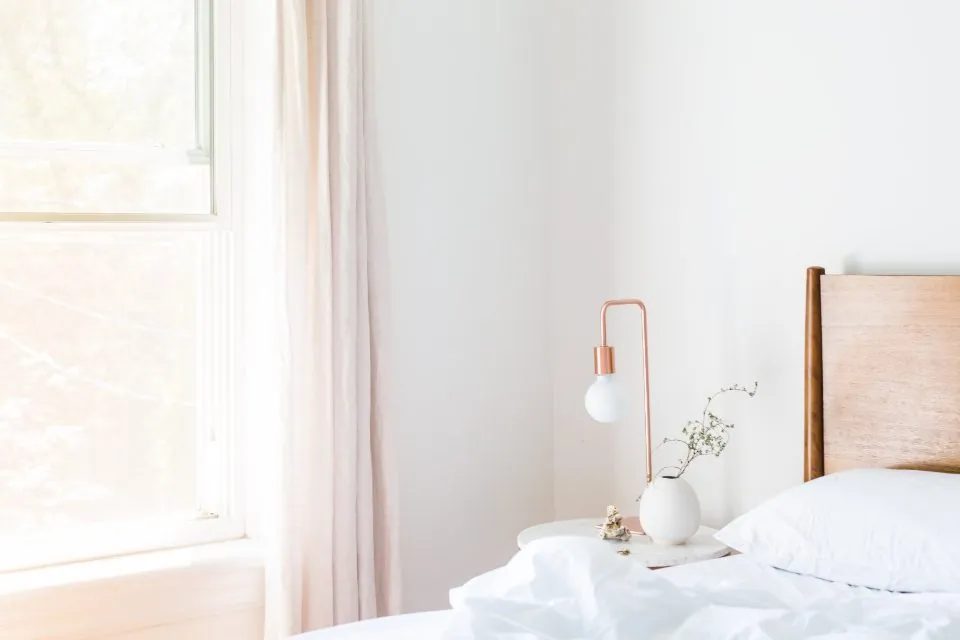
Your steps start in the bedroom
Qozgal counts your steps during the day, but how far you walk is largely decided at night. After a bad night you have less energy, your mood dips and it is easy to push the walk to tomorrow. Sleep runs on an internal clock, and the body sets that clock mostly by light. A bright morning tells you the day has begun, darkness in the evening says it is time to rest. In a typical flat these signals get mixed up: in summer the sun hits the window long before the alarm, in winter we get up in the dark, and at night a street lamp, a shop sign or car headlights in the yard light up the bedroom
In this article we go through what research says about light before and during sleep, how sleep and movement pull each other along, and how to set up the light in every room without a renovation. At the end you will find a simple one-week plan and a tip for readers in western Kazakhstan: where to order blinds made to the size of your windows in Aktau, Aktobe, Uralsk and the Mangystau region
How light runs your body clock
Everyone has an internal clock, the circadian rhythm. It decides when you feel sleepy, when your body temperature shifts and when melatonin, the darkness hormone, is released. The main cue for this clock is the light that reaches your eyes. Morning light moves the rhythm earlier, so sleep comes on time in the evening. Bright light late in the evening does the opposite and pushes it later. In a study by Wright and colleagues people spent a week camping with natural light only, and their internal clocks moved about two hours earlier: the biological night started at sunset and ended shortly after sunrise. A review by Blume and co-authors comes to the same point: the clock needs daylight and darkness at night in equal measure
116 healthy volunteers lived in a lab for several days in a row, spending the evening either in dim light or in ordinary room light under 200 lux. Room light before bed delayed the start of melatonin release in 99% of participants and shortened it by about 90 minutes. When the light stayed on during the usual hours of sleep, melatonin dropped by more than half in 85% of cases
Gooley J.J. et al. J Clin Endocrinol Metab, 2011And it is not only about the phone in your hand. Light gets in through a gap between curtains, from a street lamp, an advertising screen or a floodlight on the next building. In an experiment by Mason and colleagues young healthy people slept just one night with an overhead light of about 100 lux left on. During that night their heart rate was higher and heart rate variability lower, and the next morning their insulin resistance was stronger than after a night in the dark. In a large study by Park and co-authors of 43 thousand women, sleeping with a light or TV on in the room was linked to a 17% higher risk of gaining 5 kg or more over the following years. Check your bedroom against a few simple signs
- In summer you wake before the alarm because the sun shines right on your face
- From the bed you can see a street lamp, a sign or bright windows of the house opposite
- You fall asleep with the TV or a night light on, or in the glow of your phone
- On winter mornings the room is dark and getting up is really hard
- In the afternoon the sun heats the room and by night the bedroom feels stuffy
- Your curtains do not reach the edges of the window and bright strips stay at the sides
Sleep and movement pull each other along
The link works both ways. A review by Kline brings together evidence that regular activity helps you fall asleep faster and sleep deeper, while short sleep drains your energy and your wish to move. In a study by Dzierzewski and colleagues 79 middle-aged and older adults kept a daily diary for 18 weeks: on days with more exercise they rated their sleep as better, and good sleep in turn predicted more exercise afterwards. So if your Qozgal streak broke after a sleepless night, that is not laziness, it is a normal reaction of the body. We wrote more about how walks help you sleep in our article on walking and sleep
Researchers compared office workers who had windows at their workplace with those who worked without windows. The first group got 173% more white light during the working day, slept on average 46 minutes longer every night and tended to move more. It is a small pilot study, but it shows well that daylight matters for more than just mood
Boubekri M. et al. J Clin Sleep Med, 2014Light in the morning, dim in the evening Right after you wake up, open the blinds or curtains fully, or better still, go out for a 10-15 minute walk: even on a cloudy day it is much brighter outside than in a room. In the evening, dim the lights an hour or two before bed, and once it is dark, cover the bedroom window. That way your body clock gets a clear signal from both ends of the day
How to set up the light in each room
You do not need a renovation for this. What matters is being able to control the light: let it in when you need it and cover the window when it gets in the way. A bedroom needs darkness at night, a living room and a work spot need soft light without glare on the screen, a kitchen and a kids room need daylight during the day. Heat is a separate story. A review by Okamoto-Mizuno shows that in a hot room people wake up more often and spend less time in deep sleep. In summer in Mangystau and Aktobe the sun heats rooms facing south and west all day long, and if you shade them from direct rays during the day, the bedroom is usually less stuffy by night. We covered how to walk in that kind of weather in our article on walking in the heat
| Room | What matters | What fits |
|---|---|---|
| Bedroom | Darkness at night, soft light in the morning | Duet: a light fabric by day, a dense one for the night. Or a dense roller blind in a cassette |
| Living room | Light without glare on the TV | Day-night: fabric stripes adjust the light in one move |
| Kitchen | Plenty of daylight, easy care | A roller blind on each sash |
| Kids room | Darkness for daytime naps | Duet or a cassette system with dense fabric |
| Balcony and large windows | Protection from direct sun and heat | MGS across the whole opening or roller blinds sash by sash |
| Work corner | A screen without glare | Day-night or a light roller blind |
Good sleep starts in the morning: light through the window, steps outside and a dark bedroom at night
A one-week plan: light, sleep and steps
There is no need to change everything at once. Try living by a simple plan for a week and watch in Qozgal how your steps change after good and bad nights. Write down when you went to bed and how you slept, then compare it with the next day's steps: that makes it easier to see what works for you personally and what you can leave as it is
- Day 1: in the evening, sit in the bedroom with the lights off and see where light gets in: a street lamp, gaps at the edges of the window, little lights on devices
- Day 2: remove or cover the small lights, put your phone face down and away from the bed
- Day 3: let the light in as soon as you wake up and go out for a 10-15 minute walk, even if only to the shop or the bus stop
- Day 4: an hour before bed switch off the overhead light and keep a soft lamp on
- Day 5: during the day keep the bedroom windows shaded from direct sun so the room does not overheat
- Days 6 and 7: compare your steps in Qozgal and your sleep notes with last week. If light from the street still bothers you, think about blinds made to the size of your windows
Where to order blinds in Aktau, Aktobe, Uralsk and Mangystau
If the week made it clear that your windows need proper cover, take a look at ATLANT. They make blinds to order, sized to your windows: roller blinds, day-night blinds, Duet, MGS for wide openings and cassette systems. Measuring and installation are free, the fitter brings fabric samples and names the exact price on the spot. Prices from their list: roller blinds from 5 000 ₸, day-night from 7 000 ₸, cassette systems from 8 000 ₸, MGS from 10 000 ₸, Duet from 12 000 ₸. What to choose for sleep is laid out in detail on their page about bedroom blinds
- Blinds in Aktau: a shop with fabric samples in the 6th microdistrict
- Blinds in Aktobe: a separate number for orders and free measuring
- Blinds in Uralsk: its own number, measuring and installation are free here too
- Blinds in the Mangystau region, including Zhanaozen and Beyneu: it is best to check the visit terms by phone
While you wait for the measuring visit, make good use of the daylight. We have walking routes for these cities: Aktau, Aktobe and Uralsk. A morning walk along the embankment or through a park gives you both steps and the bright light that helps you fall asleep on time in the evening. And the free Qozgal app will count your steps and show how they change once your bedroom is truly dark
- Your body clock is set by light: a bright morning and a dark night help you fall asleep on time
- Ordinary room light before bed delays melatonin and shortens its release
- Sleep and steps are linked: moving is easier after a good night, and movement helps you sleep
- Let light in each morning, dim it in the evening, shade the bedroom from street lamps at night and from heat by day
- ATLANT makes blinds to order in Aktau, Aktobe, Uralsk and the Mangystau region, measuring and installation are free
Frequently asked questions
Does a bedroom need to be completely dark?
For most people, the darker the better. In studies even moderate light during sleep affected heart rate and metabolism. If you cannot do without a night light, pick a dim warm light low near the floor rather than a ceiling lamp
Which is better for a bedroom: day-night or Duet?
Day-night blinds adjust the light neatly with fabric stripes, but they usually darken less than a solid dense fabric. For sleep a Duet with a dense layer or a roller blind in dense fabric inside a cassette works better. You can see and touch the samples during the measuring visit
How much morning light do I need?
There is no exact norm for everyone. A good habit is to let the light in right after you wake up and spend 10-15 minutes outdoors in the first half of the day. Walking to work or to class takes care of both at once
How much do ATLANT blinds cost and is measuring paid?
Prices start from 5 000 ₸ for roller blinds, from 7 000 ₸ for day-night and from 12 000 ₸ for Duet. Measuring and installation are free, the exact amount is named during the measuring visit. The current price list is on their prices page
Which cities does ATLANT work in?
Aktau, Aktobe, Uralsk and the Mangystau region, including Zhanaozen and Beyneu. Phone numbers for each city are on the ATLANT website
If I sleep badly, should I force myself to walk?
An easy walk usually helps, but after a sleepless night do not chase a record. If poor sleep lasts more than a few weeks, you snore heavily or you nod off during the day, see a doctor
Sources
- Gooley J.J. et al. Exposure to room light before bedtime suppresses melatonin onset and shortens melatonin duration in humans. J Clin Endocrinol Metab, 2011 Gooley et al., 2011
- Mason I.C. et al. Light exposure during sleep impairs cardiometabolic function. PNAS, 2022 Mason et al., PNAS, 2022
- Park Y.M. et al. Association of exposure to artificial light at night while sleeping with risk of obesity in women. JAMA Intern Med, 2019 Park et al., JAMA Intern Med, 2019
- Wright K.P. et al. Entrainment of the human circadian clock to the natural light-dark cycle. Curr Biol, 2013 Wright et al., Curr Biol, 2013
- Blume C., Garbazza C., Spitschan M. Effects of light on human circadian rhythms, sleep and mood. Somnologie, 2019 Blume et al., Somnologie, 2019
- Kline C.E. The bidirectional relationship between exercise and sleep. Am J Lifestyle Med, 2014 Kline, Am J Lifestyle Med, 2014
- Dzierzewski J.M. et al. Exercise and sleep in community-dwelling older adults: evidence for a reciprocal relationship. J Sleep Res, 2014 Dzierzewski et al., J Sleep Res, 2014
- Boubekri M. et al. Impact of windows and daylight exposure on overall health and sleep quality of office workers. J Clin Sleep Med, 2014 Boubekri et al., 2014
- Okamoto-Mizuno K., Mizuno K. Effects of thermal environment on sleep and circadian rhythm. J Physiol Anthropol, 2012 Okamoto-Mizuno, Mizuno, 2012